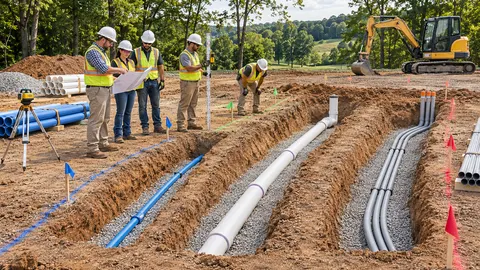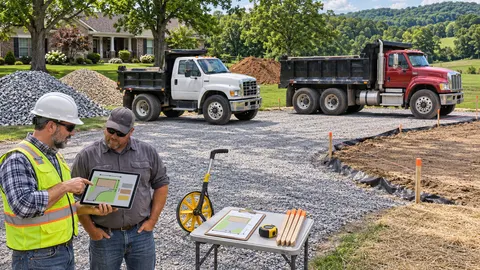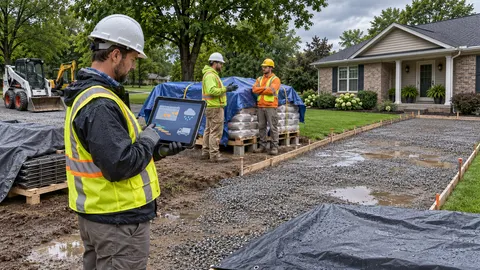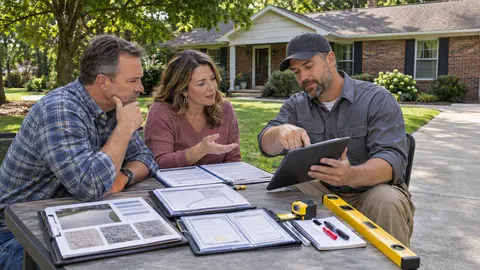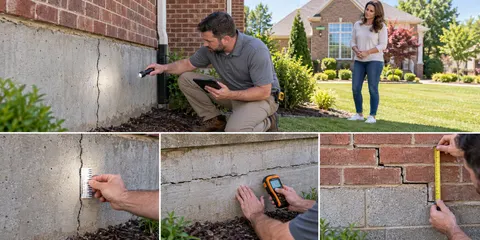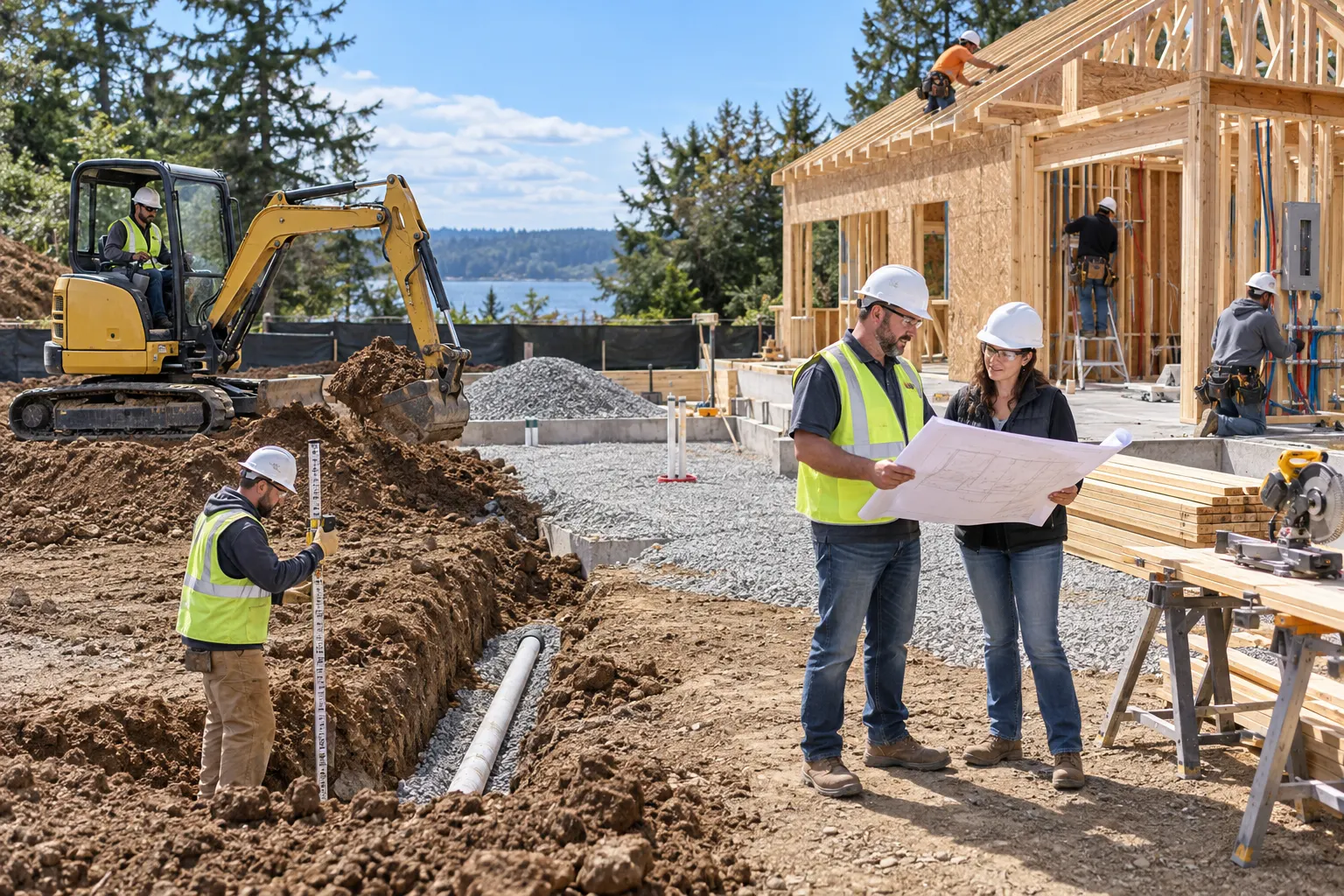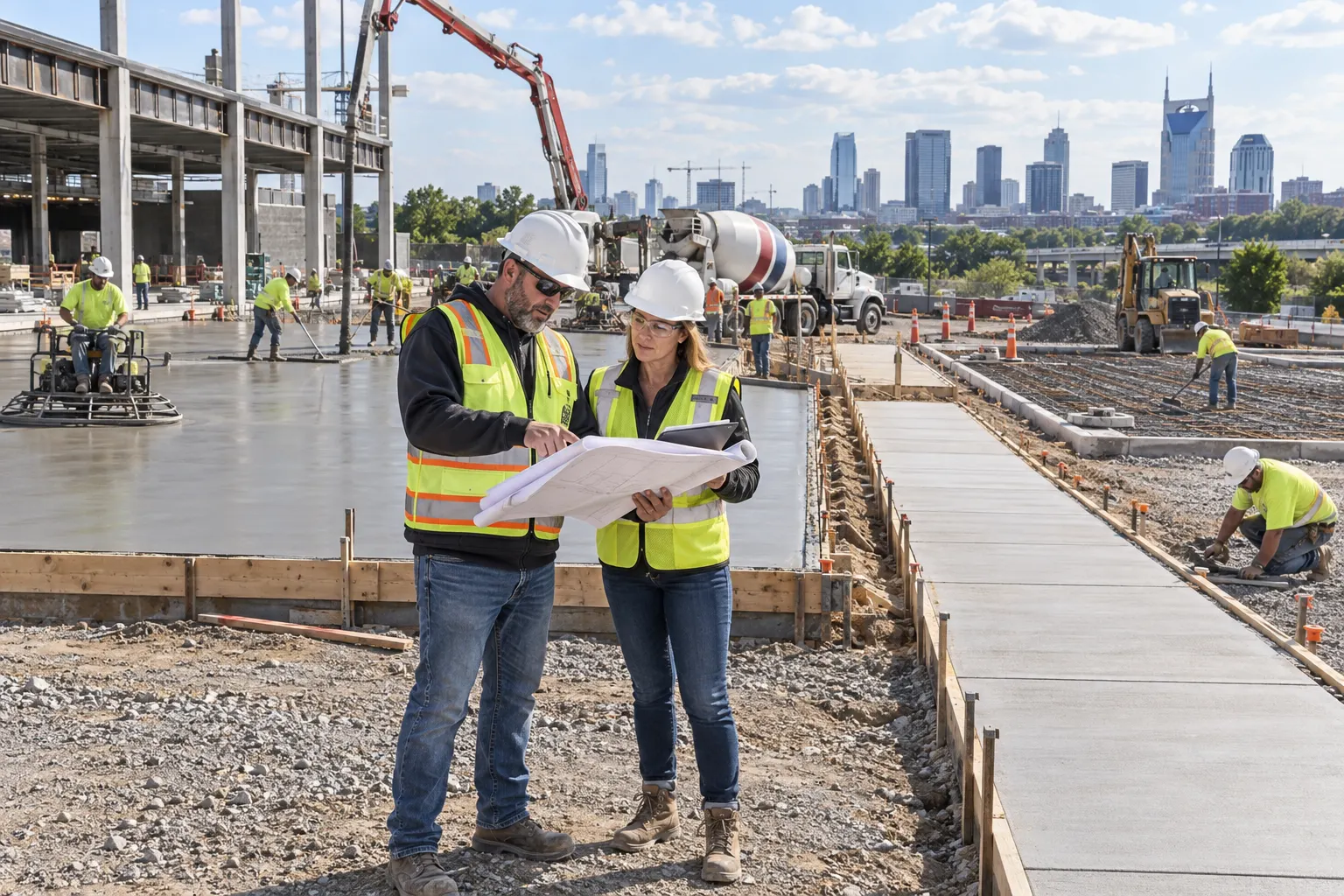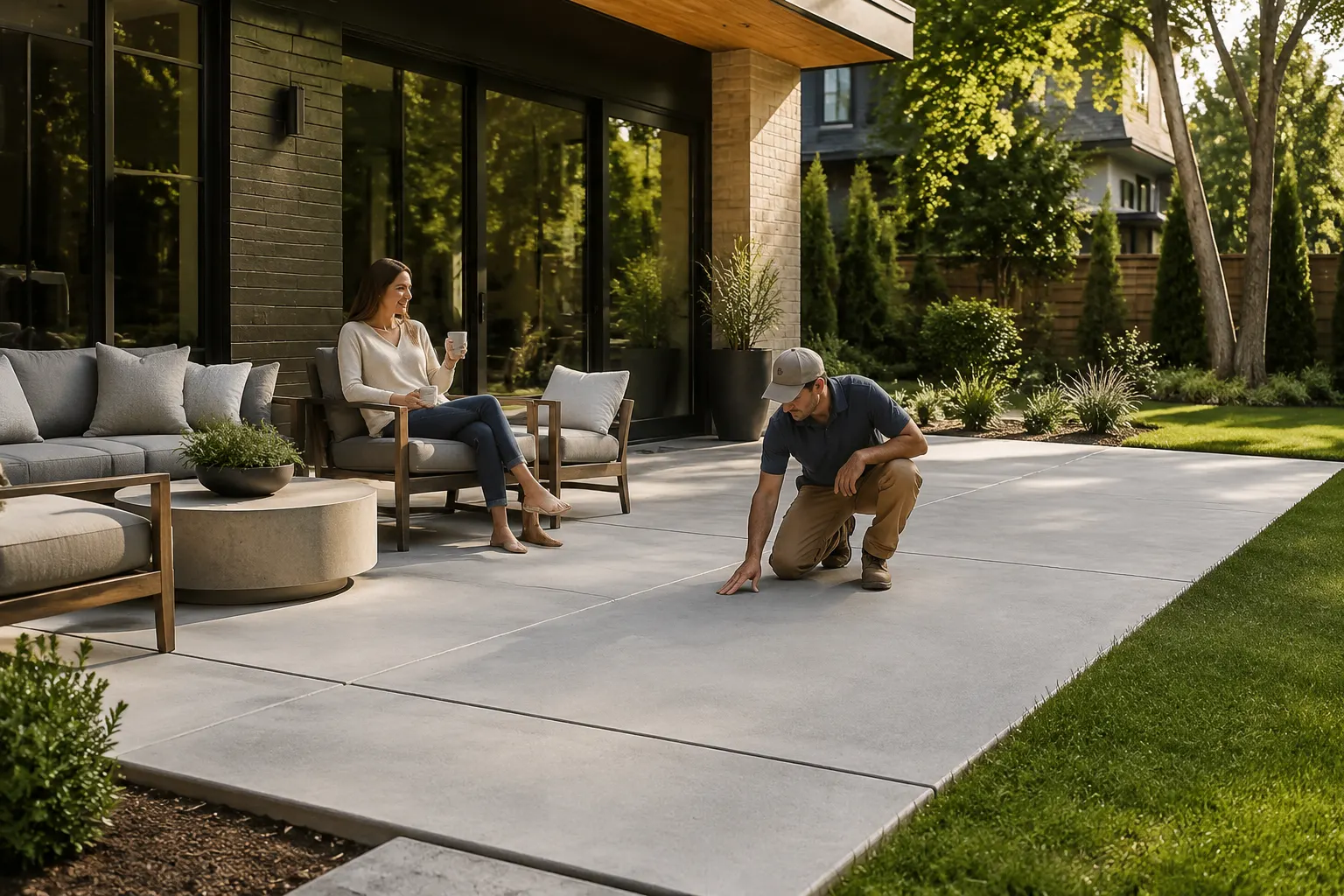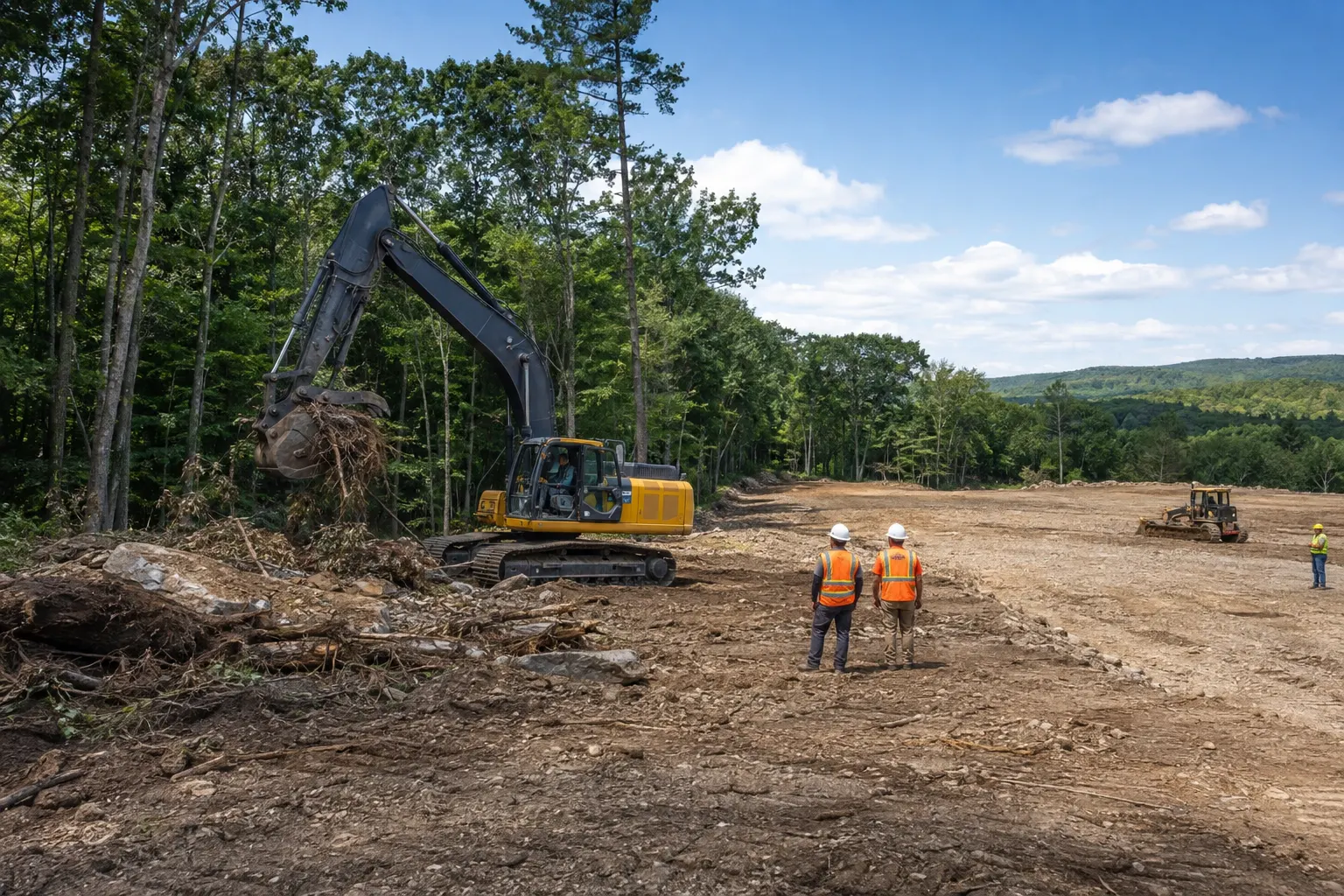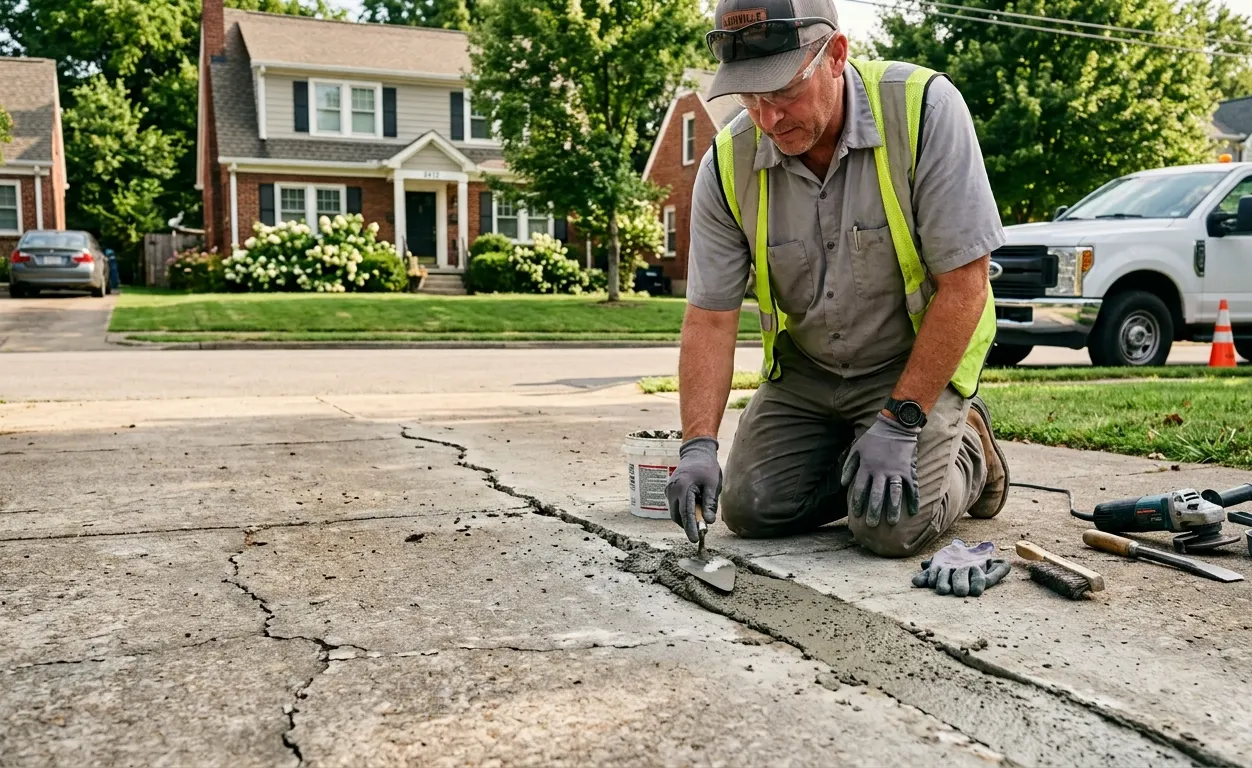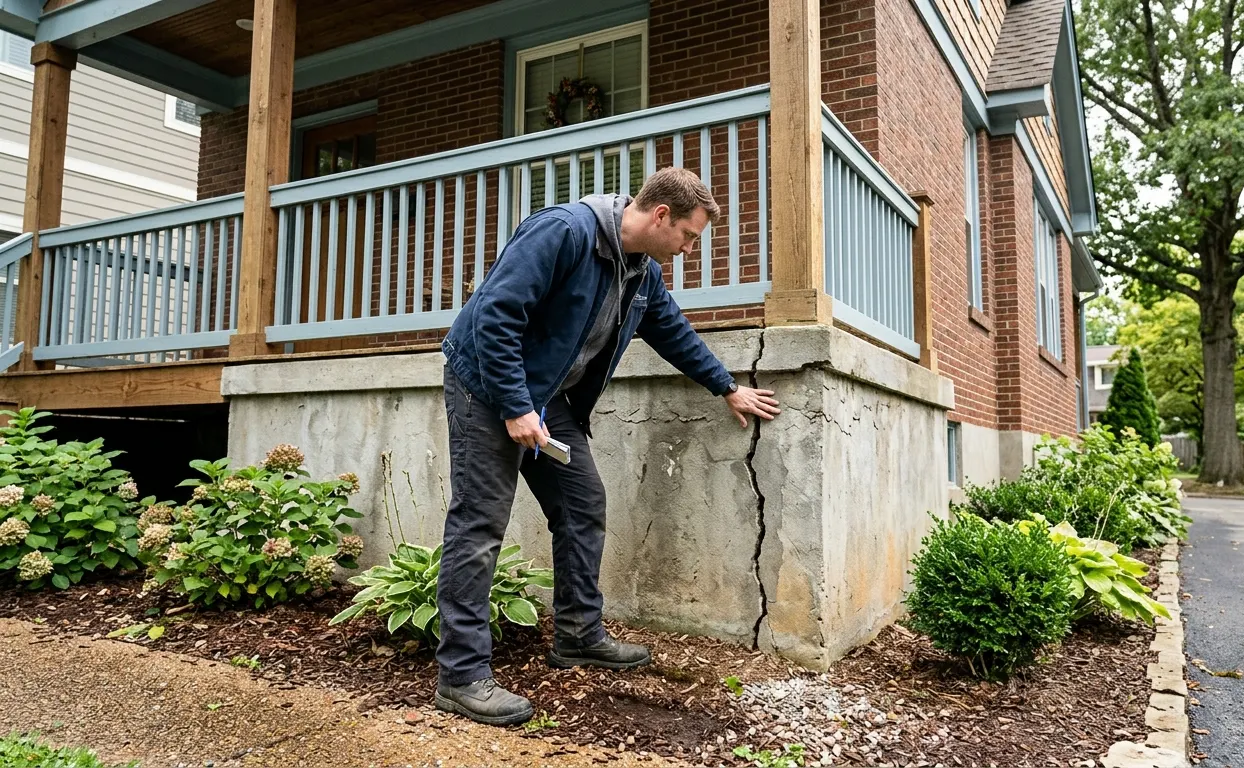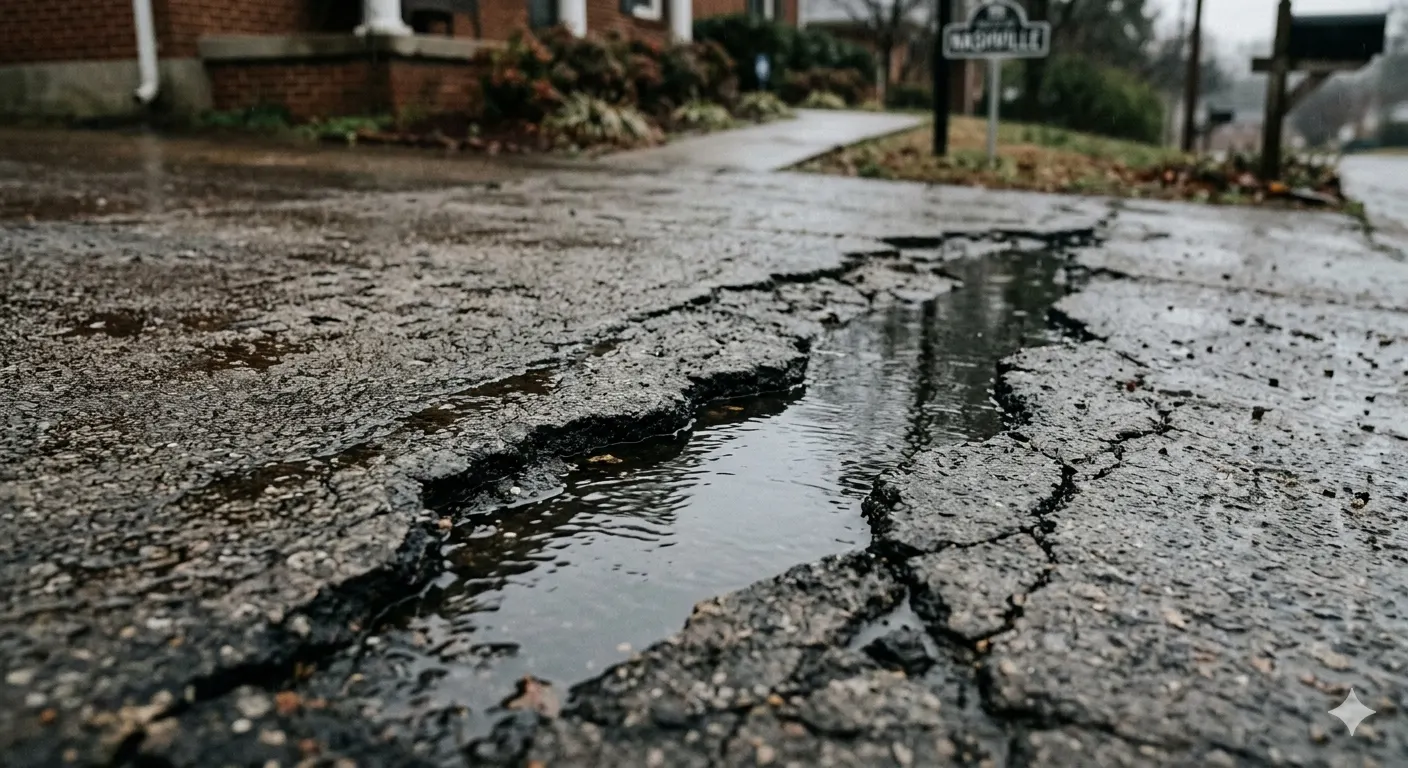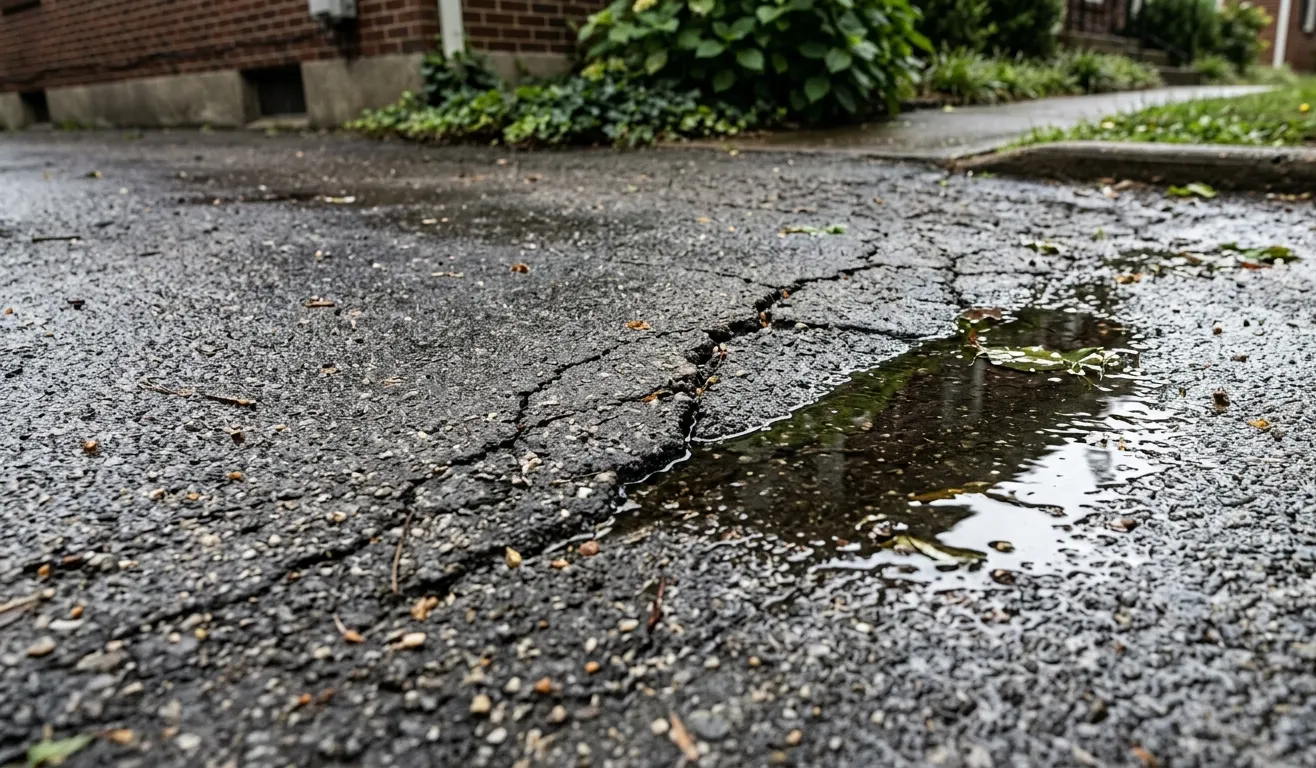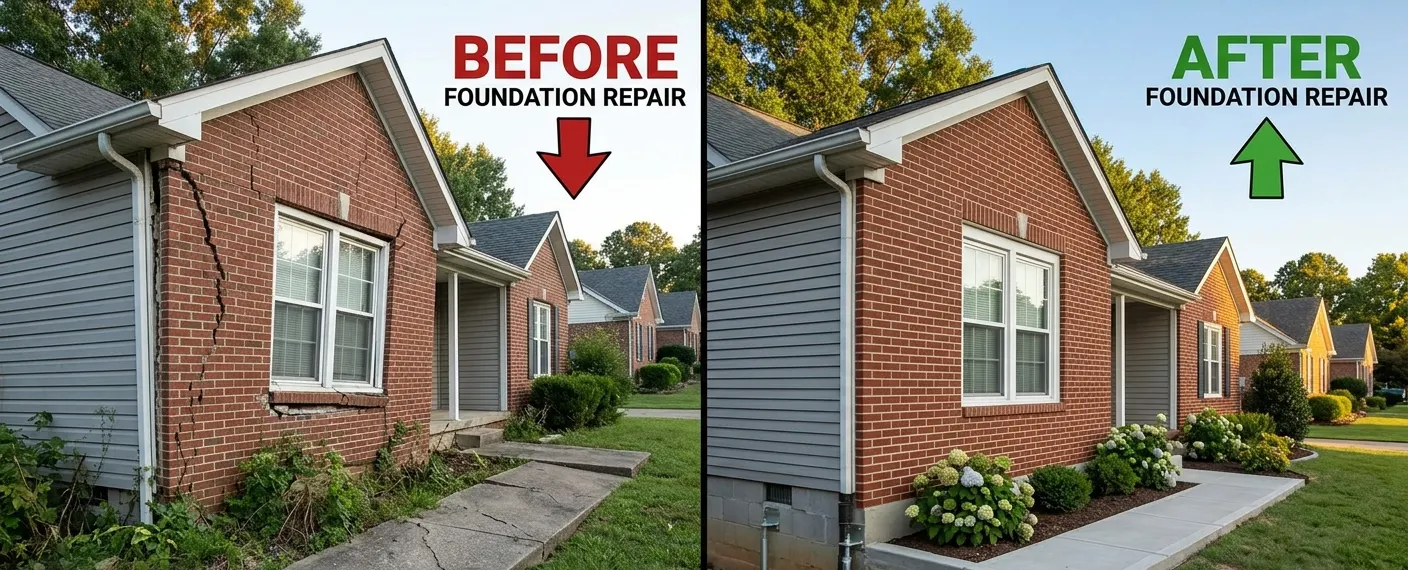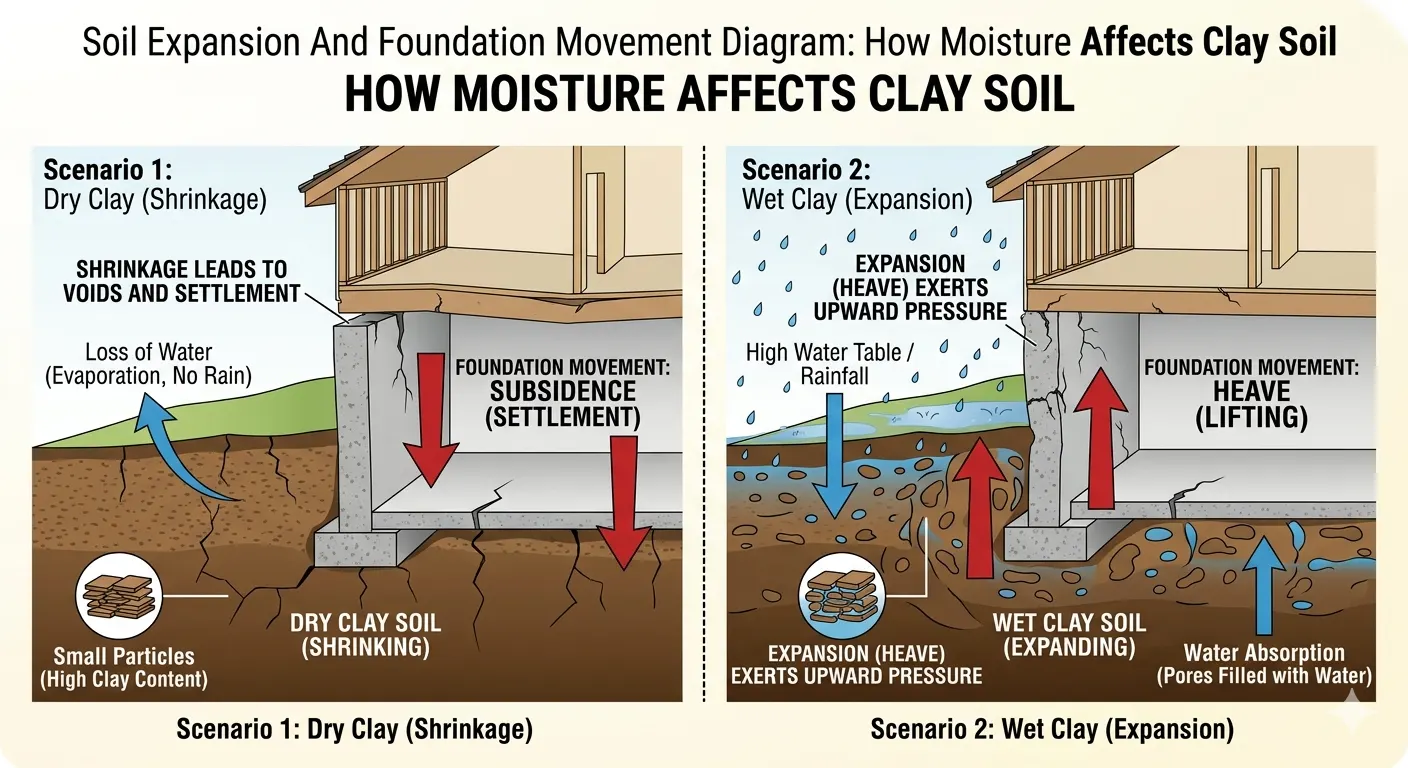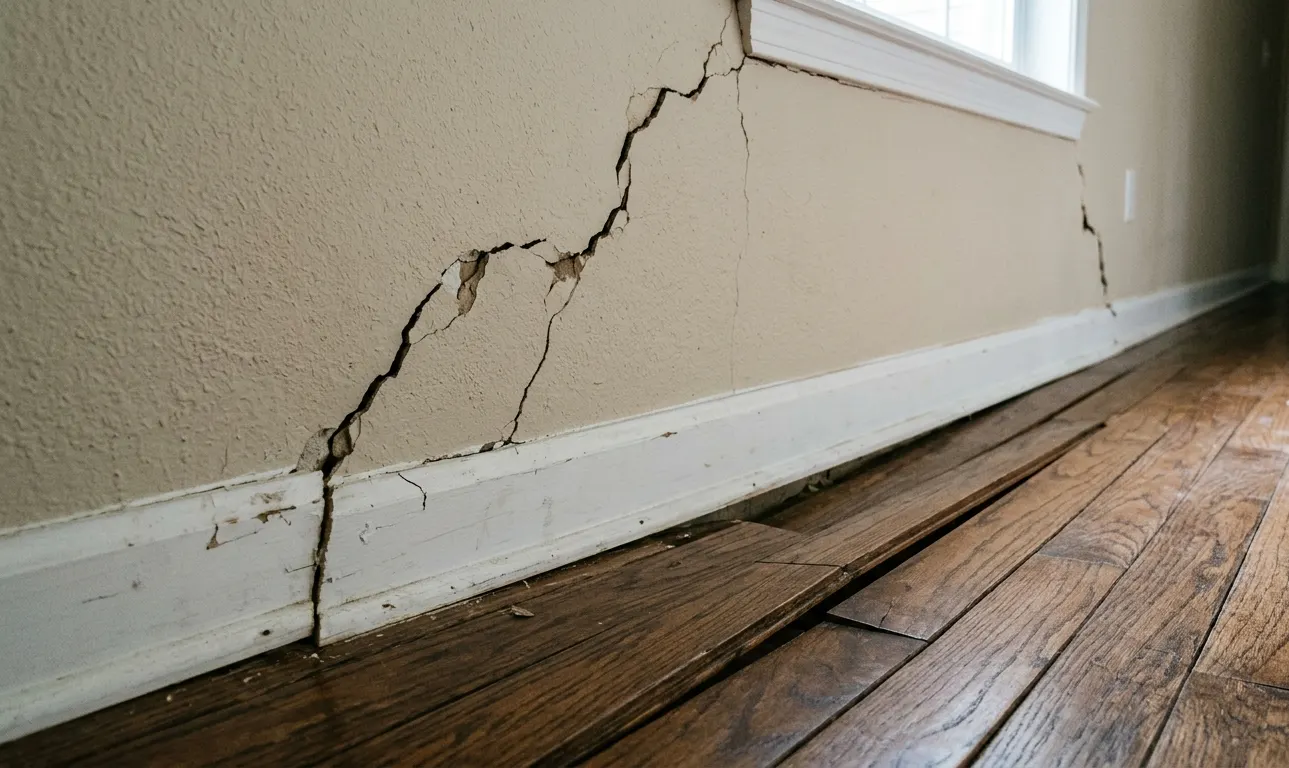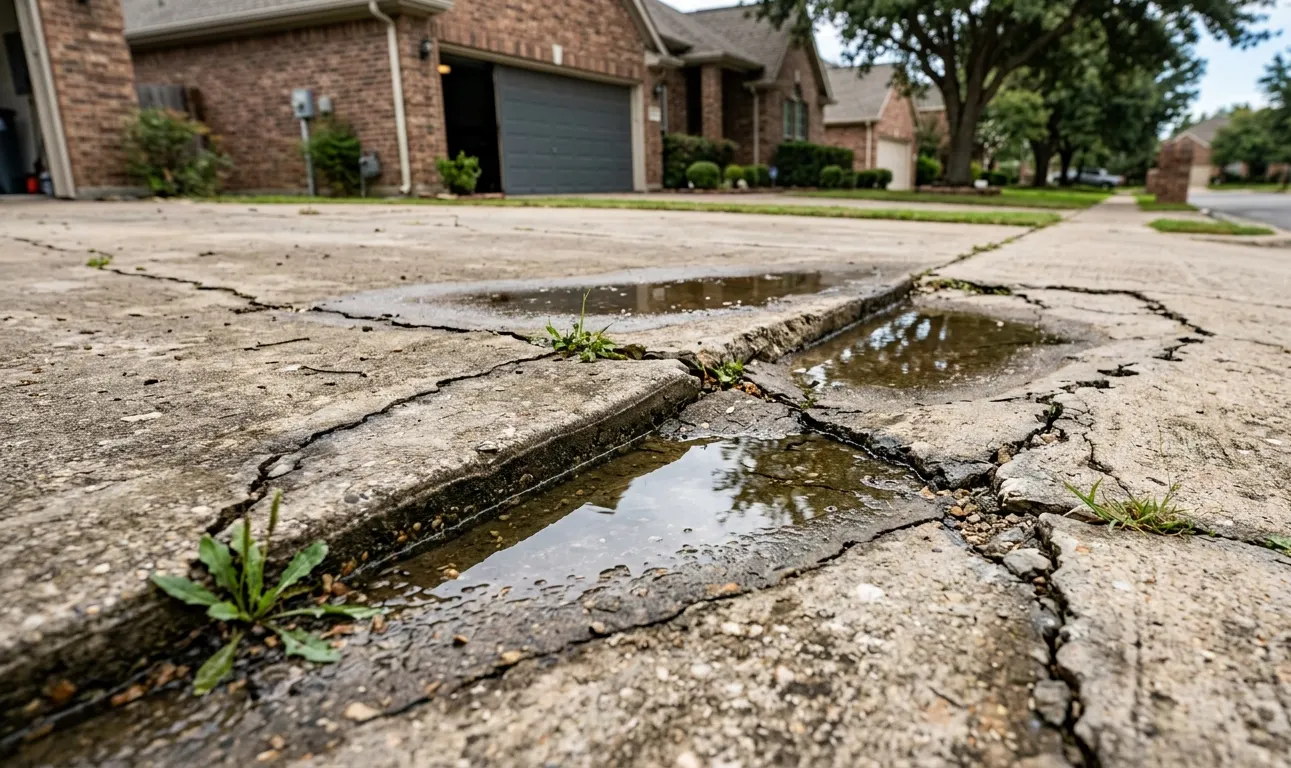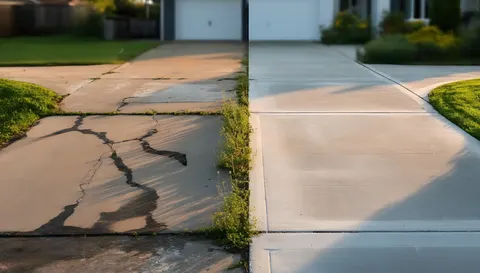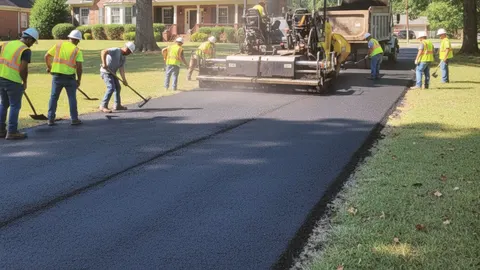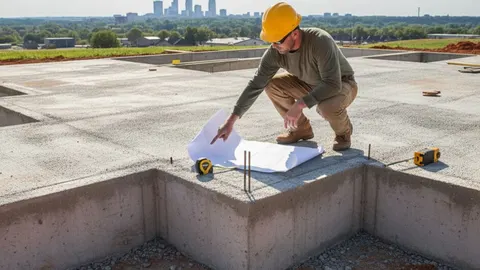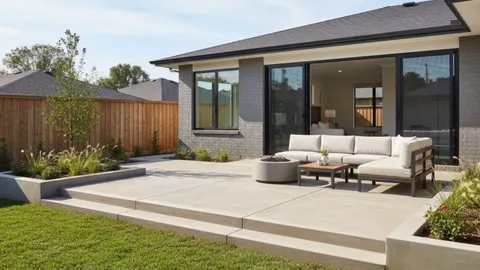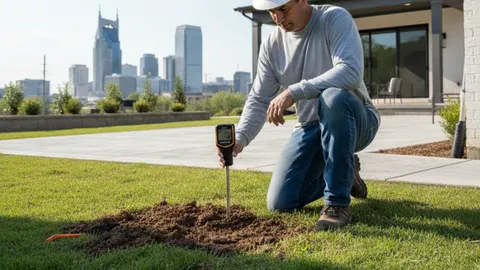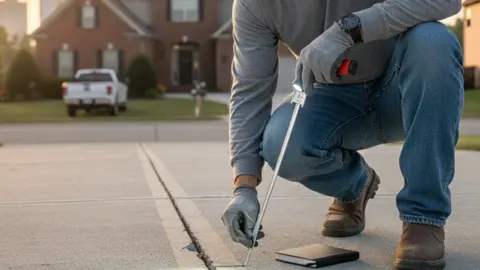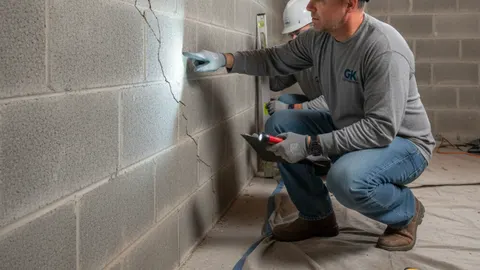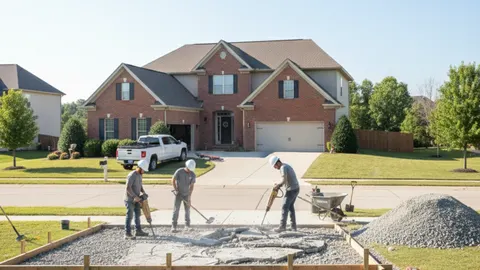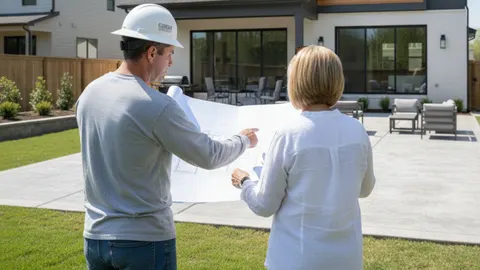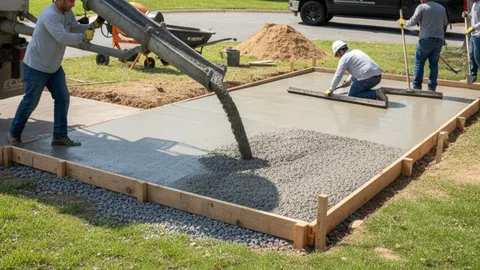
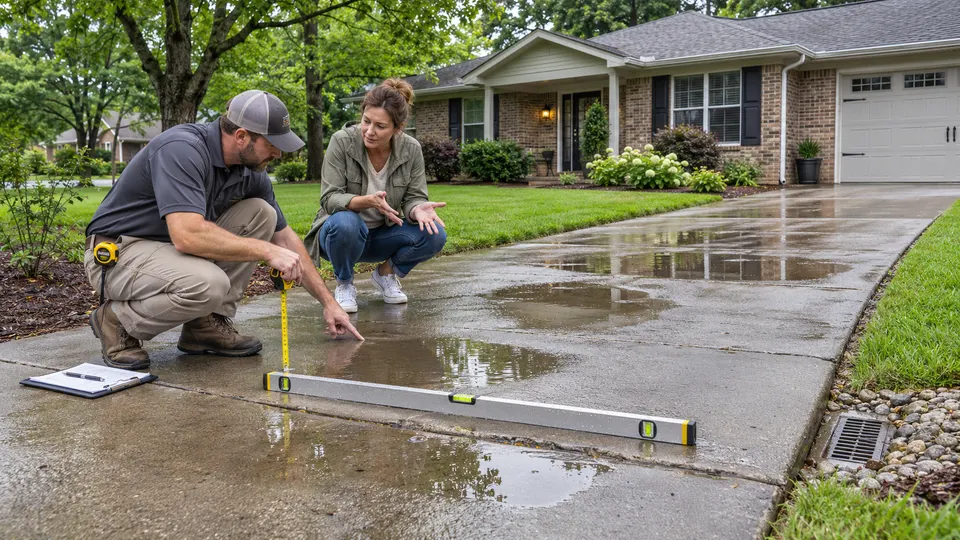
Water usually pools on concrete because the surface doesn’t have enough slope to drain, or because part of the slab has settled and created a low spot. Depending on the cause, the fix might be lifting the slab, grinding down a high area, adding a drain, resurfacing, or replacing the affected section. If the same puddle shows up on your patio, walkway, garage apron, or commercial slab every time it rains, I wouldn’t assume the concrete itself is bad. The first question we ask is where the water was supposed to go.
That’s why we check the slope, the surrounding grade, any slab movement, the drainage path, and the ground underneath before recommending a repair at GK Construction Solutions .
What Causes Water to Pool on Concrete?
Most standing water comes back to one of four problems: not enough slope, settlement, erosion under the slab, or a low spot left during the original finishing.
Not Enough Slope
Outdoor concrete needs enough fall for water to run off toward an open drainage area instead of sitting on the surface. If a patio or walkway was poured almost perfectly flat, even a small dip will hold water. The same thing happens when a slab does have slope, but it runs toward a wall or foundation instead of away from it.
Settlement From Poor Compaction
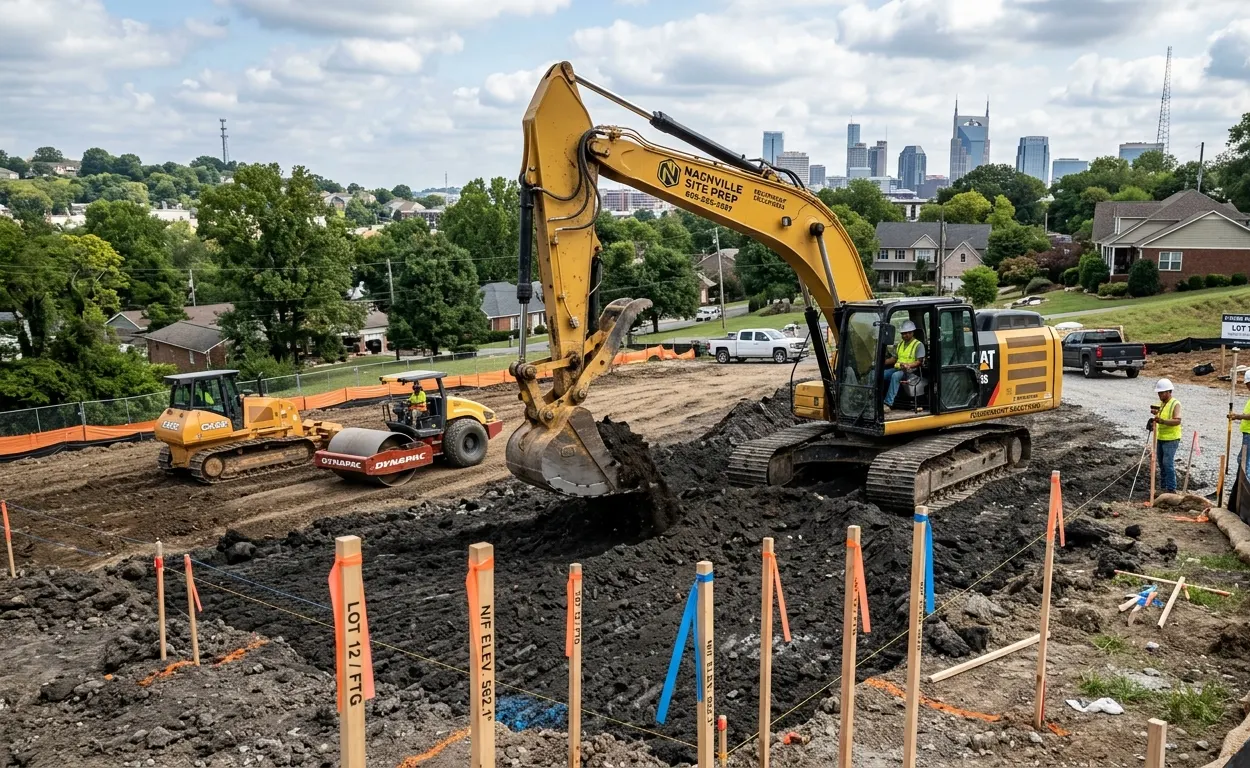
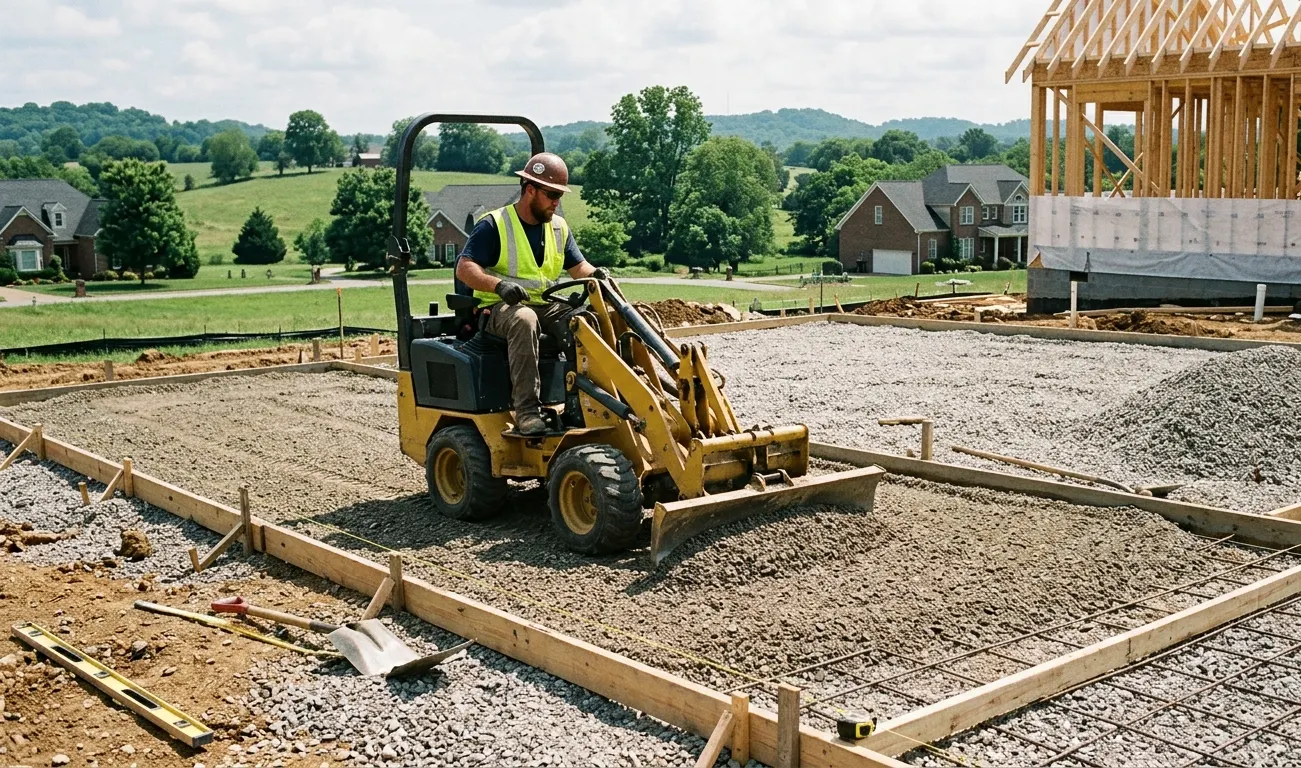
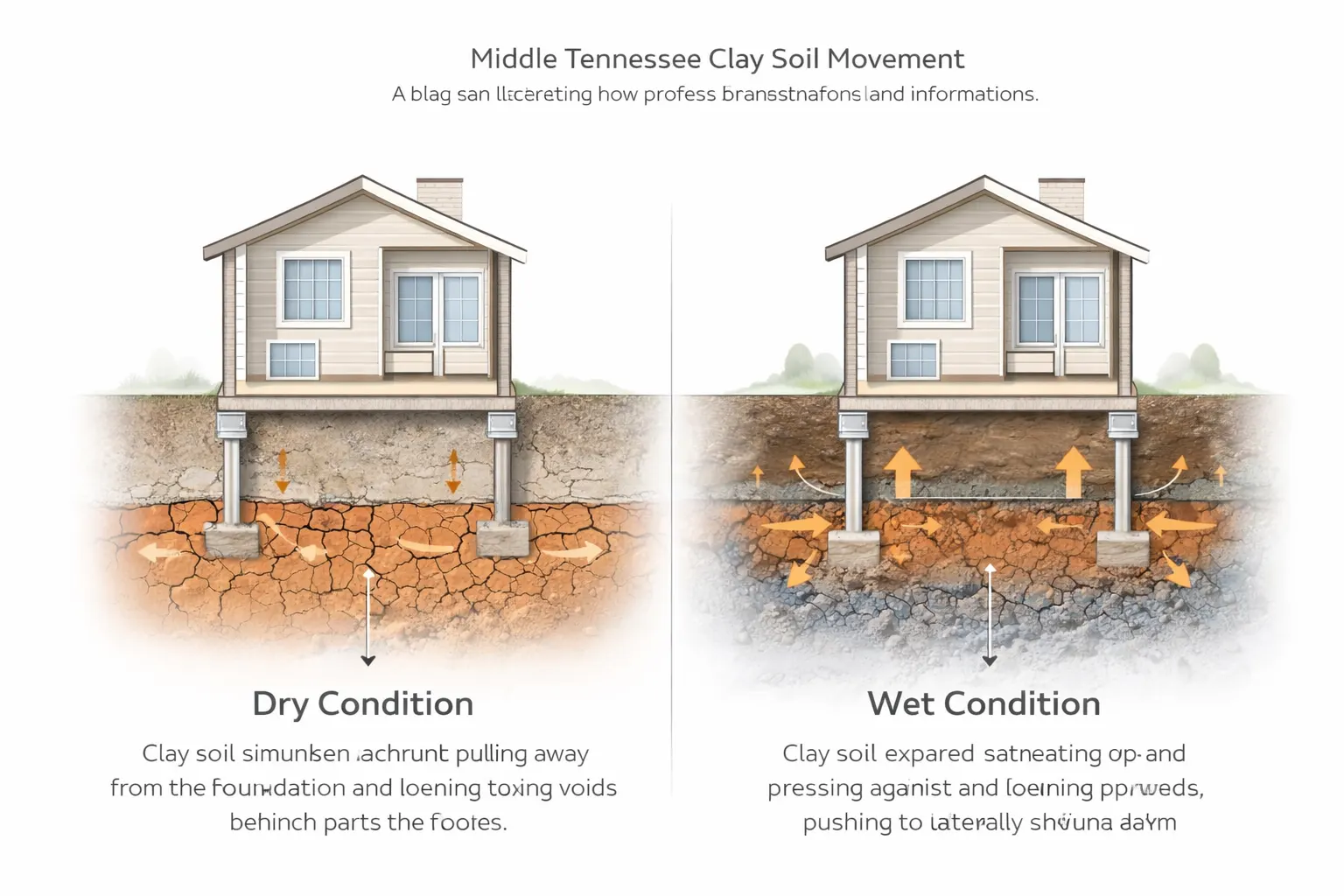
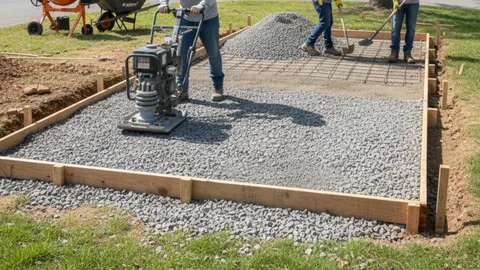
Concrete can start out draining well and develop problems later. If the soil or stone underneath wasn’t compacted evenly before the pour, part of the slab can sink and form a bowl where rainwater collects. That’s why proper site preparation before concrete is poured matters so much. The concrete follows whatever happens underneath it.
Erosion Under the Slab
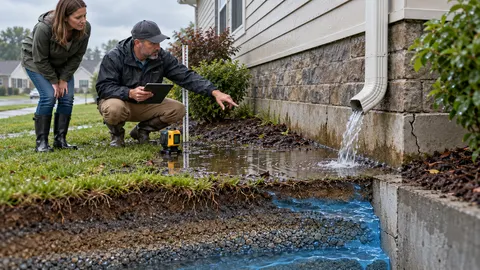
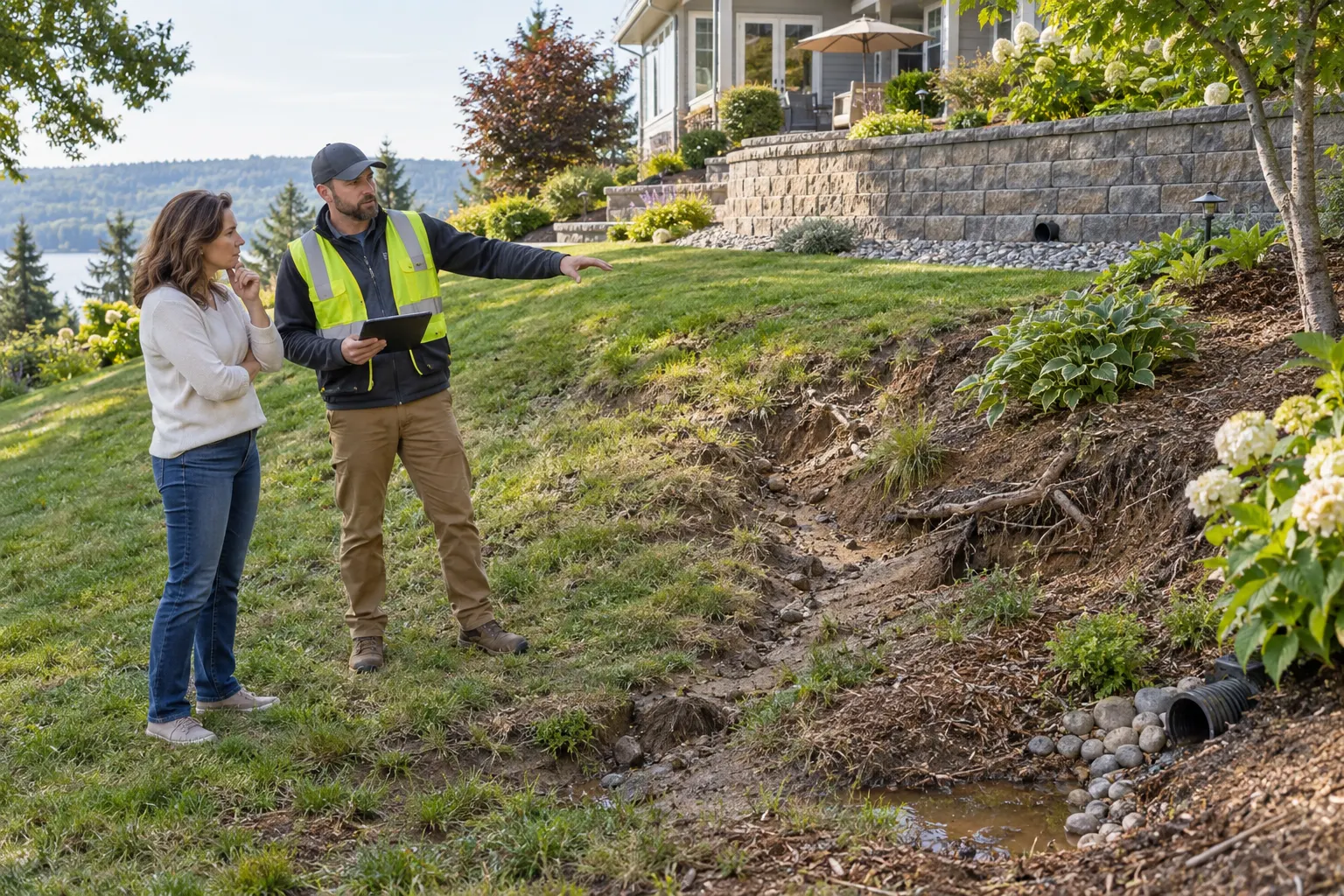
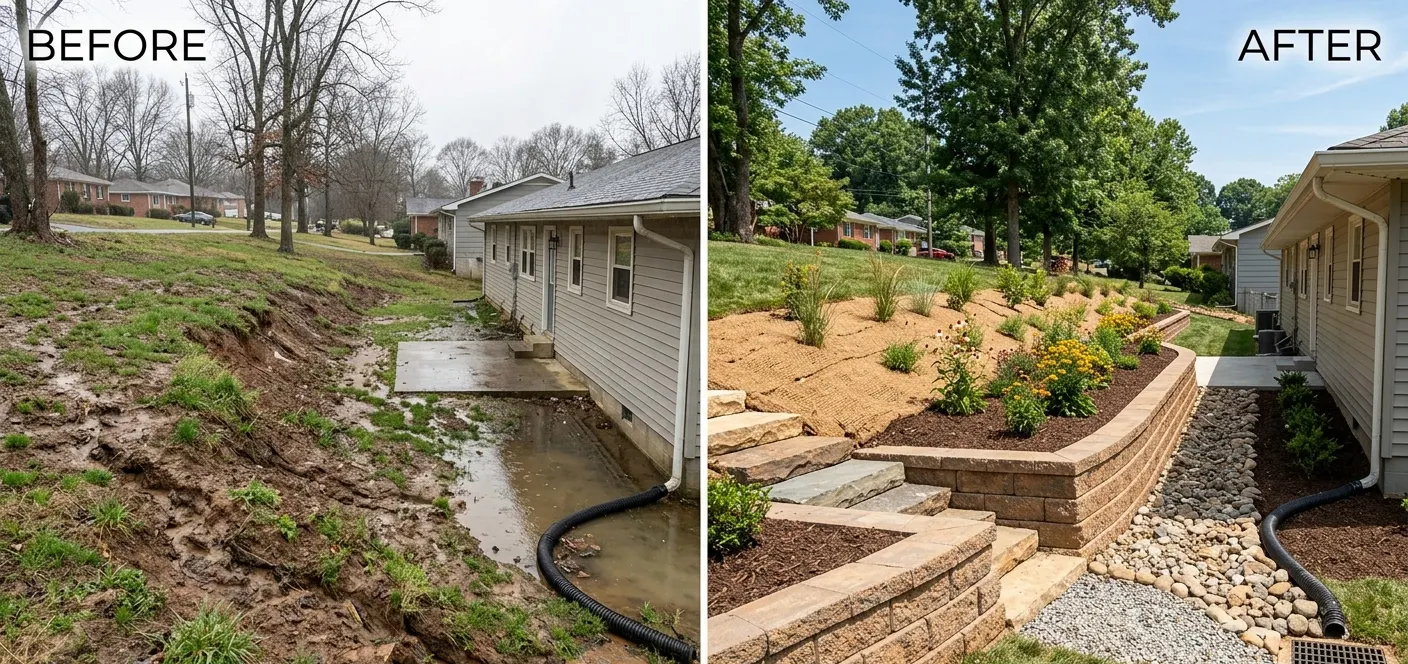
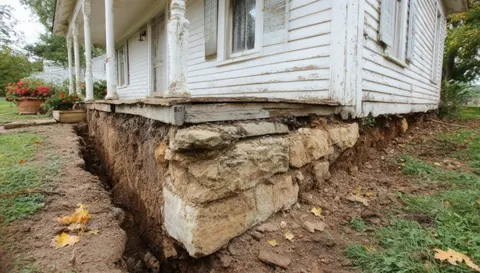
Water running under concrete can wash away the soil or base material holding it up. As that support disappears, part of the slab sinks. You’ll often see this near downspouts, along slab edges, and wherever runoff keeps finding its way under the concrete. Fixing the surface without dealing with that water source usually means the problem comes back.
Low Spots From Finishing
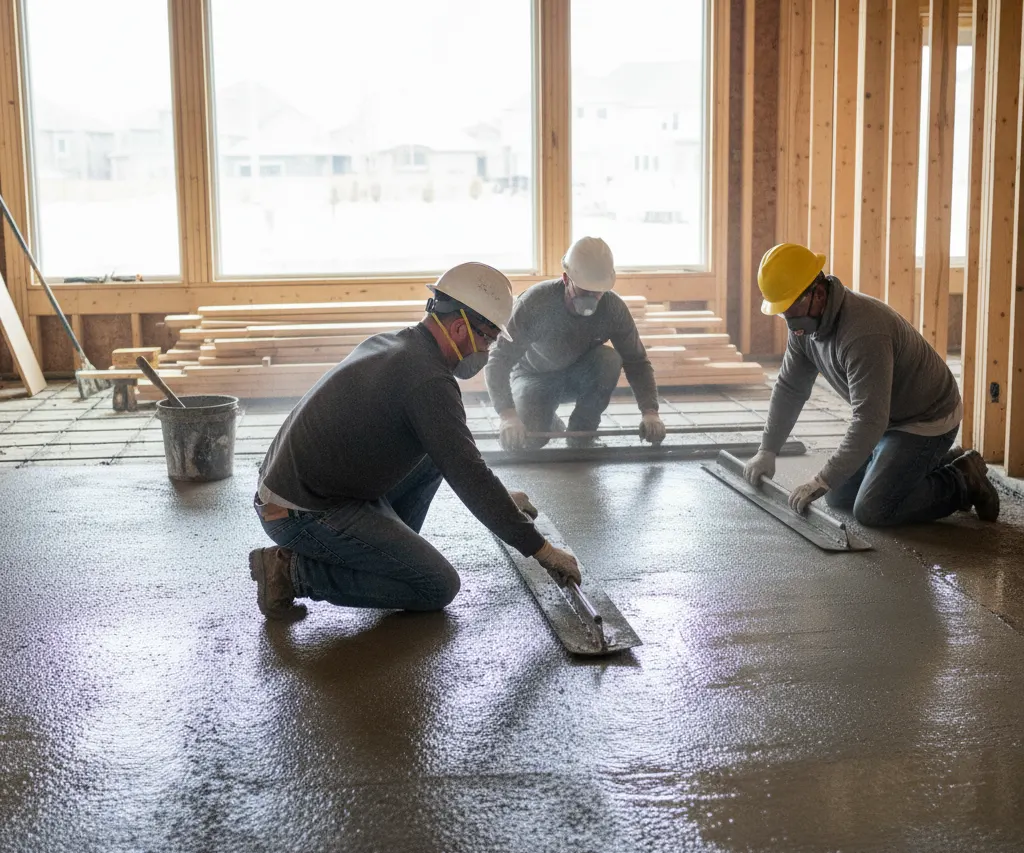
Sometimes the slab hasn’t moved at all, and the low area has been there since the day it was poured. If the final elevation was uneven or the surface wasn’t finished to the planned slope, small dips can hold water even on a stable slab.
How Much Slope Should a Concrete Slab Have?
For most patios, walkways and other outdoor slabs, a practical target is about 1/8 to 1/4 inch of fall per foot. The right number depends on how the surface is used, how long it is, any accessibility requirements, and where the water needs to end up.
That doesn’t mean every slab gets the same number. A short walkway may be laid out differently from a large patio, and commercial surfaces may have accessibility rules that limit how steep the slope can be. What matters is real, positive drainage without making the surface uncomfortable or unsafe to walk on. The American Concrete Institute points out that poor drainage lets water pond on concrete, and that ponded water lets salts and moisture soak in and speed up deterioration.
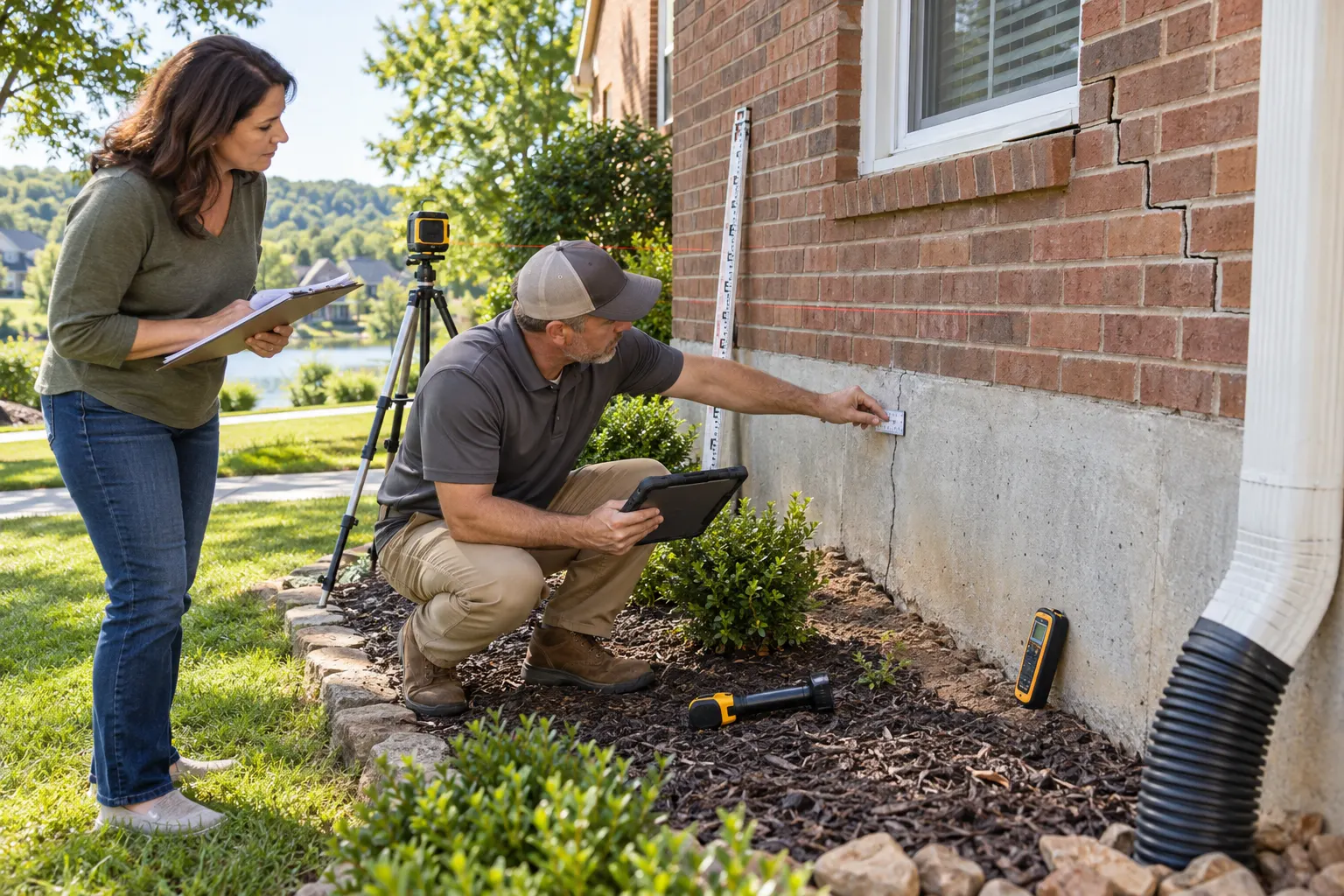
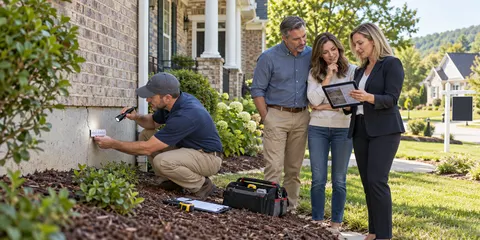
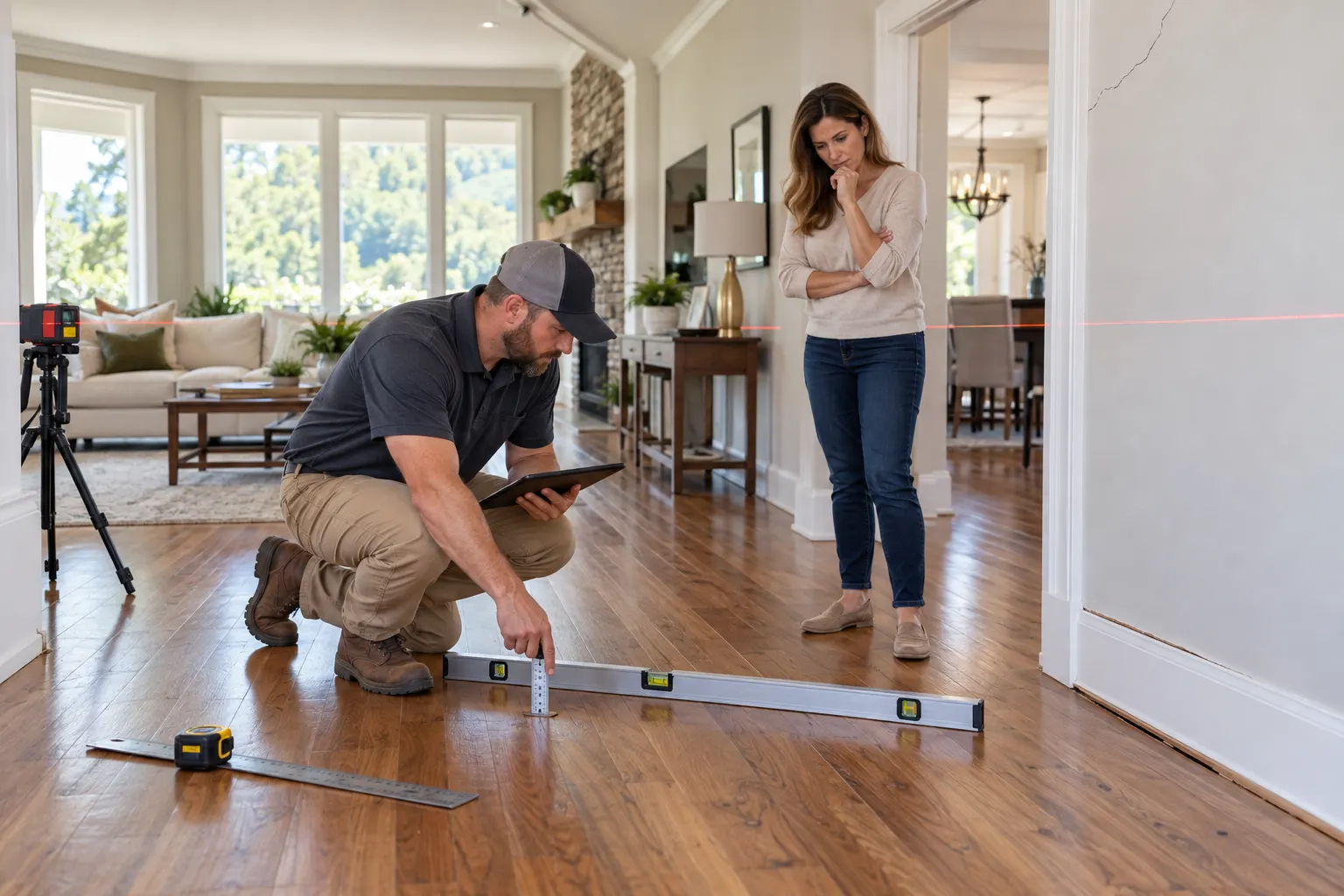
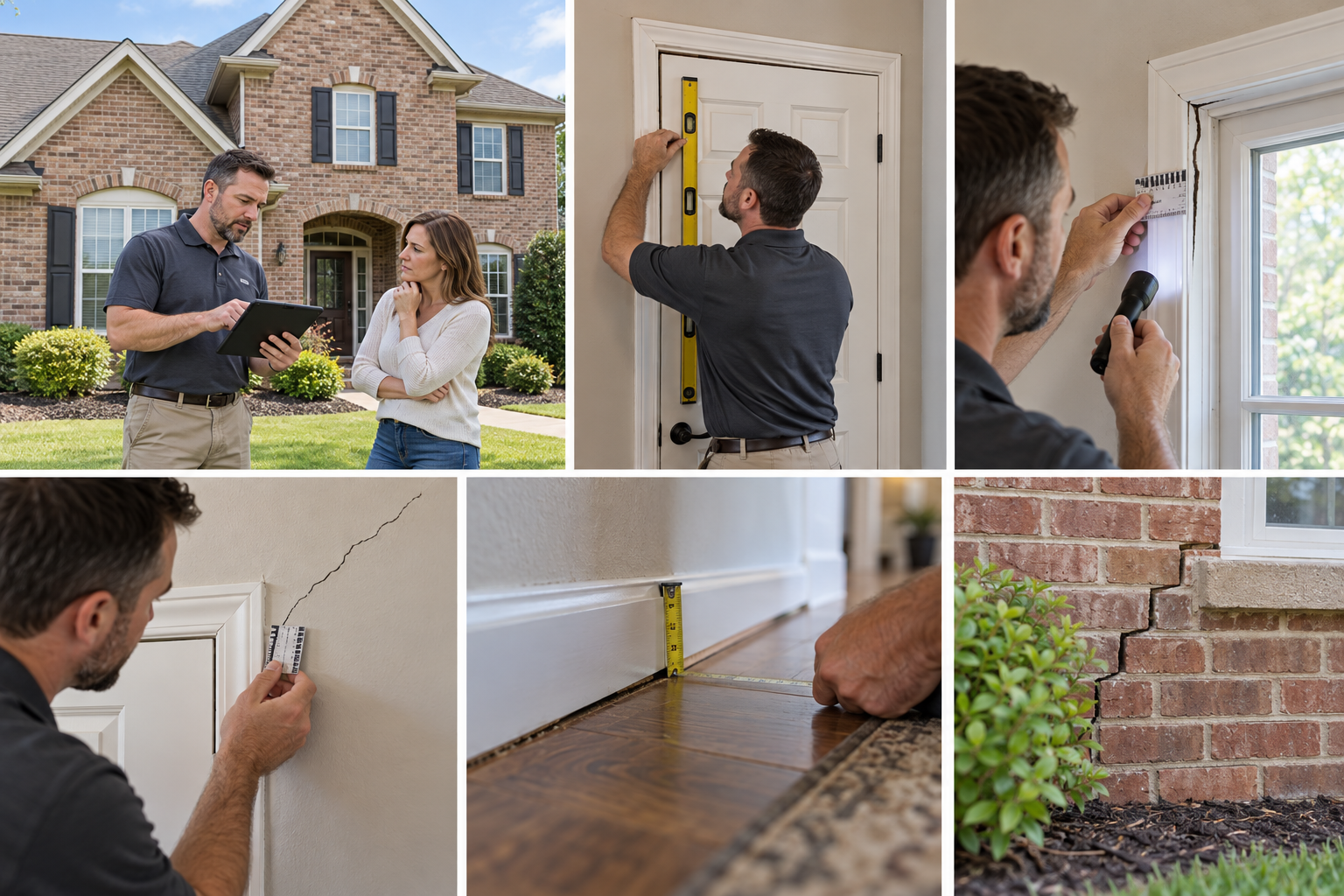
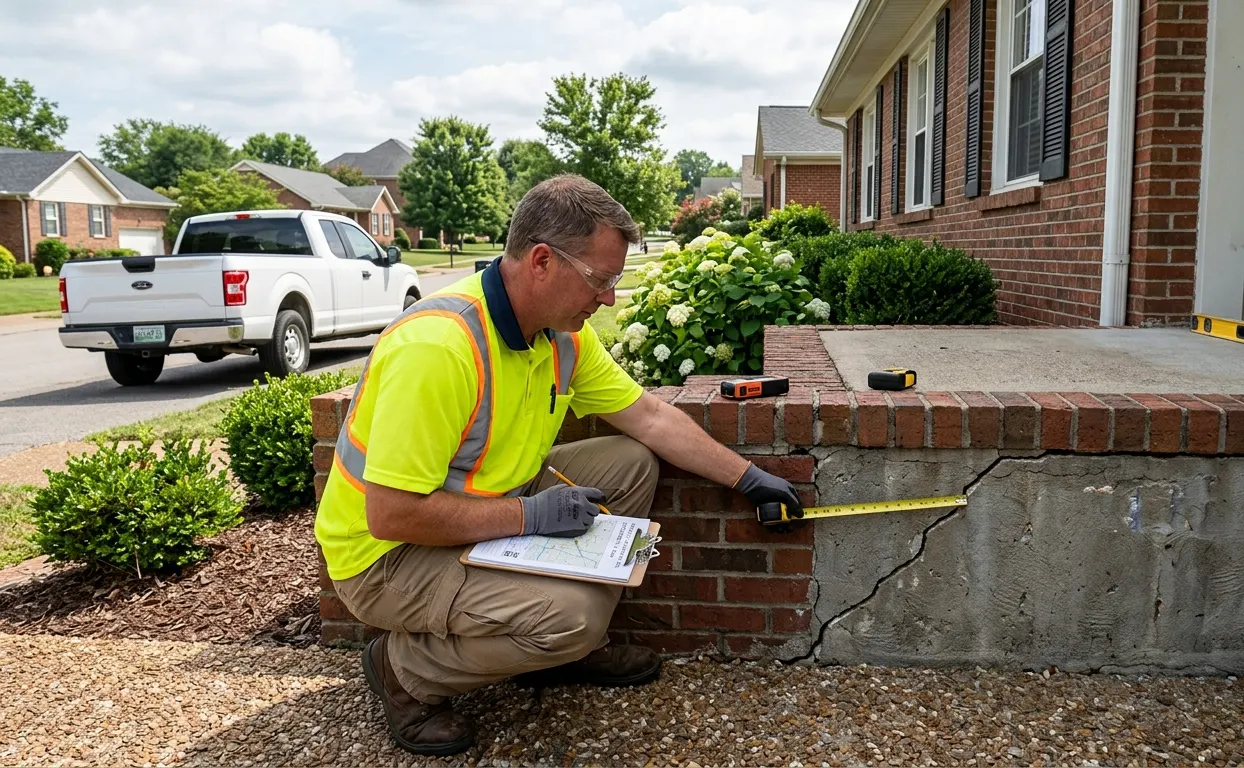
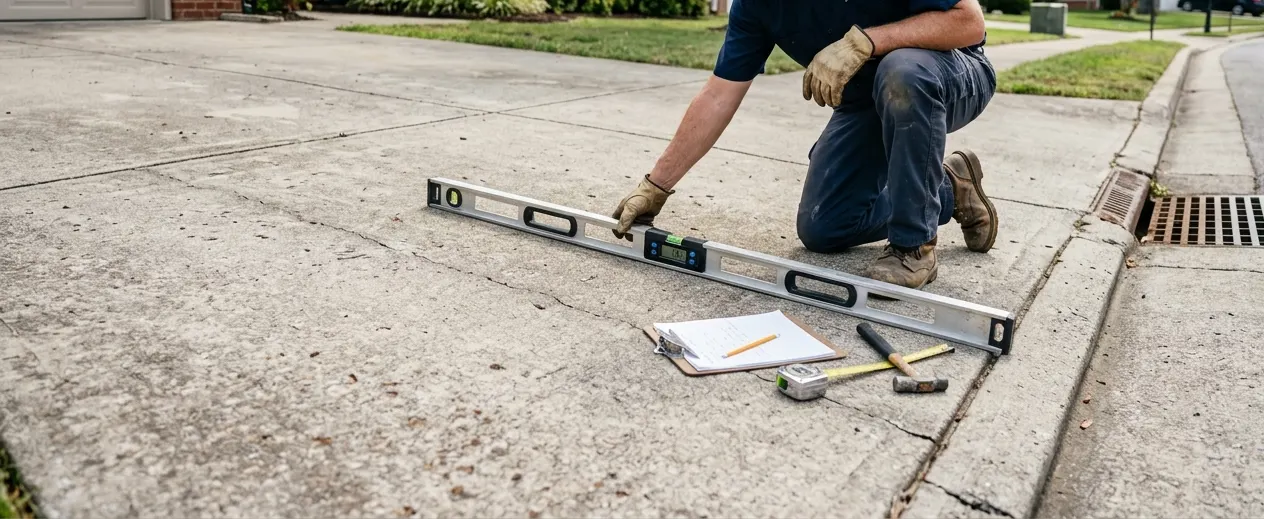
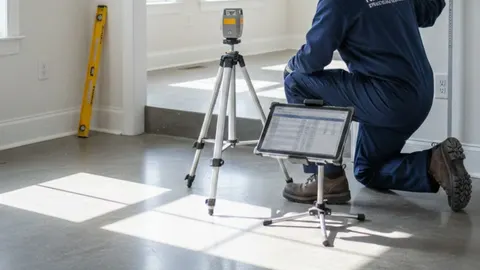
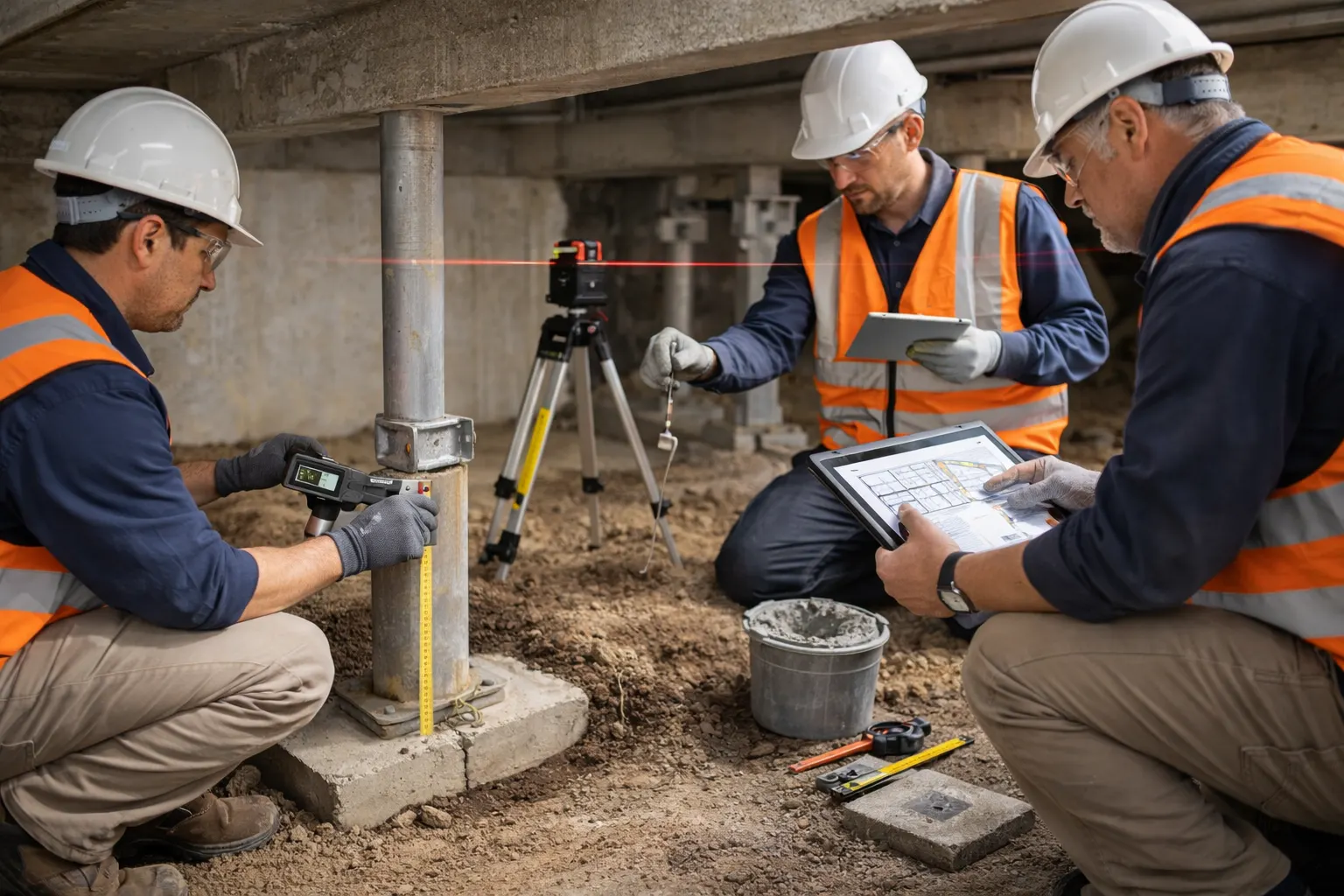
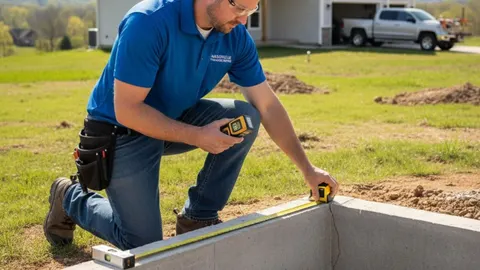
When we look at water pooling on concrete, we measure where the high and low points actually are instead of judging the slope by eye.
Is Standing Water on Concrete Actually a Problem?
A shallow puddle that dries up quickly is different from water that sits for hours or comes back after every rain. Persistent standing water deserves attention. In cold weather, water sitting on or soaking into concrete can cause freeze-thaw damage. Water expands when it freezes, and repeated soaking and freezing leads to cracking and flaking on the surface. Standing water also leaves stains, dirt, algae, and discoloration. On walking surfaces, it’s a slip hazard.
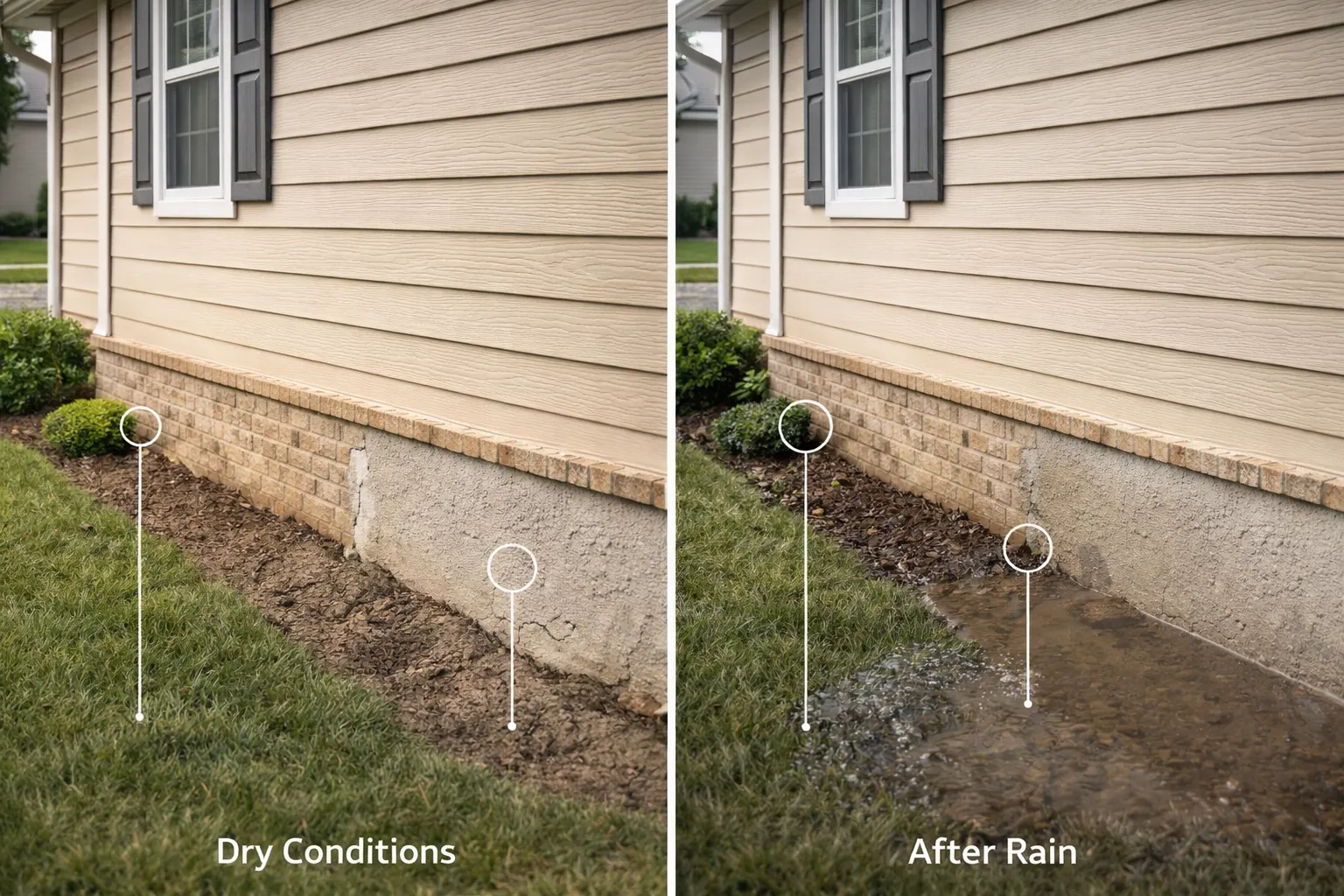
Water running toward a house is the bigger concern. A patio or walkway that sends runoff toward the foundation keeps soaking the same area, which can lead to moisture problems and wash out the soil around the building. The puddle is often just the symptom. The drainage pattern is the real issue.
How Can You Tell a Slope Problem From a Settling Problem?
The easiest clue is whether the puddle has been there from the start or showed up over time.
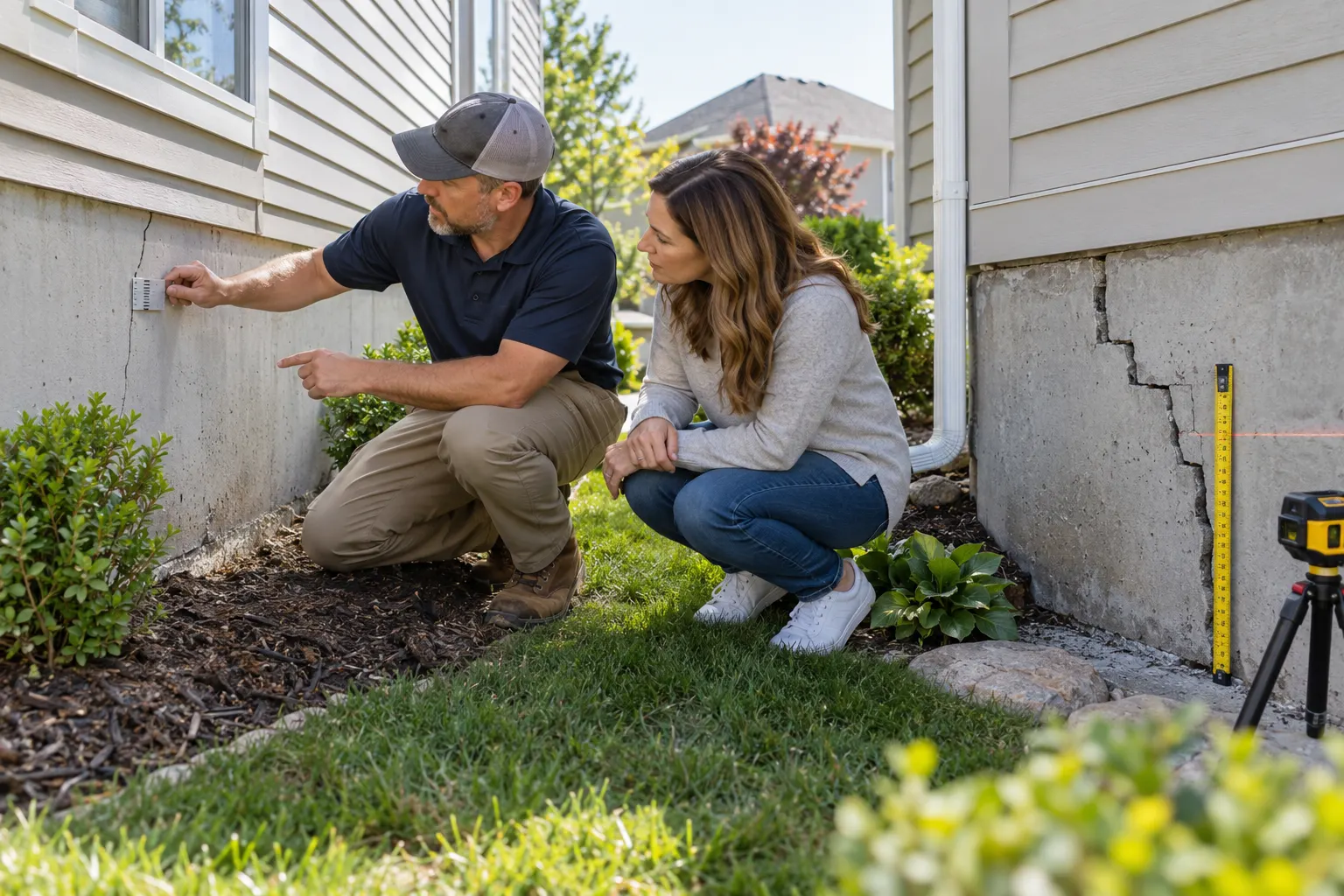
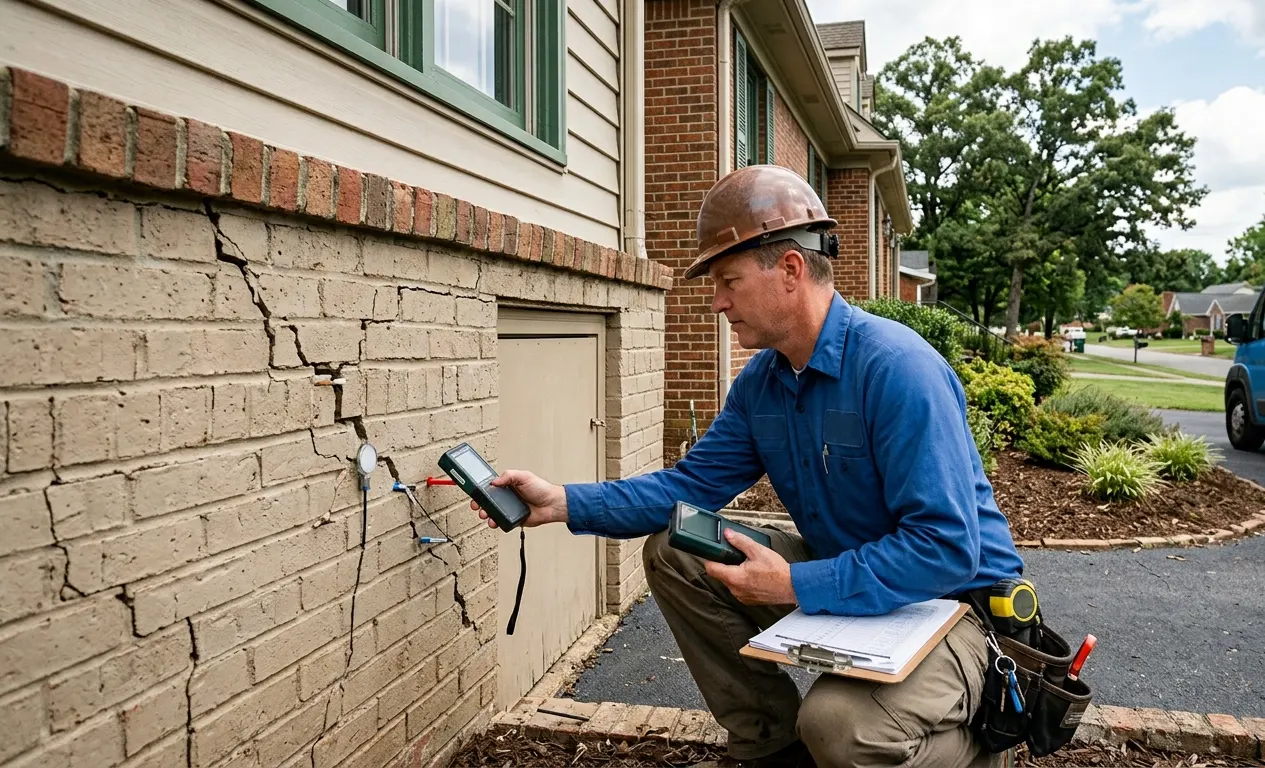
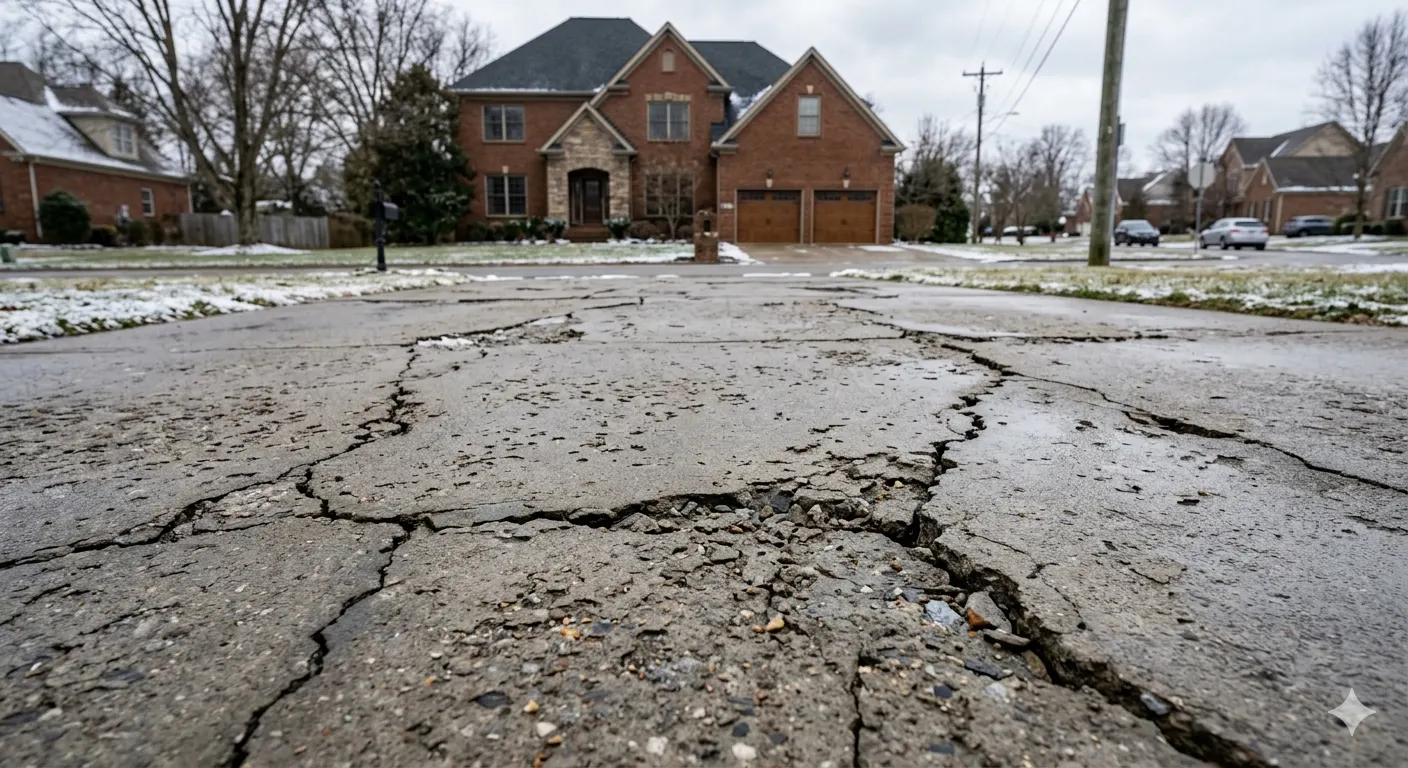
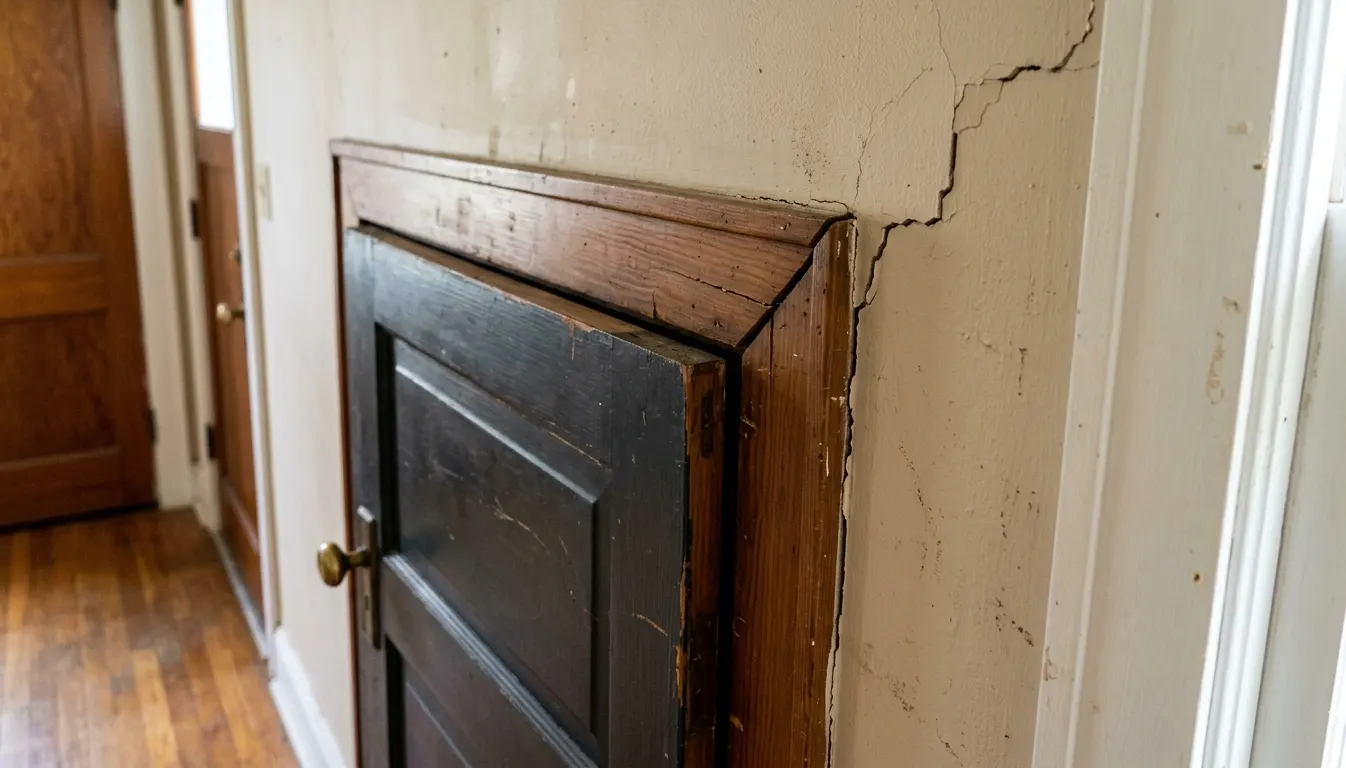
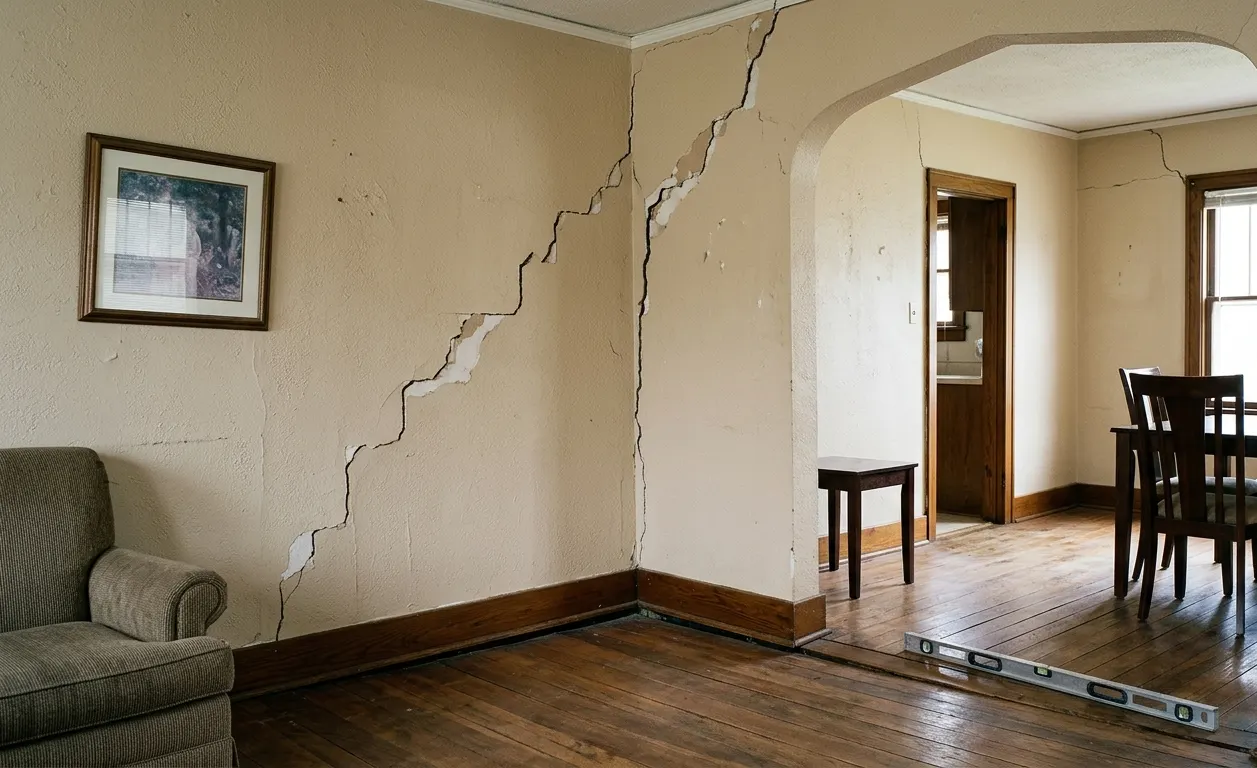
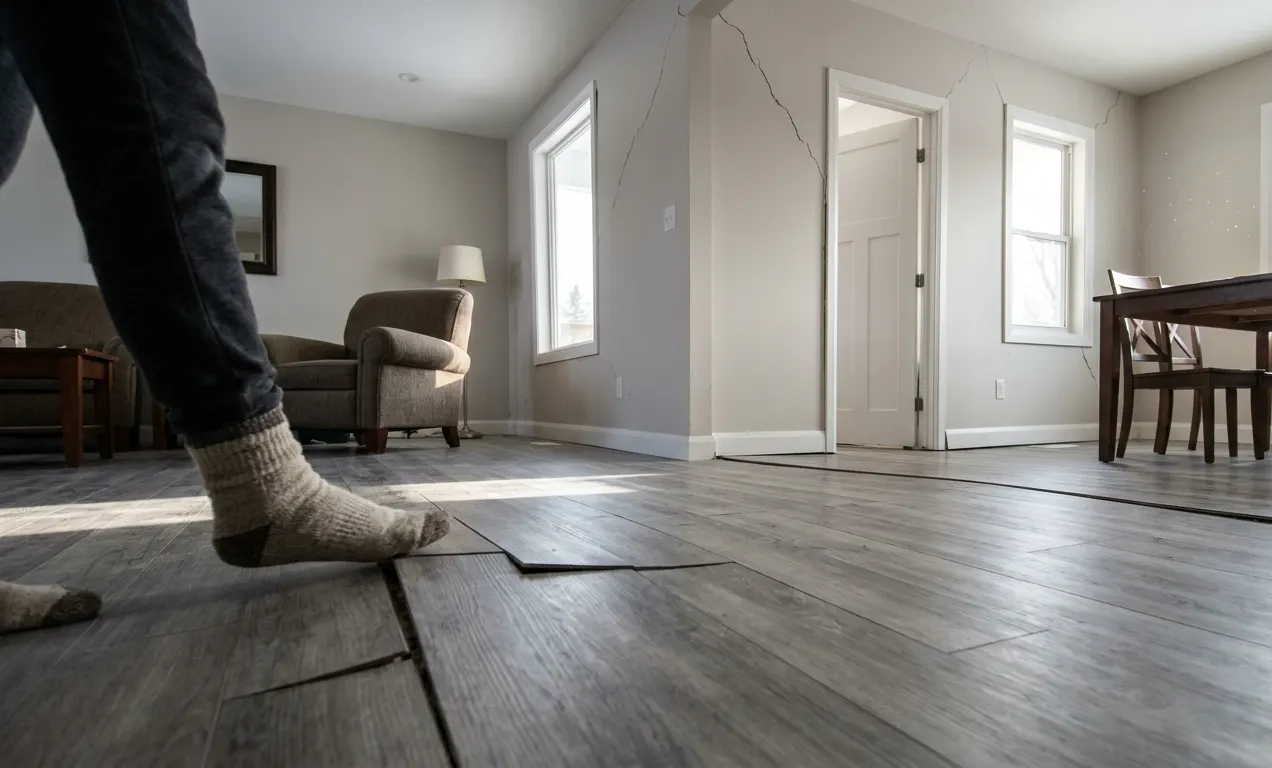
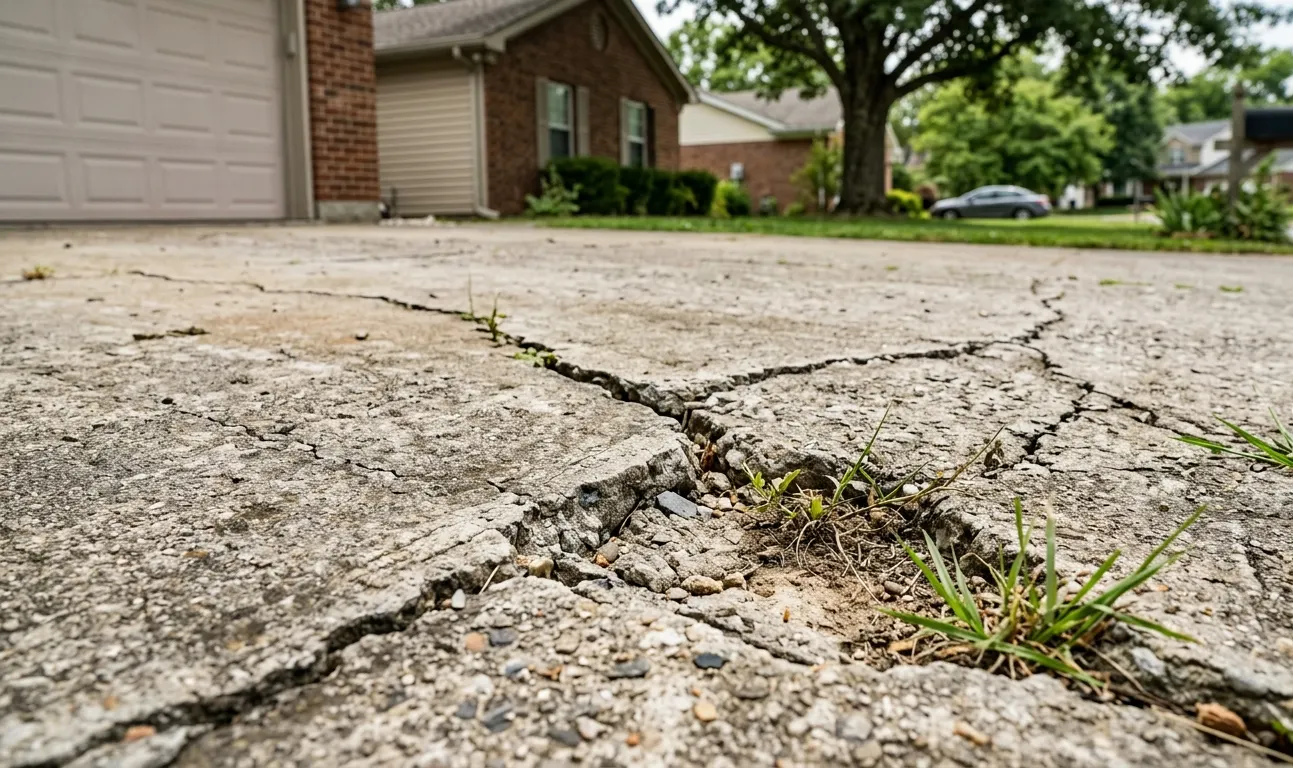
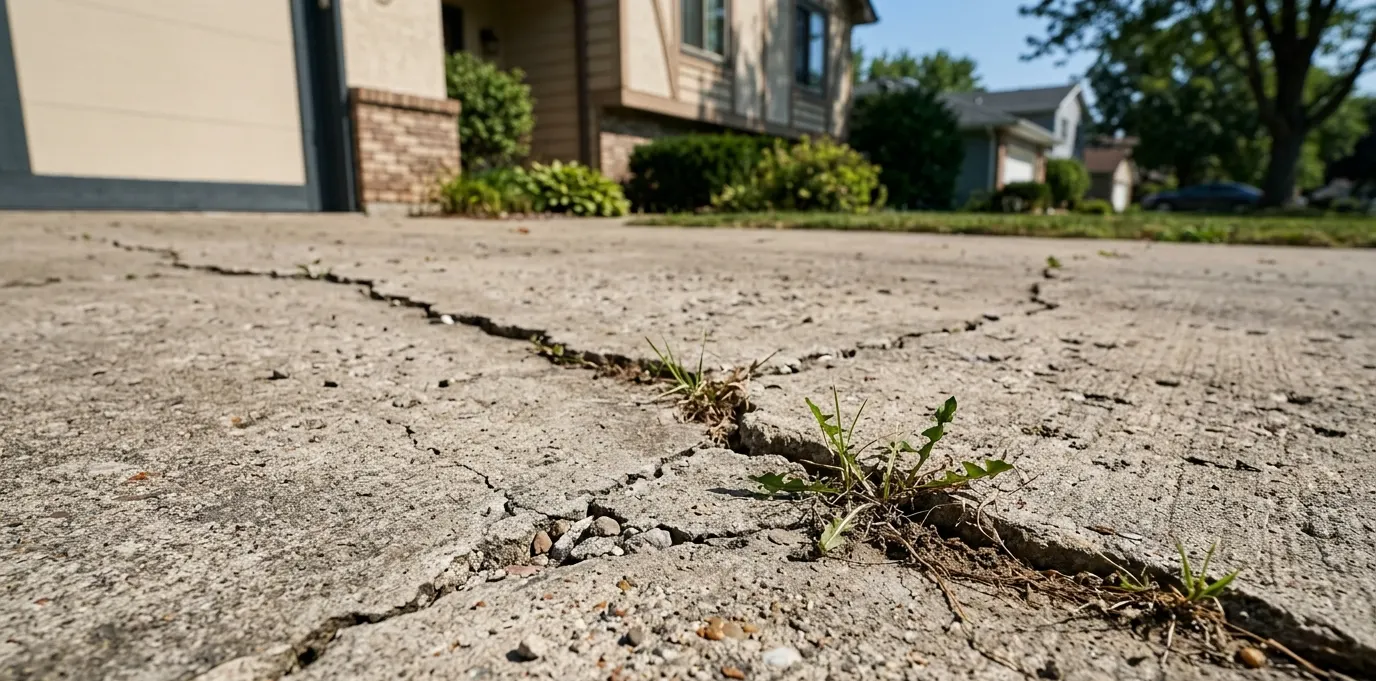
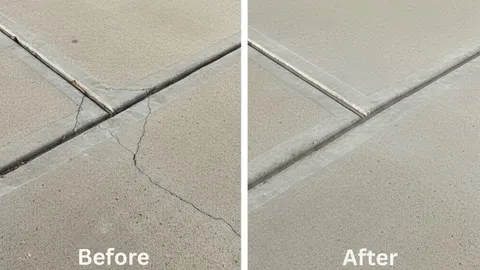
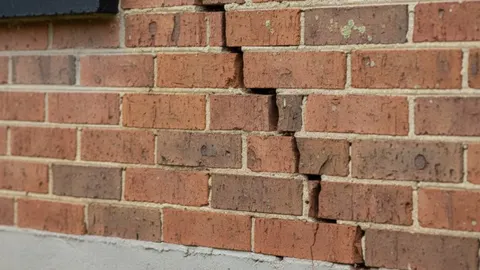
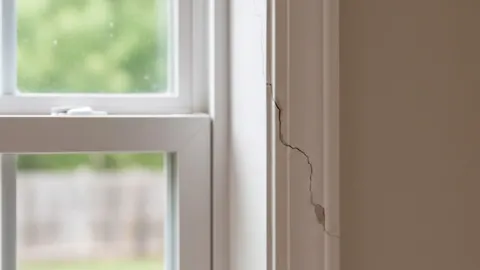
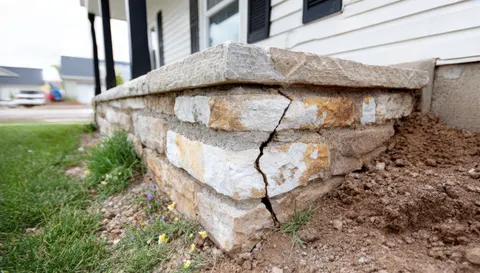
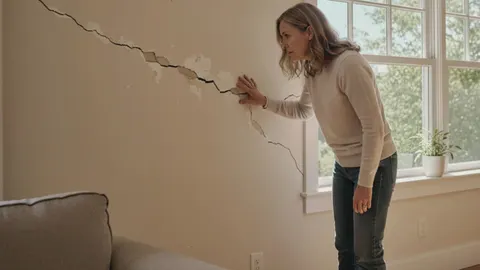
If a fairly new slab has always held water in the same spot and shows no signs of movement, the original slope or finishing is the likely cause. Settlement usually leaves more clues. One section may sit lower than the one next to it, joints may no longer line up, cracks may form near the low area, or a slab edge may drop below a step, wall, or neighboring pavement.
How the water moves tells us a lot too. If the whole slab sends water the wrong way, it’s most likely a grading or slope problem. If most of the surface drains fine but one area has formed a bowl, settlement is the more likely cause. Sometimes we also have to look past the slab, because a drainage or erosion problem nearby can explain why the concrete moved in the first place.
Driveways follow the same principles, but the fixes can be different because vehicles, larger runoff areas, and street elevations come into play. Driveway drainage solutions need their own approach.
How Can Water Pooling on Concrete Be Fixed?
The right fix depends on whether the problem is concrete that’s too high, concrete that’s too low, poor drainage, or failed support underneath.
Slab Lifting
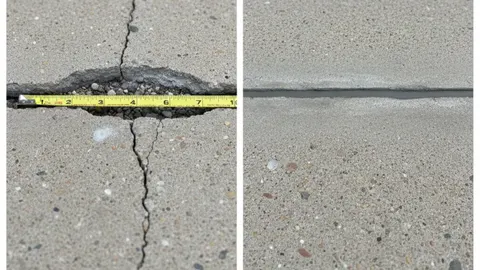
If a section has settled but the concrete is still in good shape, lifting may work. Mudjacking or polyurethane foam lifting can raise a sunken slab back toward its original height.
Lifting works best when the slab is worth saving and raising it won’t create new drainage or alignment problems. It’s a poor fit when the concrete is badly cracked, crumbling, or moving in several directions at once.
Grinding High Spots
Sometimes the problem isn’t a low area but a nearby edge that sits too high and traps the water. Grinding removes a small amount of concrete and can open up a drainage path.
It works for small height differences. Grinding can’t create a whole new slope when the entire slab was poured at the wrong angle.
Adding a Channel or Trench Drain
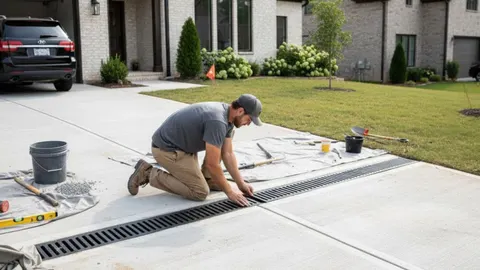
When changing the slab’s height isn’t practical, a drain can give the water somewhere to go. A channel or trench drain collects runoff at the low point and carries it to a suitable outlet.
The key is having a workable outlet. A drain with nowhere to send the water just moves the problem underground.
Resurfacing
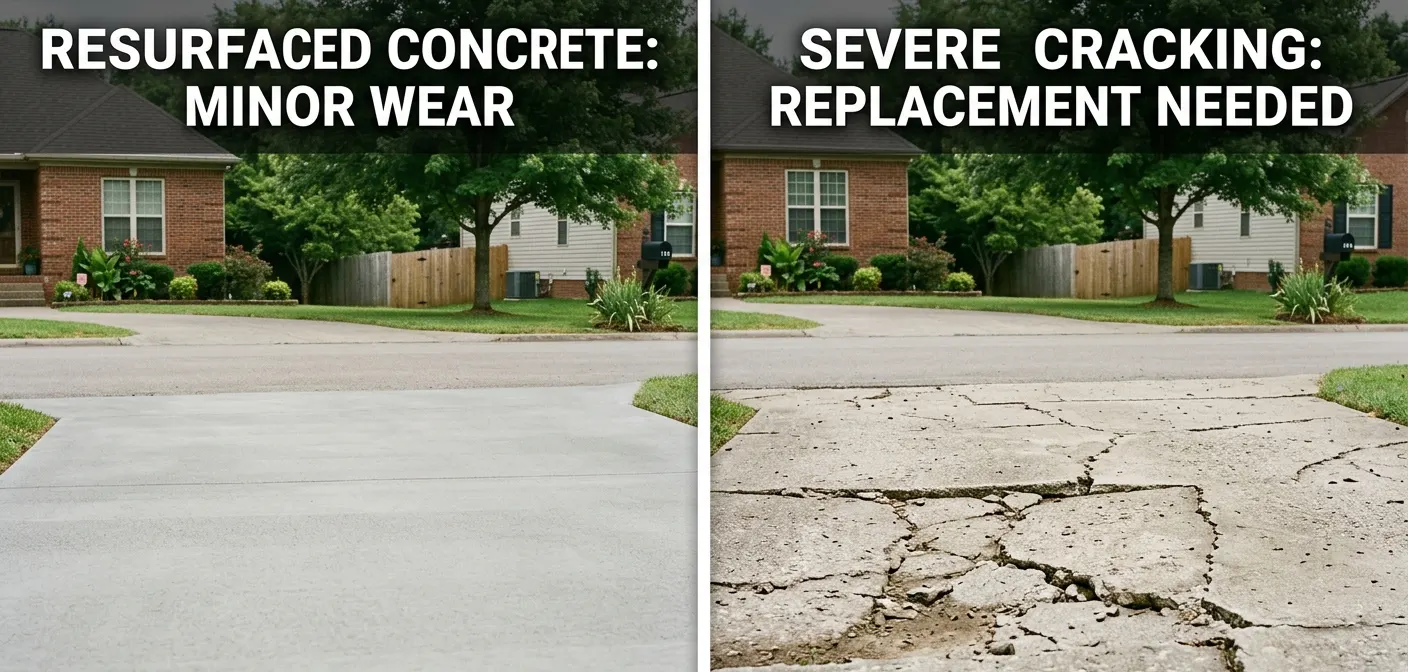
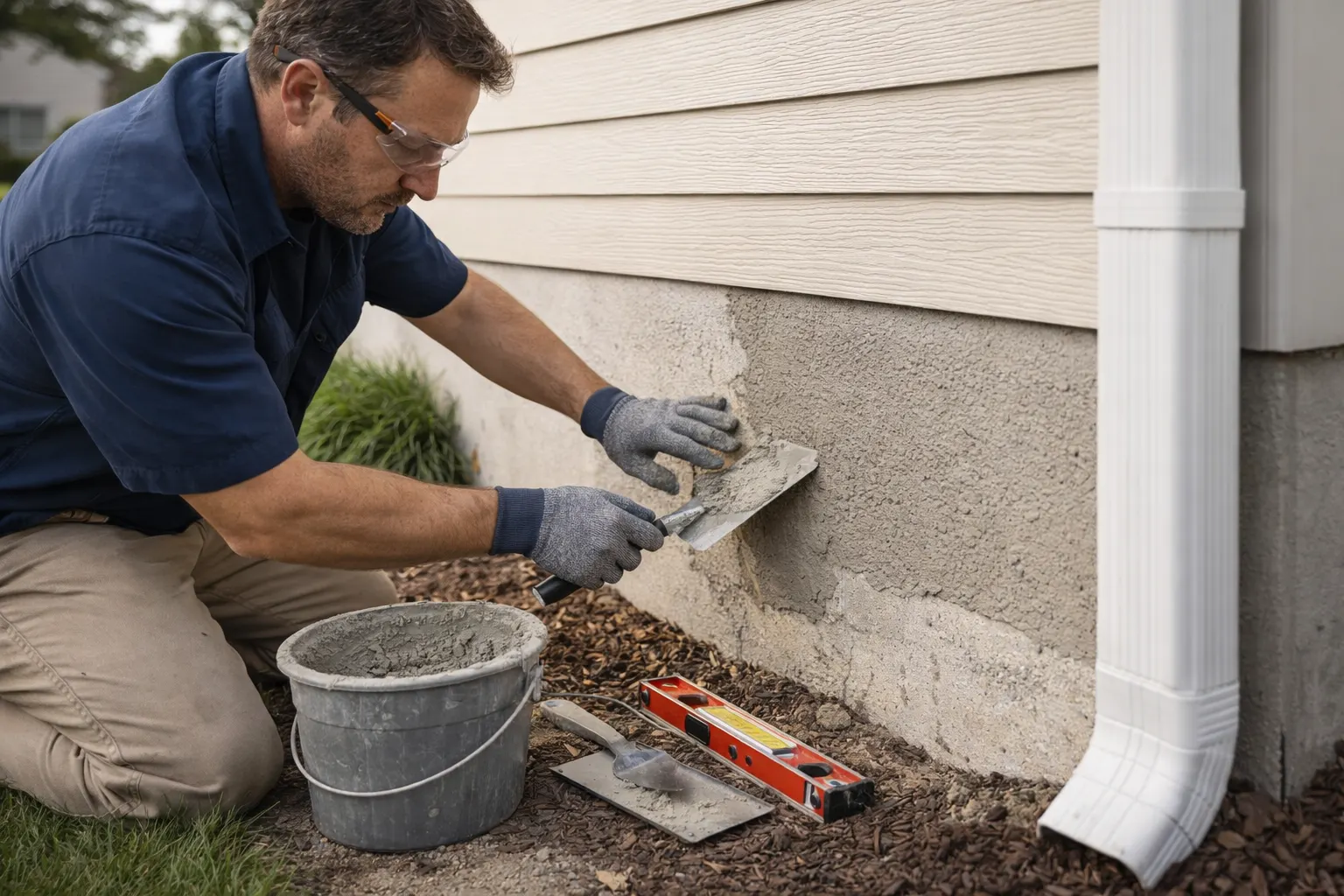
Resurfacing can smooth out minor surface dips and improve how the concrete looks, but it has limits. A thin overlay won’t fix major settlement, unstable ground, heavy cracking, or a badly designed slope. If the base is still moving, the new surface will move with it.
Replacing the Section
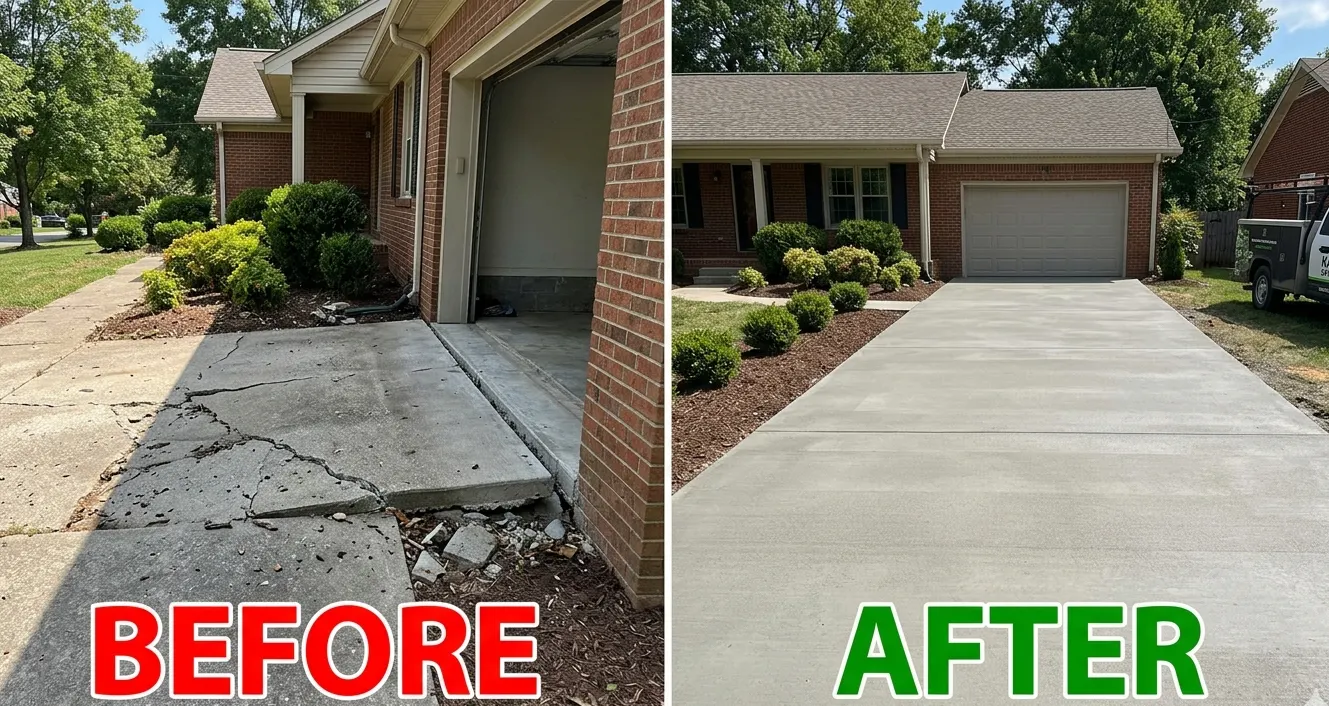
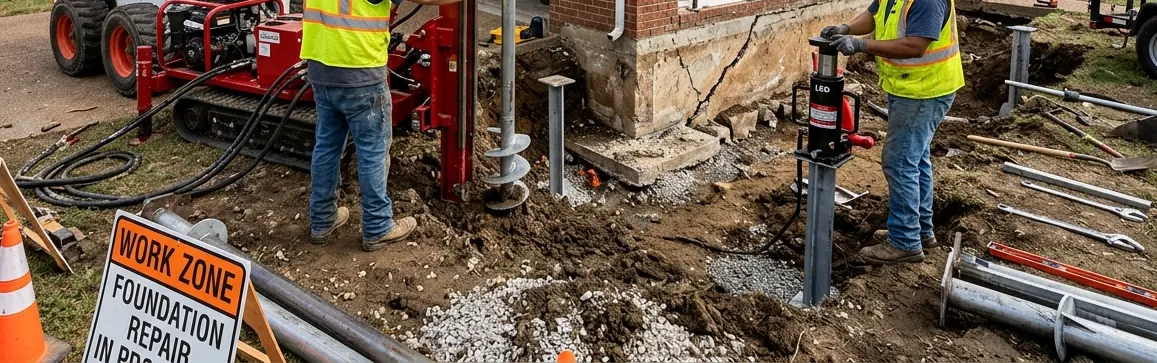
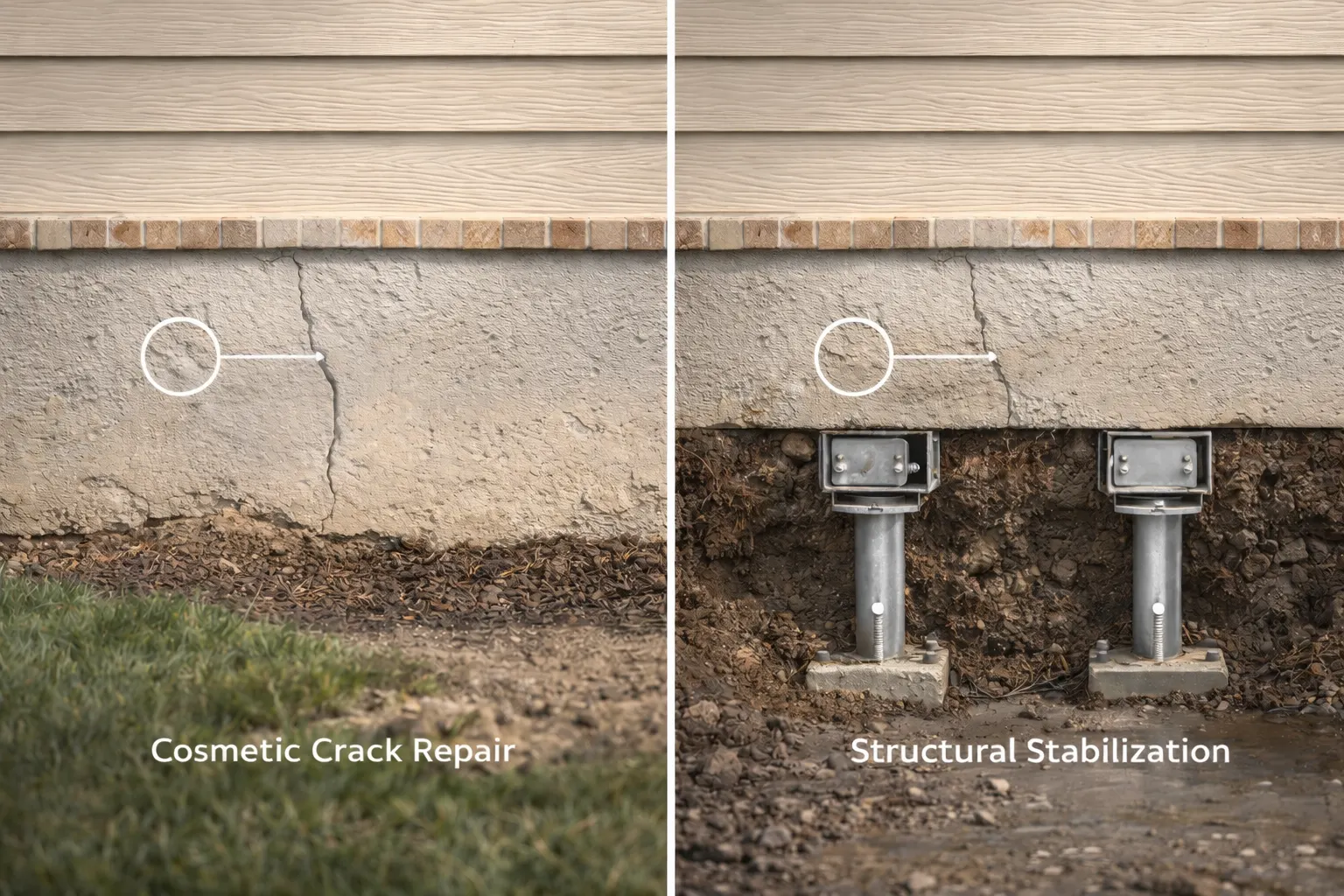
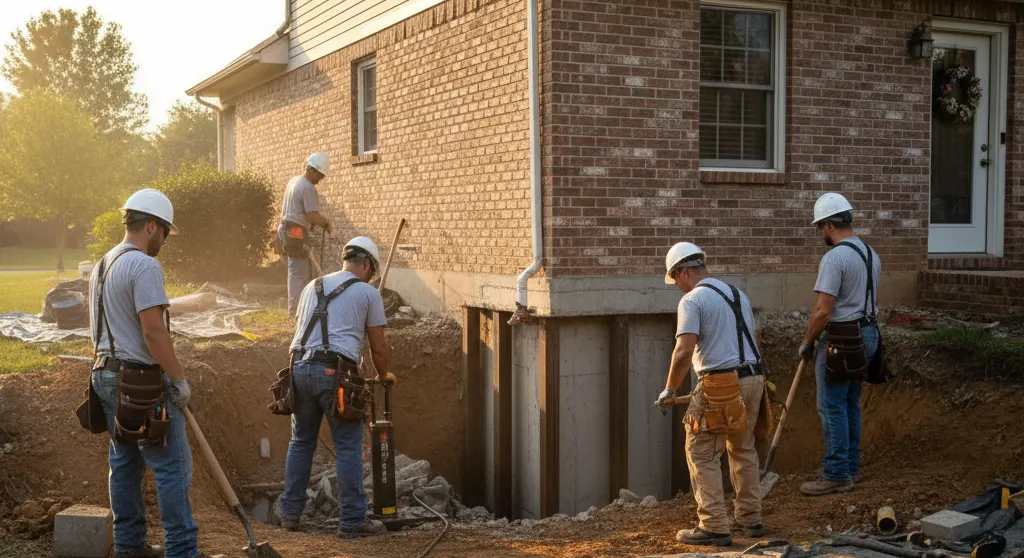
Replacement is usually the cleanest answer when the concrete is heavily cracked, badly settled, sloped the wrong way, or sitting on a failed base. Taking the section out gives us access to the ground underneath. We can fix the subgrade, rebuild the stone base, set the correct elevations, and pour the new section at a slope that actually drains. A lot of our concrete work starts with looking at those underlying conditions before deciding whether saving the existing slab makes financial sense.
The fix we use most often is foam lifting, because a lot of pooling comes from a single section that has sunk while the concrete itself is still sound. My rule of thumb: if the section is in one piece, has sunk about 2 inches or less, and the base underneath isn’t still washing out, lifting is worth trying. If the slab is broken into several pieces, has dropped more than that, or the soil under it is still moving, I’d rather remove and replace it than lift it now and pay to fix it again in a few years.
How Do You Stop Water From Pooling on New Concrete?
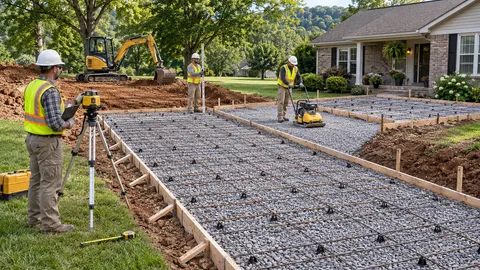
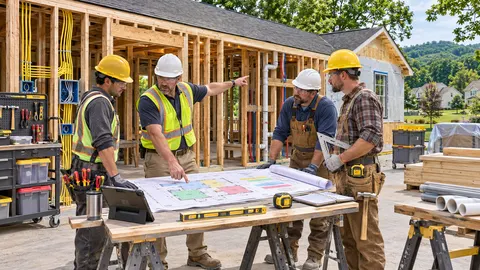
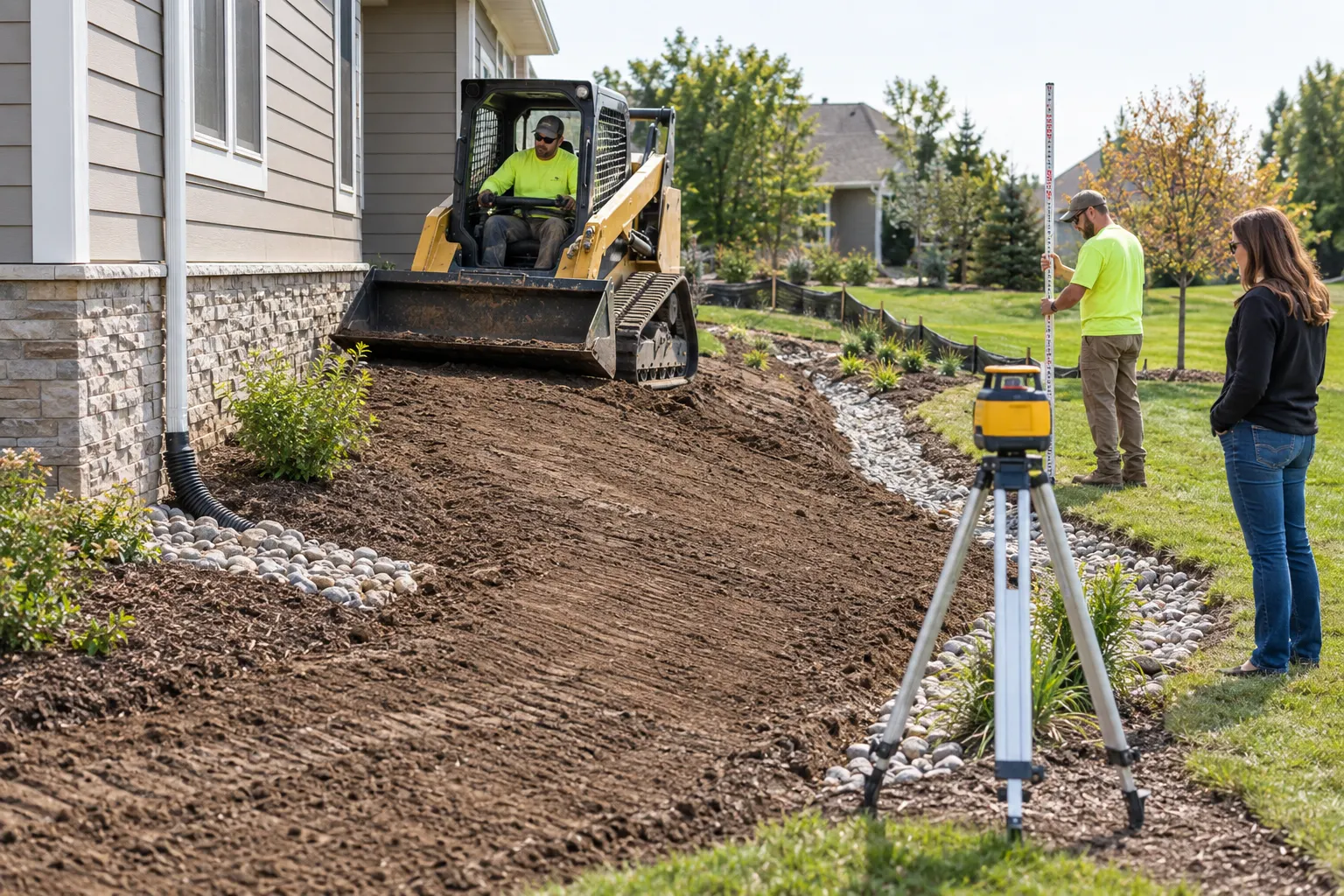
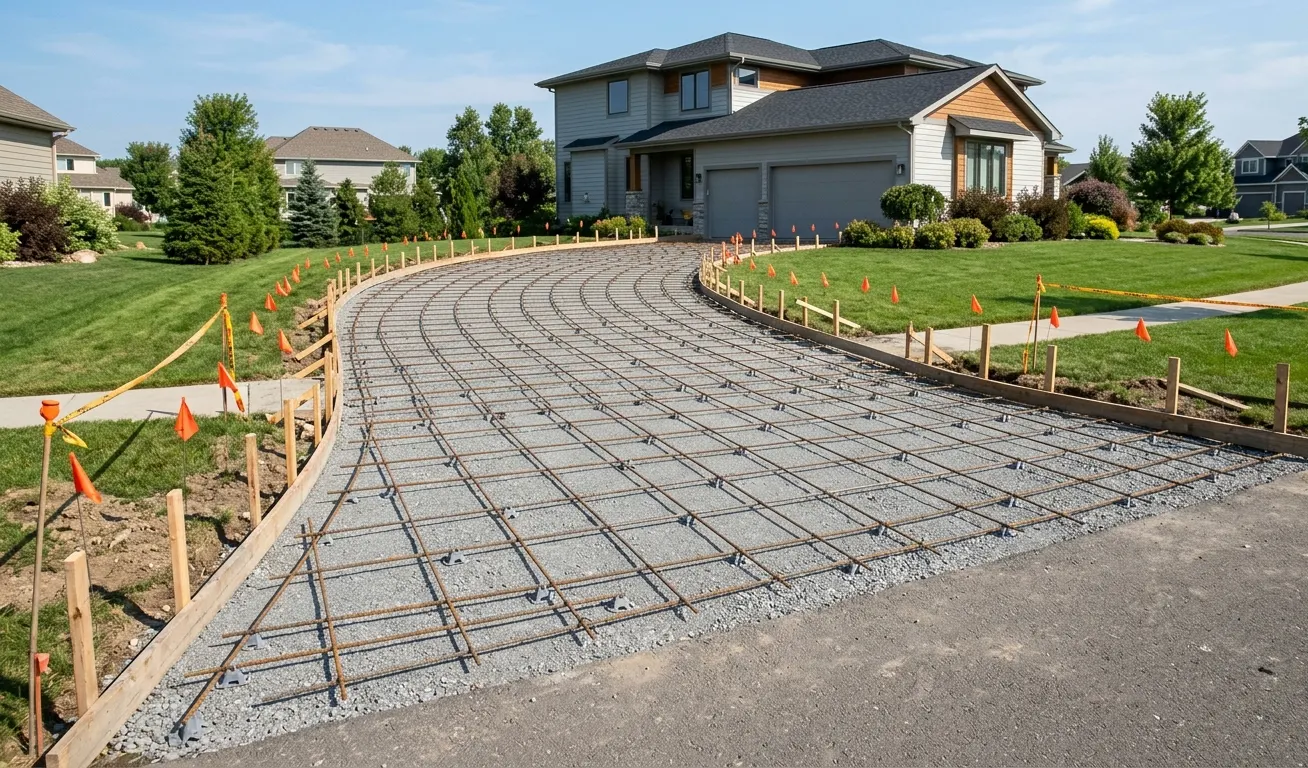
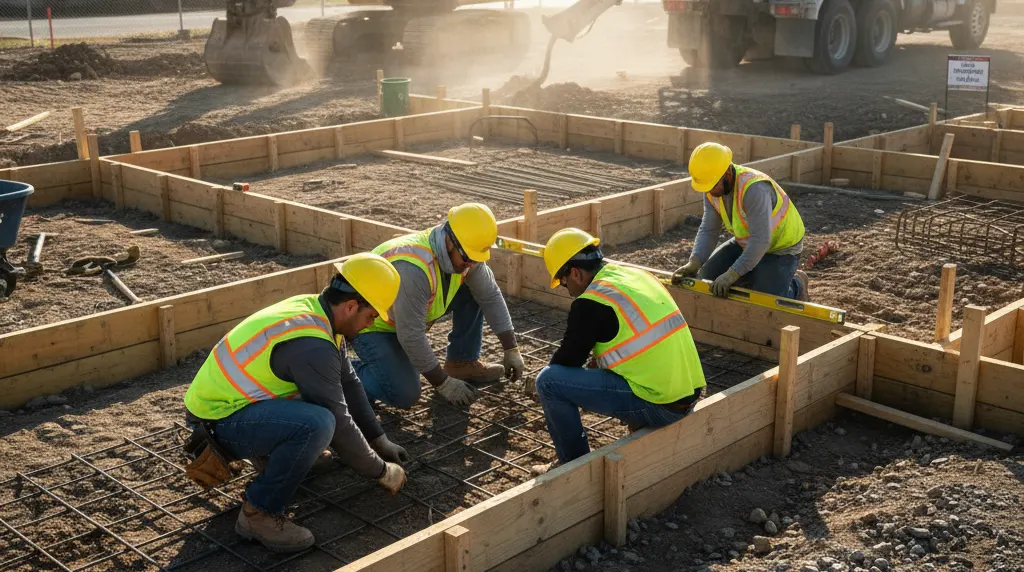
The best fix for pooling is preventing it while the slab is being built. Before we pour, we decide where the water needs to go. That means looking beyond the slab itself at the house, the surrounding grade, landscaping, retaining walls, existing drains, and any other hard surfaces that send water toward the new concrete.
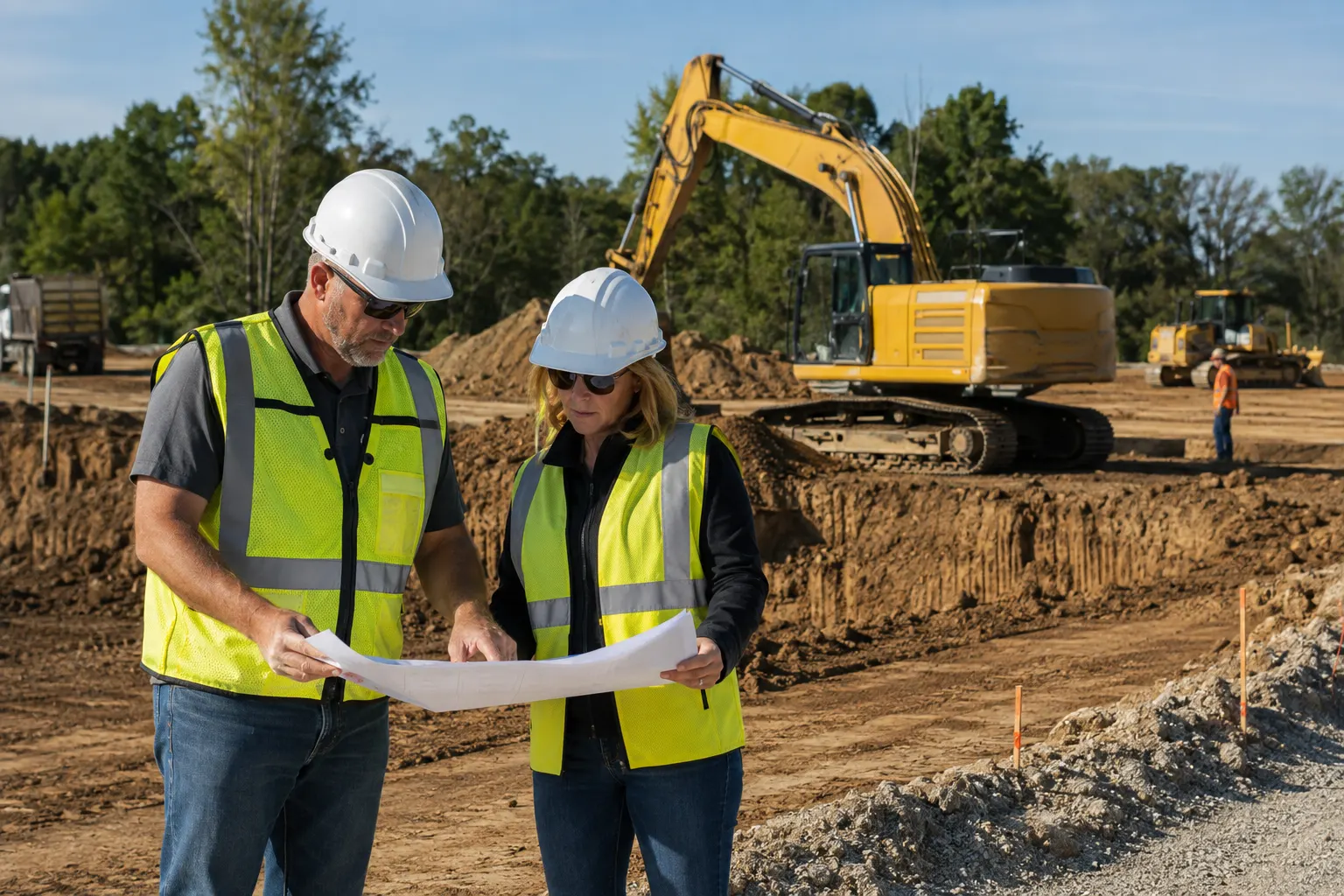
The soil underneath has to be stable and evenly compacted so no section sinks later, and a properly built stone base gives the slab consistent support. The forms then set the finished heights and slope before the concrete arrives. Drain locations should be planned before the pour, not added later in reaction to a puddle. On large slabs, we pay extra attention to valleys and transitions where water from several directions meets. Good construction doesn’t mean promising that rain will never leave a brief wet spot anywhere. It means a clear drainage path and no permanent low spots that trap water after every storm.
Should You Repair Pooling Concrete or Replace It?
If the concrete is structurally sound and the height problem is small, a repair is usually worth considering. A settled but otherwise healthy slab may be a good candidate for lifting, a small high spot can be ground down, and a channel drain can handle runoff that has nowhere to go.
Replacement makes more sense when several problems overlap. If the slab is badly cracked, several areas have settled, the slope runs toward the building, or the base underneath has failed, fixing one puddle may only put off a bigger repair.
That’s why I wouldn’t pick a repair based only on the water you can see. We need to know why the water is there.
Fix the Drainage Problem, Not Just the Puddle
Water pooling on concrete is usually telling you something about the slab’s height or the ground holding it up. Sometimes the fix is small. Other times the slab has moved enough that rebuilding the base and replacing a section is the better long-term answer. We look at the whole drainage path before recommending one option over another, because I don’t want to move water from one problem area into another. If your patio, walkway, garage apron or commercial slab keeps holding water after it rains, contact us for a quote . We’ll check the slope, settlement, drainage, and condition of the slab, and explain which repair makes sense for what’s actually happening.