Foundation Settlement vs Foundation Failure: What's the Difference?

A crack suddenly appears above a doorway. One floor feels slightly lower than the other. A window that used to open easily now sticks. The first thought is often the same: Is the foundation failing? Understanding Foundation Settlement vs Foundation Failure can help separate normal movement from signs that deserve a closer look. At GK Construction Solutions, we know how stressful foundation changes can feel, especially when homeowners are unsure whether they are seeing ordinary settling or something more serious. Some movement can happen as soil and building materials adjust. The concern increases when movement is uneven, continues over time, or begins affecting several parts of the home. For homeowners researching foundation repair Nashville, the goal should not be to assume the worst. It should be to identify what is changing, determine why it is happening, and decide whether the foundation is still supporting the home as intended.
What Is the Difference Between Foundation Settlement and Foundation Failure?
Foundation settlement is movement that occurs when the soil beneath a structure compresses, shifts, or adjusts, while foundation failure is a more serious condition in which the foundation is no longer adequately performing its structural role. Some settlement can be minor and may stabilize without creating major structural problems. Foundation failure is more concerning because movement is often uneven, progressive, or significant enough to affect walls, floors, doors, windows, and other parts of the building. A crack by itself does not prove that a foundation has failed. The pattern, width, location, direction, and whether the crack is changing over time all matter. Other warning signs such as sloping floors, repeated cracking, sticking doors, wall separation, or visible displacement should also be considered. The key difference is not simply whether movement exists. It is whether that movement has stabilized or whether it is continuing to interfere with the foundation's ability to support the home properly.
Is Foundation Settlement Normal?
Some foundation settlement can be normal, particularly as a newer structure and the soil beneath it adjust. Small cosmetic cracks may appear in drywall or finishes without indicating serious structural damage. What matters is whether the movement stabilizes. A thin crack that remains unchanged for years is different from one that keeps widening over several months. The same is true for a door that has always fit slightly tightly compared with several doors suddenly becoming difficult to close. Settlement becomes more concerning when it is uneven or progressive. Rather than judging the foundation from one isolated symptom, homeowners should watch for patterns and changes over time.
What Is Foundation Failure?
Foundation failure means the foundation is no longer supporting the structure as intended. This can happen when part of the foundation moves significantly relative to the rest of the home or when structural components are unable to resist the loads placed on them. Possible foundation failure symptoms include widening cracks, noticeably sloping floors, wall separation, bowed foundation walls, large masonry cracks, or doors and windows becoming increasingly misaligned. These signs do not all have to appear together. A professional evaluation is useful when changes continue to worsen, or several symptoms develop at the same time.
What Are the Signs of Normal Foundation Settlement?
Minor settlement may appear as small hairline cracks in drywall, limited cosmetic cracking, or slight movement that develops and then stops. The important word is stable. If a crack remains the same size and no other symptoms appear, it may be less concerning than damage that continues changing. Homeowners can take dated photos or measurements to monitor visible cracks. If you are unsure whether changes are becoming serious, our guide on when to call a professional for foundation issues explains which combinations of symptoms deserve closer attention.
What Are the Signs of Foundation Failure?
More serious warning signs often involve progressive or uneven movement. These may include stair-step cracks in masonry, widening foundation cracks, uneven floors, doors or windows that suddenly stop fitting properly, gaps between walls and ceilings, bowed walls, or visible sections of the foundation shifting. Repeated repairs can also provide a clue. If the same drywall crack is repaired several times and continues reopening, movement may still be occurring beneath the surface. Our article on common causes of foundation damage in Nashville homes explains how moisture, drainage, and soil movement can contribute to these problems.
How Can You Tell If a Foundation Crack Is Serious?
A foundation crack should be judged by more than width alone. Location, direction, growth, moisture, surrounding movement, and other structural symptoms all matter. For example, a crack that keeps widening while nearby doors become difficult to close may be more concerning than a small stable crack with no other changes. Horizontal cracking, stair-step patterns, displacement, or cracks accompanied by bowing or floor movement deserve particular attention. The safest approach is to monitor changes and seek evaluation when the crack grows, returns after repair, or appears alongside other symptoms.
What Causes Foundation Settlement?
Foundation settlement can result from soil compression, poorly compacted fill, changing moisture levels, erosion, drainage problems, or changes in the loads supported by the soil. Soil conditions vary from one Nashville property to another, which is why broad assumptions can be misleading. The USDA Natural Resources Conservation Service provides current soil information through its Web Soil Survey, allowing users to review mapped soil characteristics for specific areas. Locally, moisture changes can influence how some soils behave over time. Our article on how Nashville soil affects foundations discusses why changing moisture and soil support can contribute to foundation movement.
What Causes Foundation Failure?
Foundation failure usually results from more serious or continuing structural conditions rather than one small event. Differential settlement is a common concern because different parts of the foundation move at different rates. Other contributors can include poor drainage, soil erosion, unstable or expansive soils, plumbing leaks, inadequate support, construction defects, or long-term water problems. Several of these factors may occur together. For example, poor grading may allow water to collect beside the foundation. That moisture can alter the supporting soil, leading one portion of the structure to move more than another. Understanding the cause is important because repairing visible cracks without addressing the movement underneath may only treat the symptom.
What Is Differential Settlement?
Differential settlement happens when one section of a foundation moves more than another. This is generally more concerning than uniform settlement because it can distort the structure. Imagine one corner of a home settling while the opposite side remains relatively stable. Walls, floors, door frames, and window openings between those points may begin shifting out of alignment. Signs can include diagonal cracks, sloping floors, sticking doors, or gaps around openings. The amount of movement, rate of change, and cause all matter when deciding whether repair is needed.
Can Poor Drainage Cause Foundation Settlement?
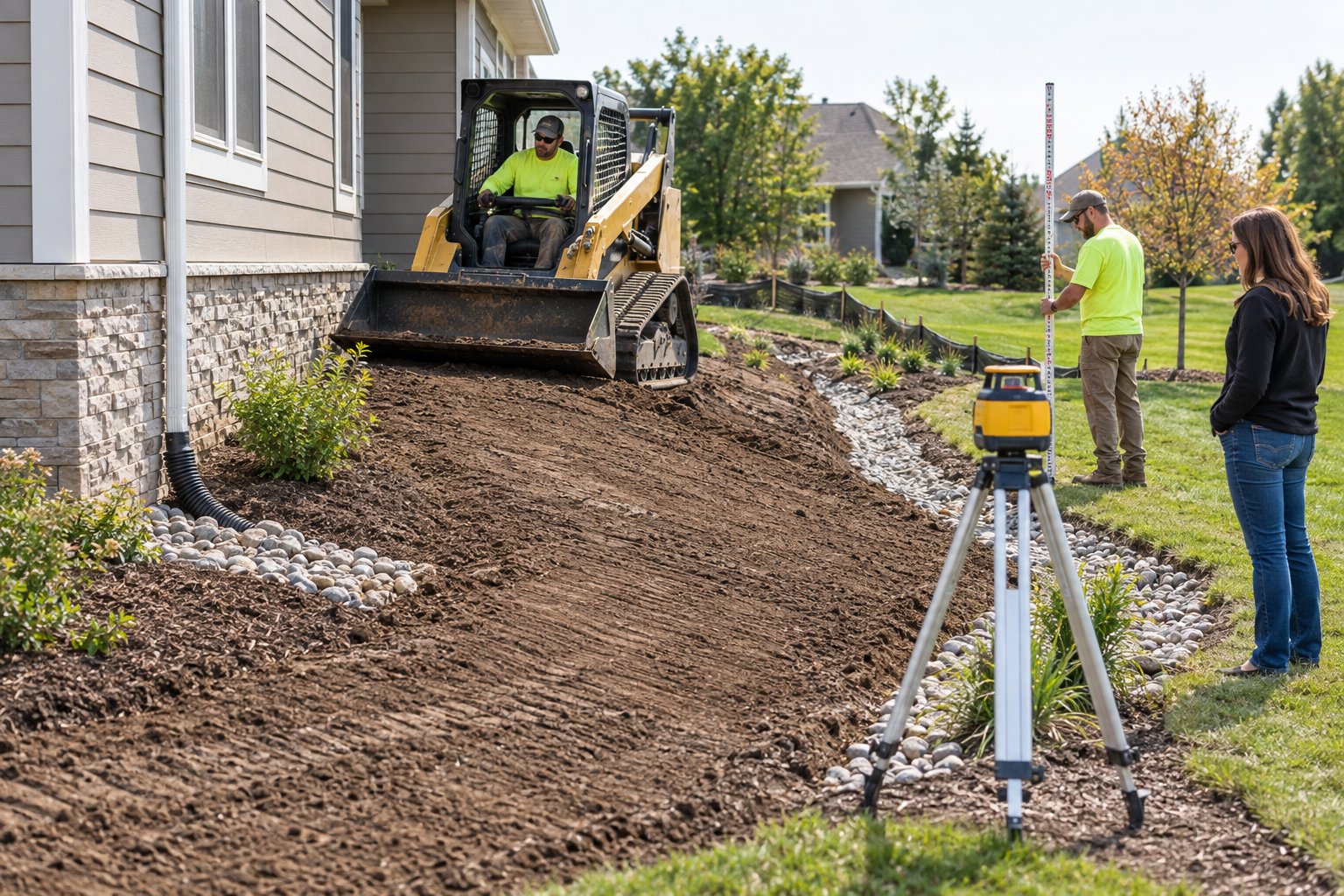
Yes, poor drainage can contribute to foundation movement by changing the condition of the soil around and beneath the home. Water collecting near a foundation can soften some soils, contribute to erosion, or create repeated wet and dry cycles. Downspouts that discharge next to the house, low areas that hold water, or surfaces that slope toward the foundation can all contribute to moisture problems. The same connection between water and soil stability appears in retaining-wall projects. Our guide to retaining walls and property stability explains why controlling runoff can matter for nearby structures too.
Can a Foundation Settle Without Failing?
Yes, a foundation can settle without failing. Some movement may occur and then stabilize without preventing the foundation from doing its job. This is why every crack should not automatically be treated as evidence of a major structural problem. The main concern is ongoing, uneven, or progressive movement. When symptoms continue changing, the structure may need evaluation to determine whether the foundation is still adequately supported.
What Happens If Foundation Movement Keeps Getting Worse?
Continued movement can lead to larger cracks, more noticeable floor slopes, misaligned doors and windows, separation between building components, and more complicated repairs. The sooner the cause is understood, the easier it is to decide what level of intervention is appropriate. For homeowners considering foundation repair, the important step is determining whether the movement is still active.
Can Foundation Settlement Be Repaired?
Yes, foundation settlement can often be addressed when the underlying cause and extent of movement are understood. Possible solutions may involve improving drainage, stabilizing soil, reinforcing structural components, or using piering or underpinning systems where appropriate. The correct approach depends on the foundation type and site conditions. Not every home needs the same repair. That is why diagnosis should come before choosing a repair method.
When Should You Call a Foundation Professional?
Call a professional when foundation symptoms are clearly worsening, appearing in several areas, or affecting how the home functions. Examples include widening cracks, significantly uneven floors, doors that suddenly stop closing properly, wall separation, visible foundation movement, or damage that repeatedly returns after cosmetic repairs.
Homeowners do not need to wait for severe damage. An evaluation can determine whether the movement is minor, stable, or something that needs structural attention.
How Is Foundation Movement Evaluated?
A foundation evaluation typically looks at the home as a complete system. That may include crack patterns, floor elevation changes, wall alignment, doors and windows, exterior grading, drainage, foundation type, and signs of movement around the property. The history matters too. A crack that appeared ten years ago and never changed tells a different story from one that doubled in size over six months. Professionals may also consider soil conditions and how water moves around the site. The goal is to identify both the visible symptom and the condition causing it.
Does Foundation Settlement Always Require Repair?
No, minor stable settlement does not always require structural repair. Some homeowners may only need to monitor the condition or address drainage and moisture management. Repair becomes more likely when movement is active, uneven, significant, or affecting structural performance. This distinction is important because foundation work should solve a real problem rather than be performed simply because a small crack exists.
How Much Does Foundation Repair Cost?
Foundation repair costs vary widely because different problems require different solutions. Factors can include the foundation type, amount of movement, repair method, accessibility, number of support points, drainage corrections, structural damage, and whether engineering is required. A small localized repair and a large stabilization project are not comparable. For anyone researching foundation repair, an on-site evaluation is usually more useful than relying on a broad online price range. Our guide to foundation repair versus foundation replacement also explains why the scope of work can vary so significantly.
Why Choose GK Construction Solutions for Foundation Concerns?
At GK Construction Solutions, we look beyond the visible crack. Foundation movement is often connected to soil, drainage, grading, moisture, and other site conditions. We consider those factors together so homeowners can understand why a problem may be occurring rather than receiving a recommendation based on one symptom alone.
Our work includes foundation-related construction, concrete, excavation, drainage-related site work, masonry, and other structural services. We also believe clear explanations matter. Homeowners should understand what was found, whether movement appears active, and why a particular solution is being recommended before deciding how to proceed.
Frequently Asked Questions About Foundation Settlement and Failure
Is Foundation Settlement the Same as Foundation Damage?
No. Settlement refers to movement, while foundation damage is the physical effect that movement may cause. A foundation can experience minor settlement without serious structural damage. The concern increases when settlement becomes uneven, continues over time, or causes widening cracks, floor slopes, or misaligned openings. The amount and pattern of movement matter more than the simple fact that settlement occurred.
Can a House Settle After Many Years?
Yes, foundation movement can occur years after construction if soil, moisture, drainage, plumbing, or site conditions change. A new drainage problem, prolonged wet or dry conditions, erosion, or leaking pipes can alter the support beneath part of the home. Older homes should therefore not be assumed immune to settlement simply because initial construction settlement happened decades earlier.
Are Vertical Foundation Cracks Serious?
Not always. Some vertical cracks can result from normal material shrinkage or limited settlement, while others may deserve evaluation depending on their width, location, displacement, moisture, and whether they are growing. A vertical crack that remains unchanged is different from one that continues widening or appears alongside sloping floors and sticking doors.
Are Stair-Step Cracks a Sign of Foundation Failure?
Stair-step cracks can be associated with differential foundation movement, particularly in masonry, but they do not automatically prove complete foundation failure. Their significance depends on how wide they are, whether they are progressing, and whether other symptoms are present. Growing stair-step cracks, visible displacement, or nearby door and floor problems should be evaluated.
Can Foundation Failure Happen Suddenly?
It can, but many foundation problems develop gradually as soil support, drainage, or structural conditions change over time. Homeowners often notice small symptoms first, such as recurring cracks or doors becoming harder to close. Rapid movement or sudden major cracking deserves prompt attention because it may indicate a significant change in support conditions.
Does Foundation Repair Stop All Future Movement?
Not necessarily. A properly selected repair is intended to address a specific structural problem, but homes and soils can still respond to changing moisture, drainage, and environmental conditions. Long-term performance often depends on maintaining proper drainage and managing the conditions that contributed to the original movement.
Final Thoughts
Understanding Foundation Settlement vs Foundation Failure helps homeowners avoid two common mistakes: ignoring meaningful warning signs and assuming every small crack means the home is failing. Some settlement can be minor and stable. Foundation failure is more serious and typically involves movement that is progressive, uneven, or significant enough to interfere with structural support. The most useful clues are changes over time. Cracks that widen, floors that become more uneven, doors that stop closing, or several symptoms appearing together deserve closer attention. Soil and drainage conditions matter too, especially when moisture changes affect the support beneath the home. The goal is not to assume the worst. It is to understand what is actually moving, why it is happening, and whether the foundation is still doing its job.
Get Clarity Before Assuming the Worst
If cracks, uneven floors, or other signs of movement are making you question what is happening beneath your Nashville home, contact GK Construction Solutions. We can evaluate the visible symptoms, grading, drainage, and surrounding site conditions to help you understand whether you are dealing with minor settlement or a foundation problem that needs attention.
Follow our social media pages below: