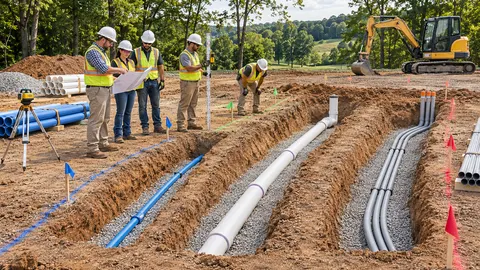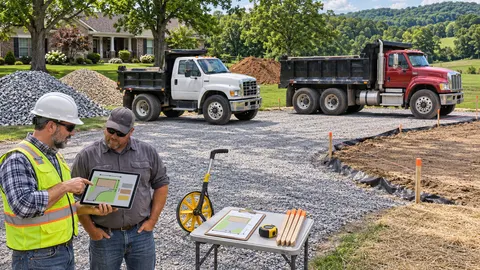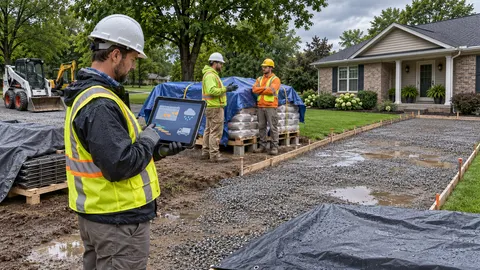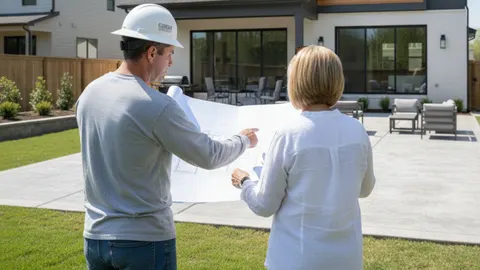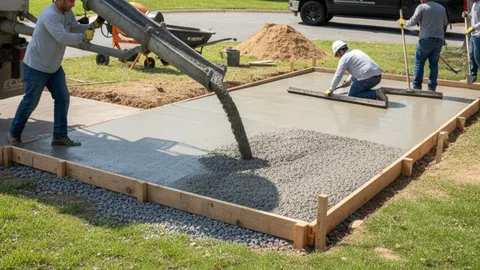
Most slab problems start under the concrete, not in it. Good site preparation for concrete means clearing the area, excavating to the right depth, grading for drainage, compacting the soil, installing a stable stone base, and setting forms and reinforcement before the concrete truck ever arrives.
When we price a driveway, patio, or slab, homeowners sometimes look at the prep line on the estimate and wonder why so much work happens before any concrete shows up. The reason is simple: concrete needs even, solid support underneath it.
If the soil settles, holds too much water, or was never compacted properly, the slab moves with it. Once that happens, even the best concrete mix can’t make up for what’s underneath. That’s why we treat ground prep as part of the concrete job at GK Construction Solutions , not as something to rush through on the way to the pour.
Why Does Prep Matter More Than the Concrete Mix?
A strong mix still needs stable ground. If the subgrade moves or settles unevenly, the slab has to bridge those weak spots, and cracking or sinking usually follows. Concrete is very strong under compression, but it isn’t designed to float over soft soil. Picture a driveway poured partly over firm ground and partly over loose fill. Those two areas settle at different rates, and the concrete on top has to absorb the difference.
The National Ready Mixed Concrete Association’s Concrete in Practice guidance says the same thing: remove soft spots and topsoil, compact the soil or fill under the slab evenly, and shape the subgrade so it drains. The mix matters, but it can’t fix poor excavation, soft soil or bad drainage underneath it.
Clearing and Excavation: What Comes Out and How Deep?
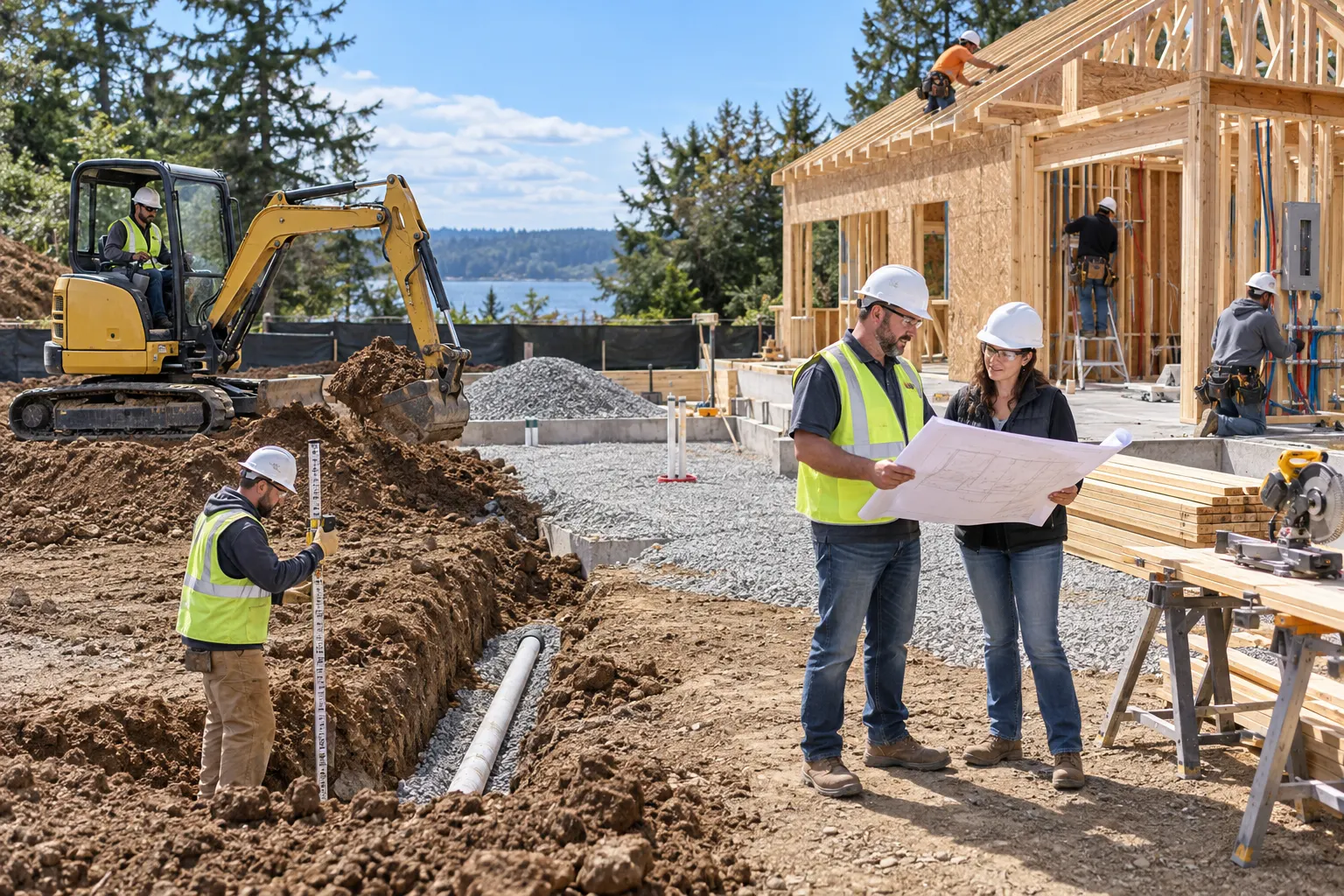
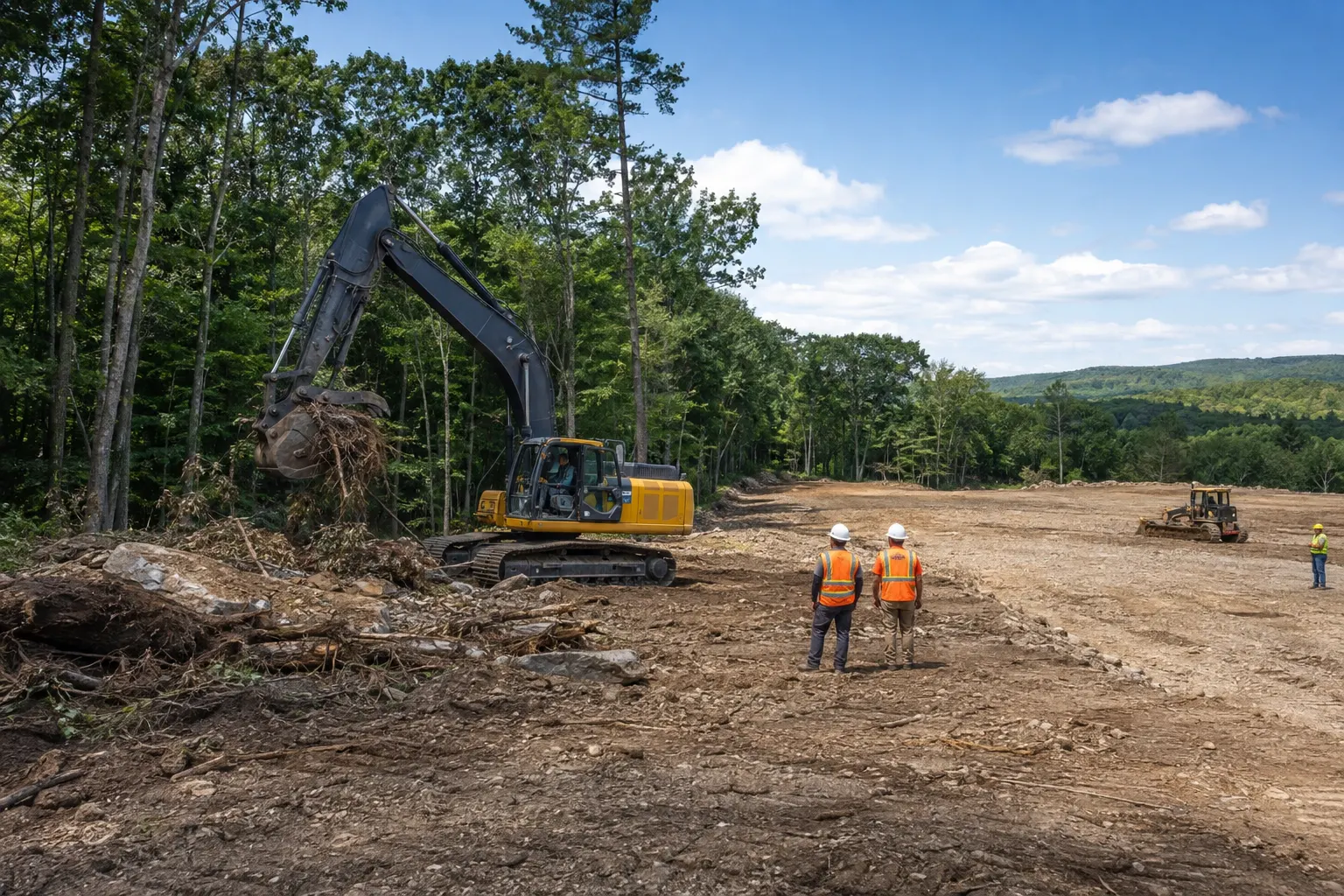
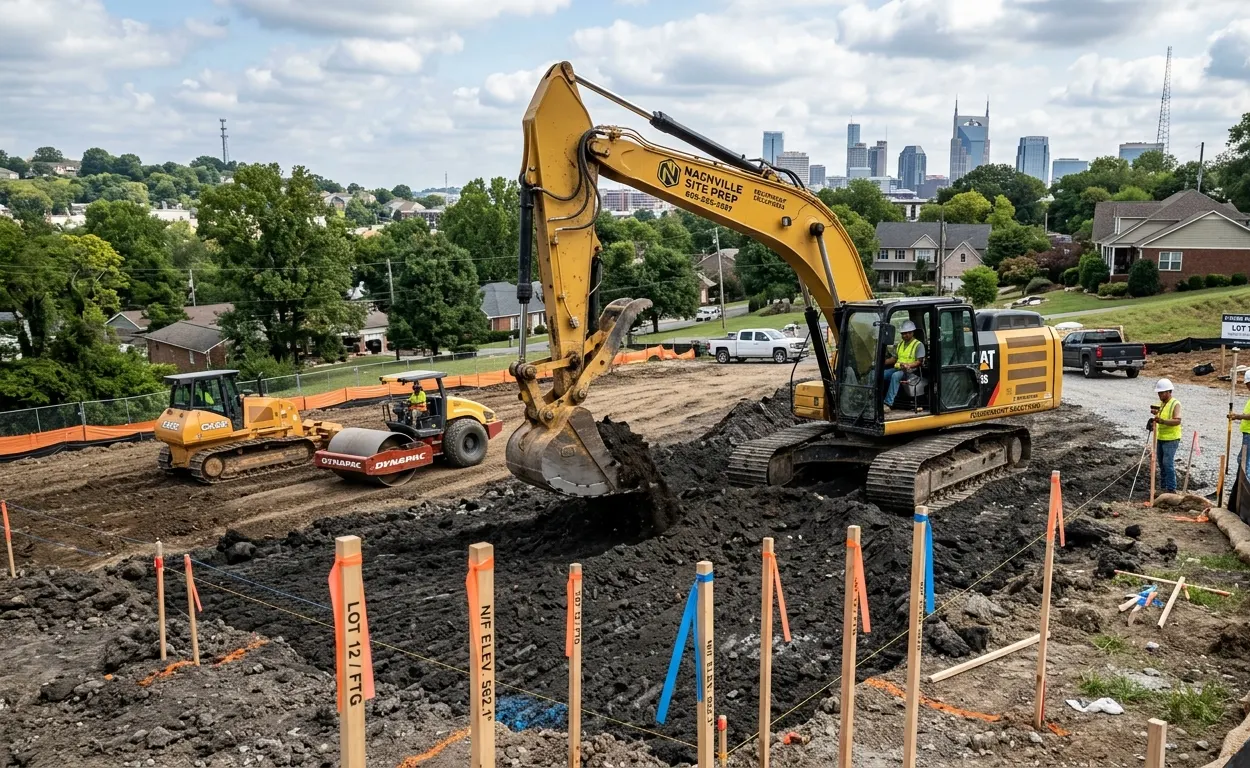
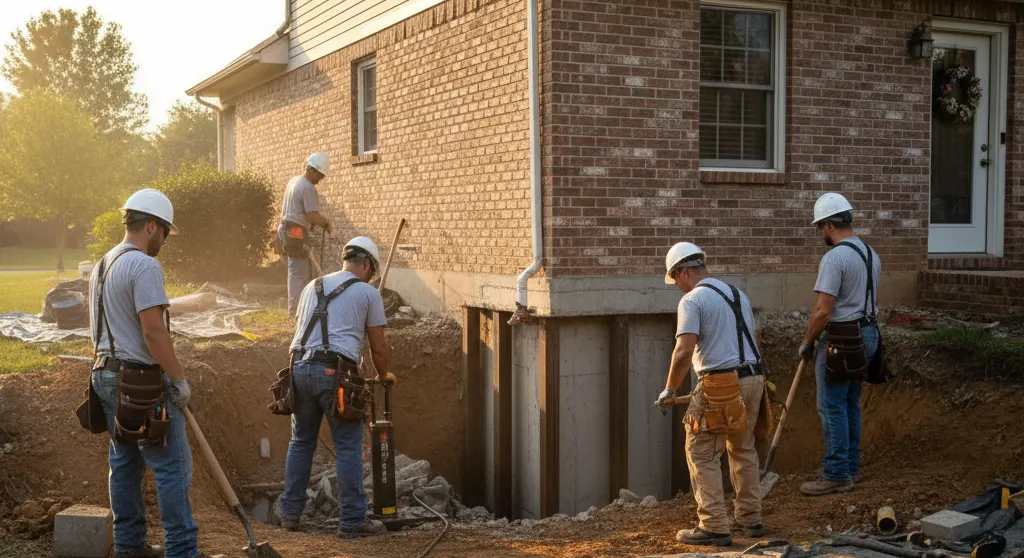
The first step is removing anything that shouldn’t be holding up concrete. That usually means grass, roots, organic topsoil, loose material, old pavement, and any soft or unstable soil we find.
How deep we go depends on the project. A backyard patio that only sees foot traffic doesn’t need the same build-up as a driveway carrying vehicles, and a slab under heavier loads may need more excavation, a thicker base, more concrete or more reinforcement.
We also have to plan for the finished height. The excavation needs room for the compacted subgrade, the stone base and the concrete, while the finished slab still lines up with doors, sidewalks, driveways, landscaping and drainage points. That’s why excavation is never just “dig down a few inches.” We’re building the whole slab section from the bottom up.
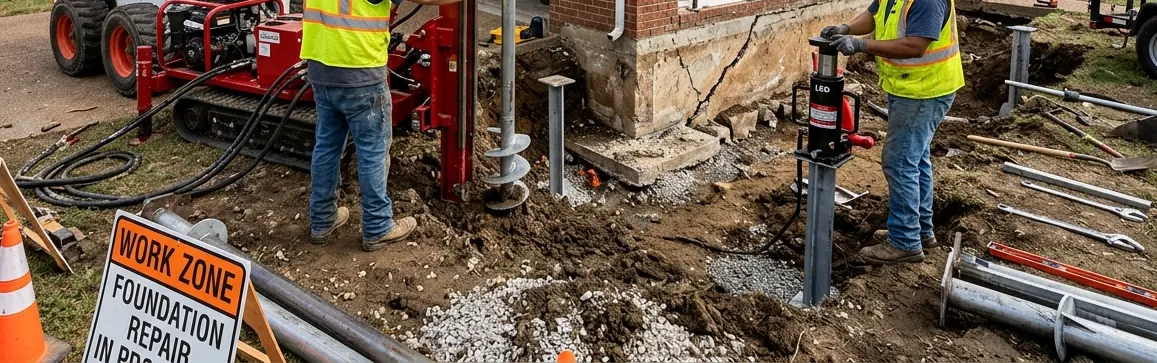
If we hit soft soil, covering it with stone isn’t always the answer. Weak material may need to come out and be replaced with suitable compacted fill before the base goes in. A lot of our concrete work starts with exactly this kind of prep, because the finished surface is only as dependable as what’s holding it up.
Grading: How Do You Make Water Run Away From the Slab and House?
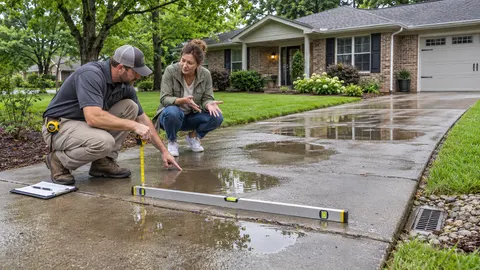
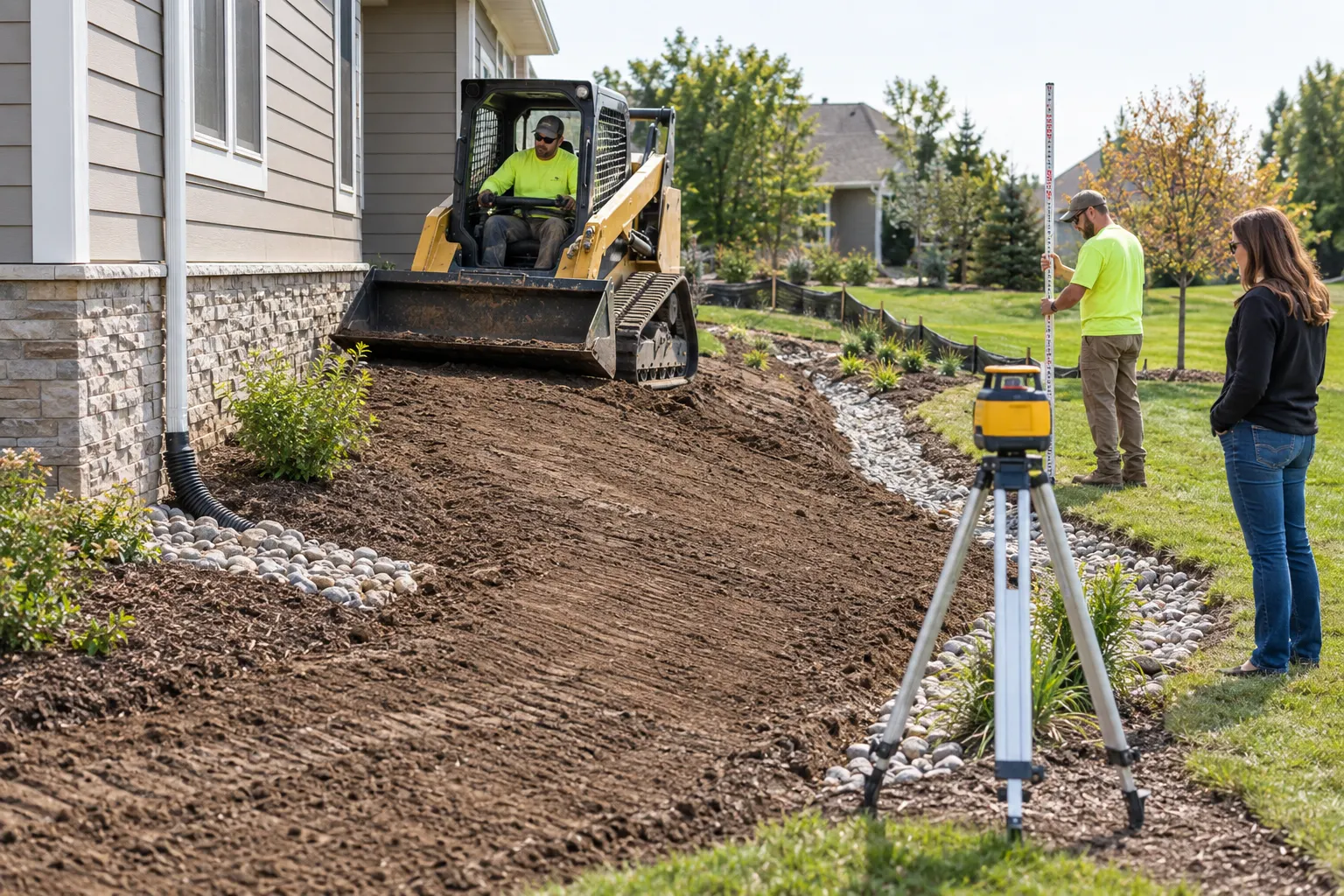
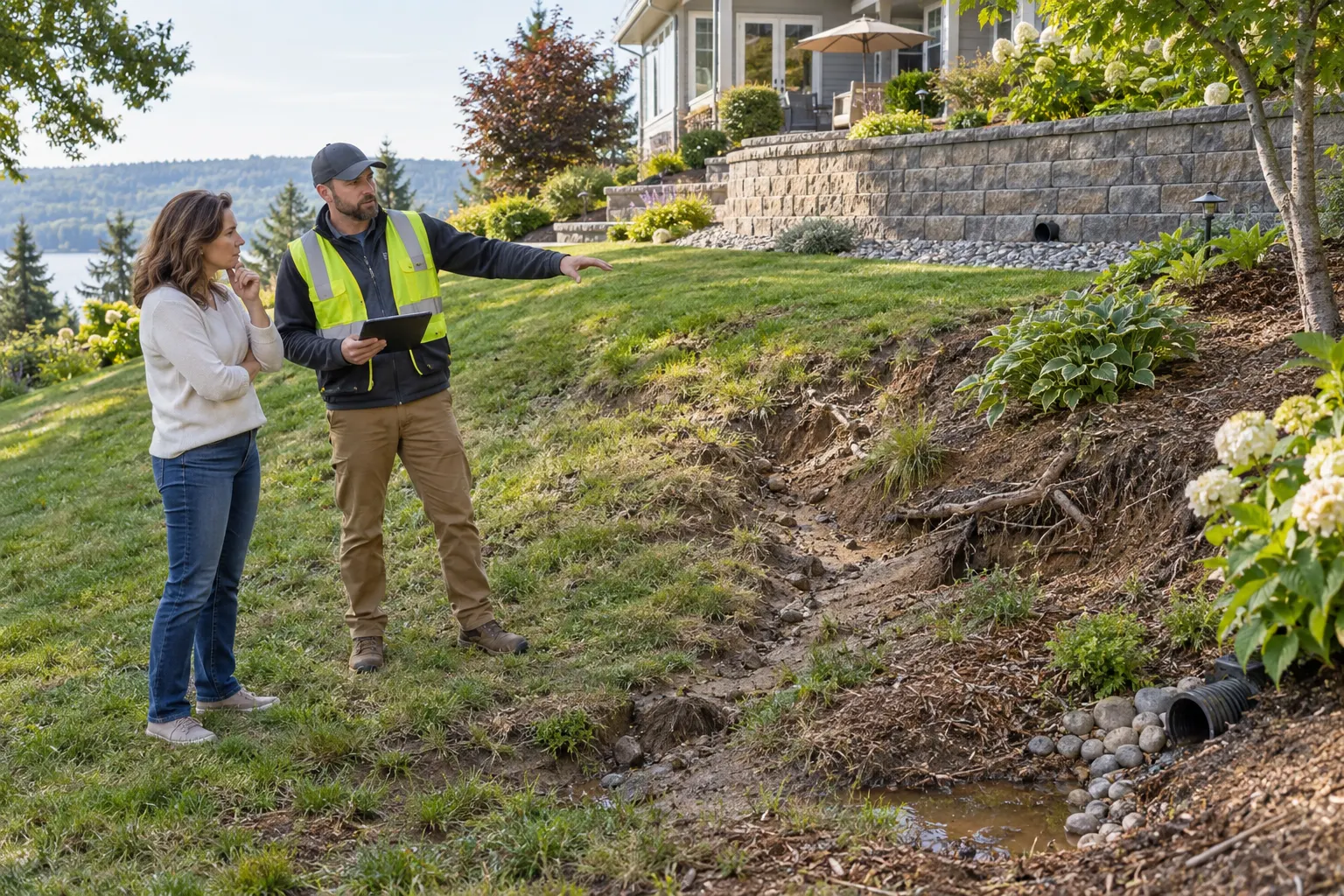
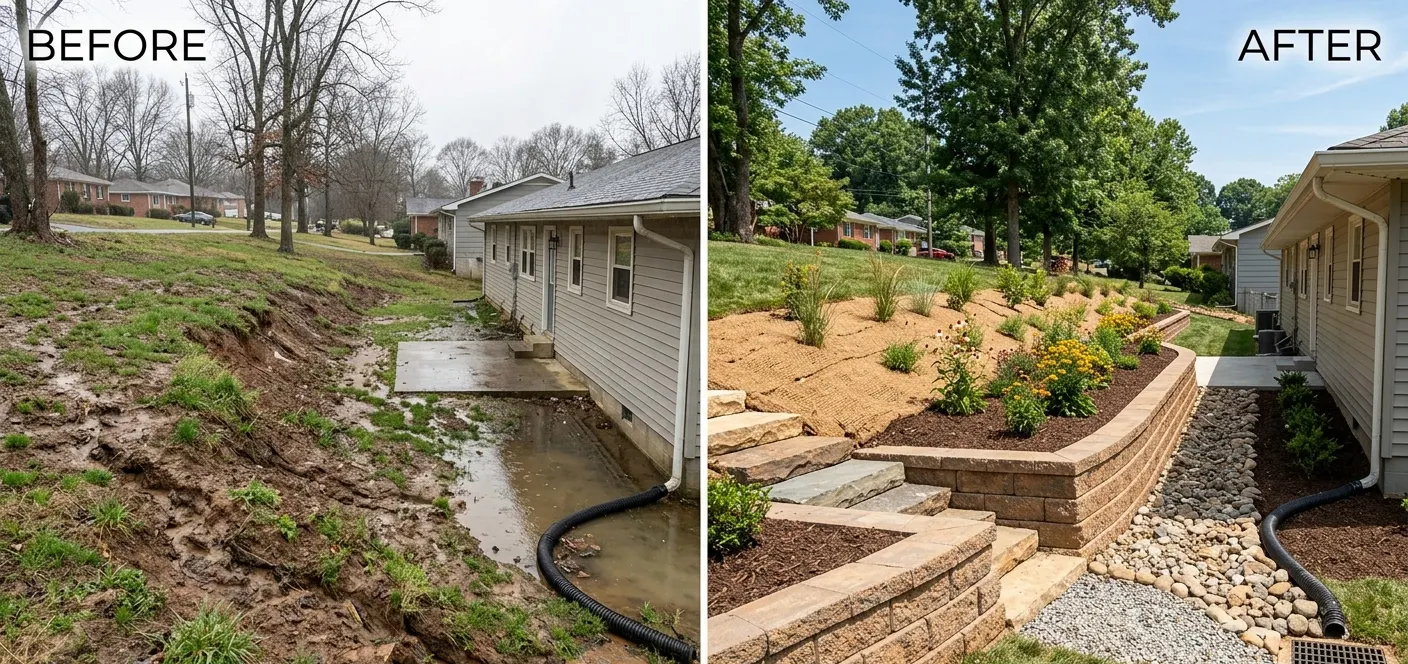
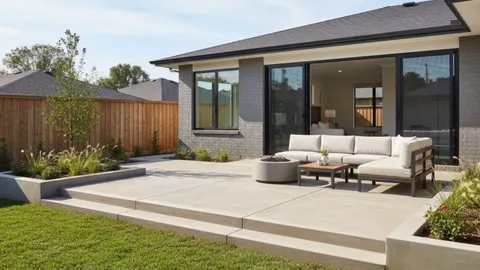
Grading gives water somewhere to go. For outdoor concrete, we want the slab and the ground around it shaped so water doesn’t sit against the concrete or run toward the house.
That planning starts before the pour. We set elevations during excavation and base prep so the slab can be formed at the right slope later. A patio next to a house, for example, should never be shaped so rain runs toward the foundation.
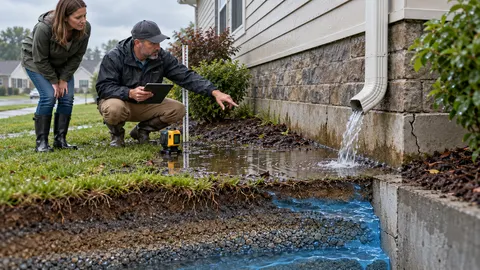
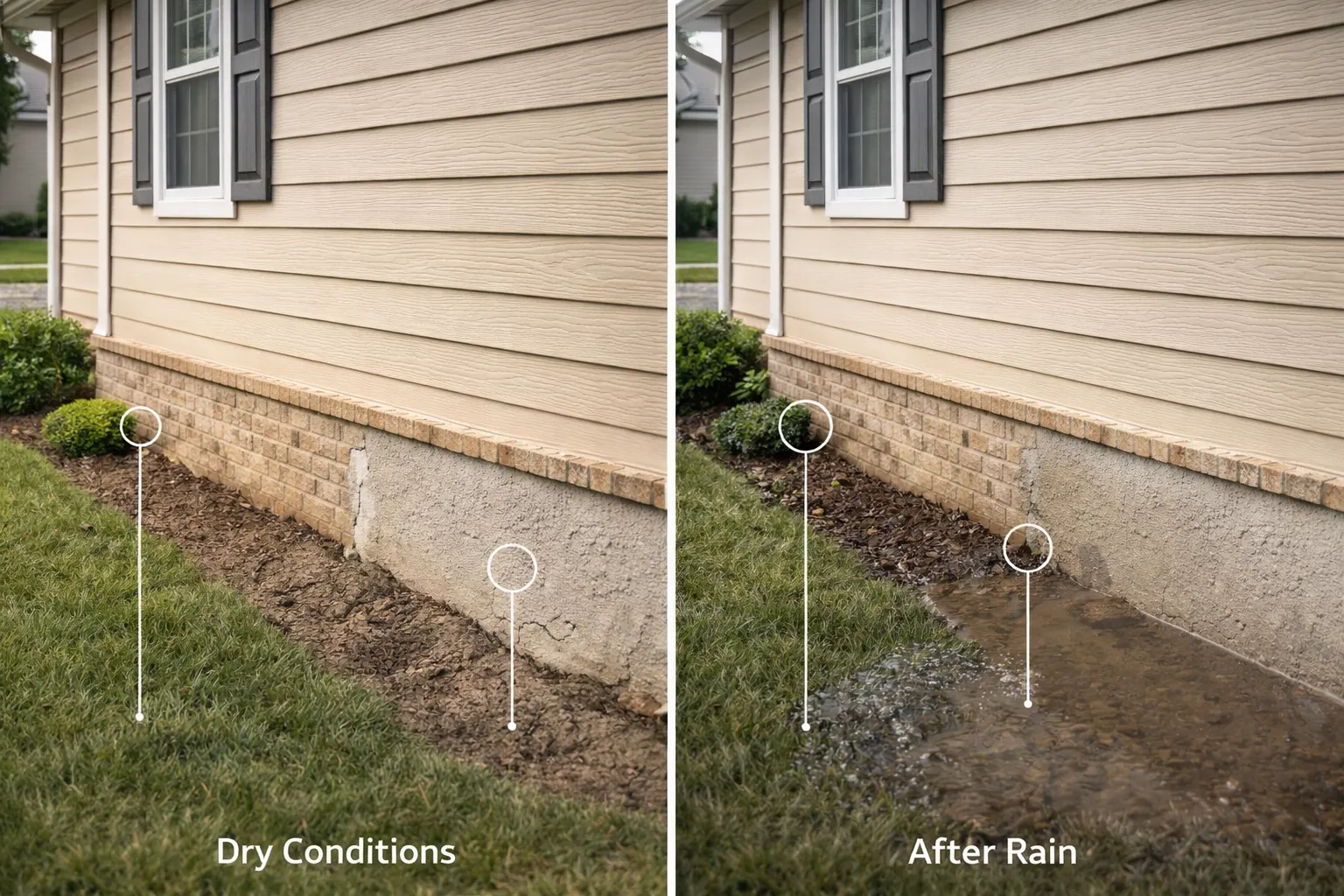
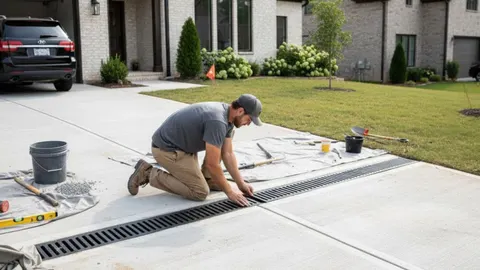
Driveways and larger slabs need the same thinking. Where does the water go once it reaches the bottom of the slope? Into the yard, toward a drain, or into a low spot where it becomes a new problem? Good grading looks past the edge of the concrete. Proper site grading protects both the slab and the house, because the concrete and the property’s drainage have to work together.
Compacting the Subgrade: Why Does Middle Tennessee Clay Need Extra Attention?
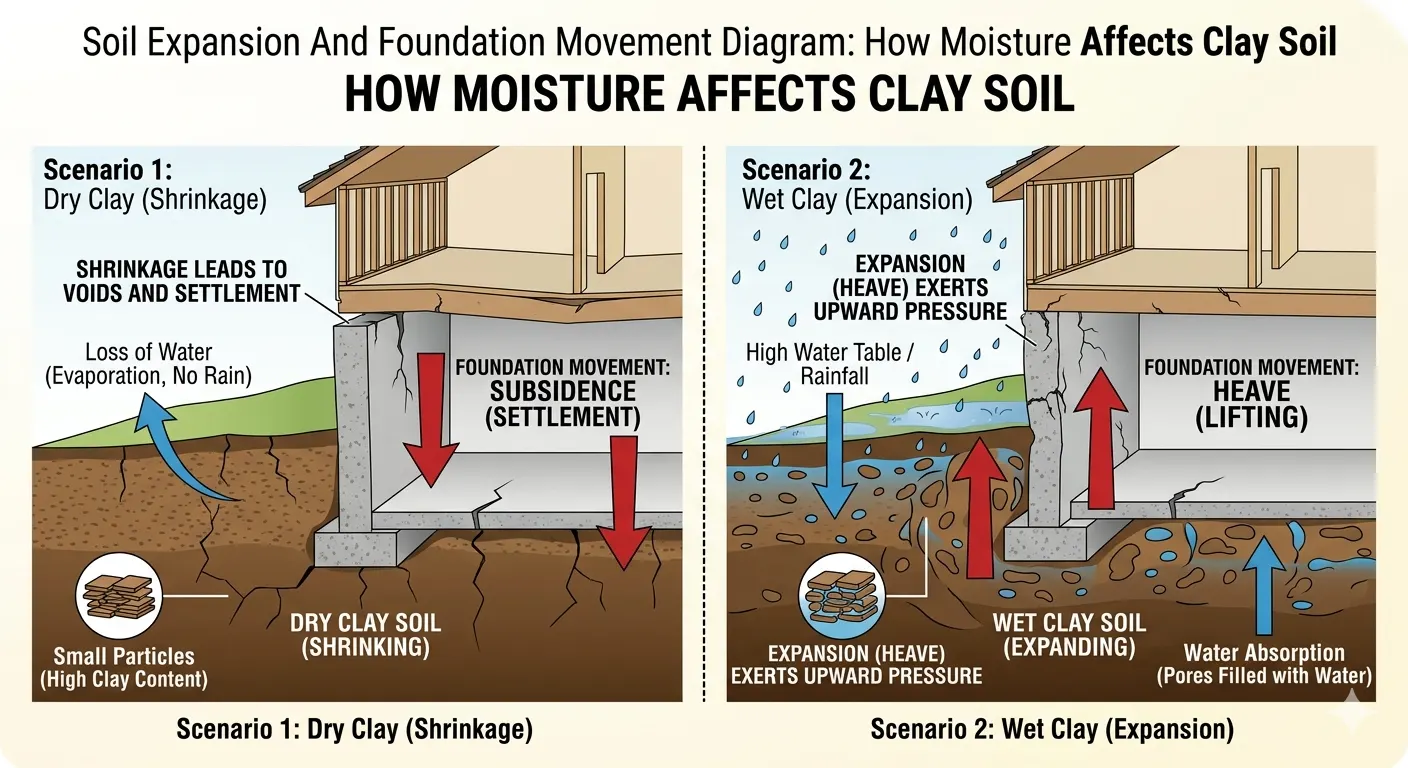
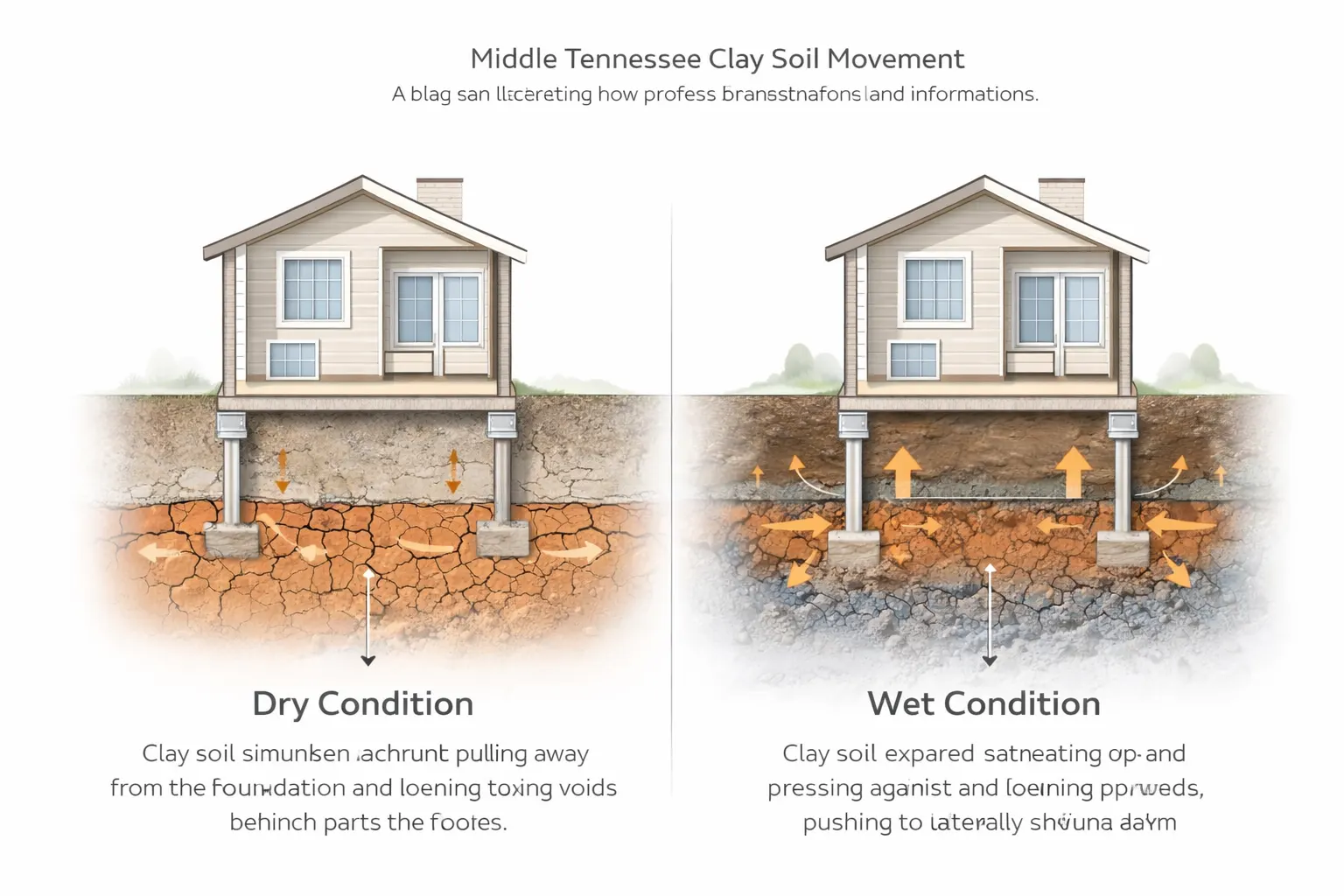
Compaction gives the slab an even surface to rest on. Middle Tennessee clay needs extra attention because it behaves differently depending on how much water it’s holding.
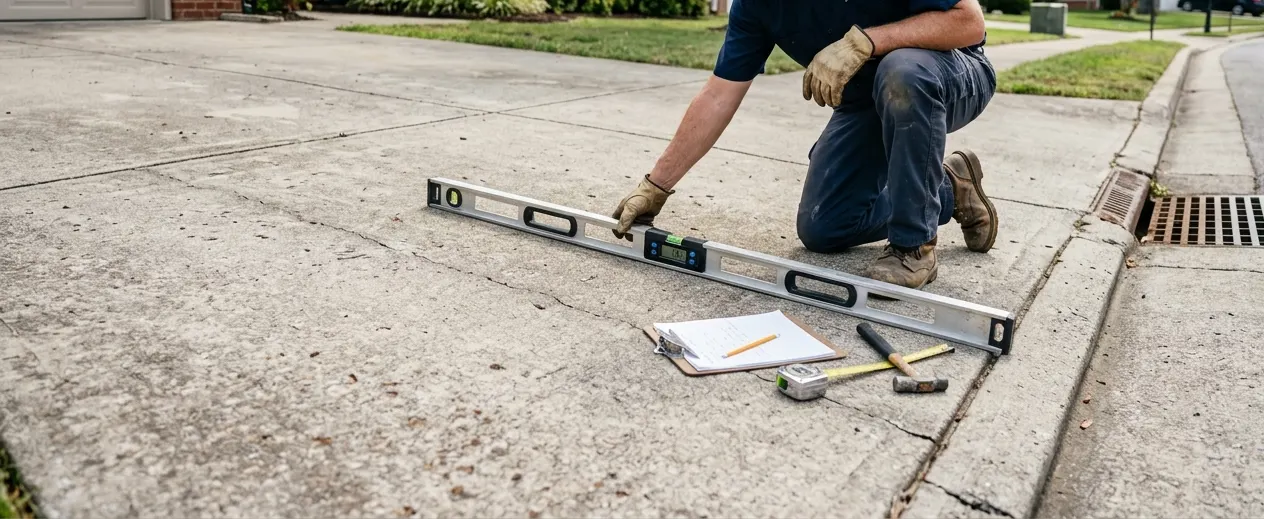
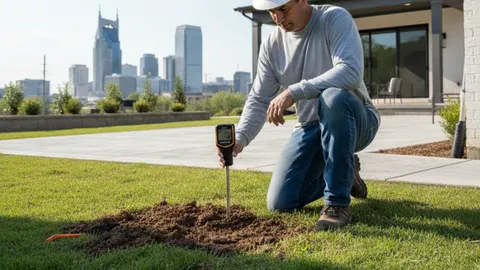
When clay gets wet, it softens and swells. When it dries out, it shrinks. That movement under a slab can lead to settling, cracking, or uneven support. That doesn’t mean every clay site is a problem. It means we have to look at what’s actually there. After excavation, we check for soft areas, disturbed soil, old fill, wet spots, and anything else that won’t give consistent support.
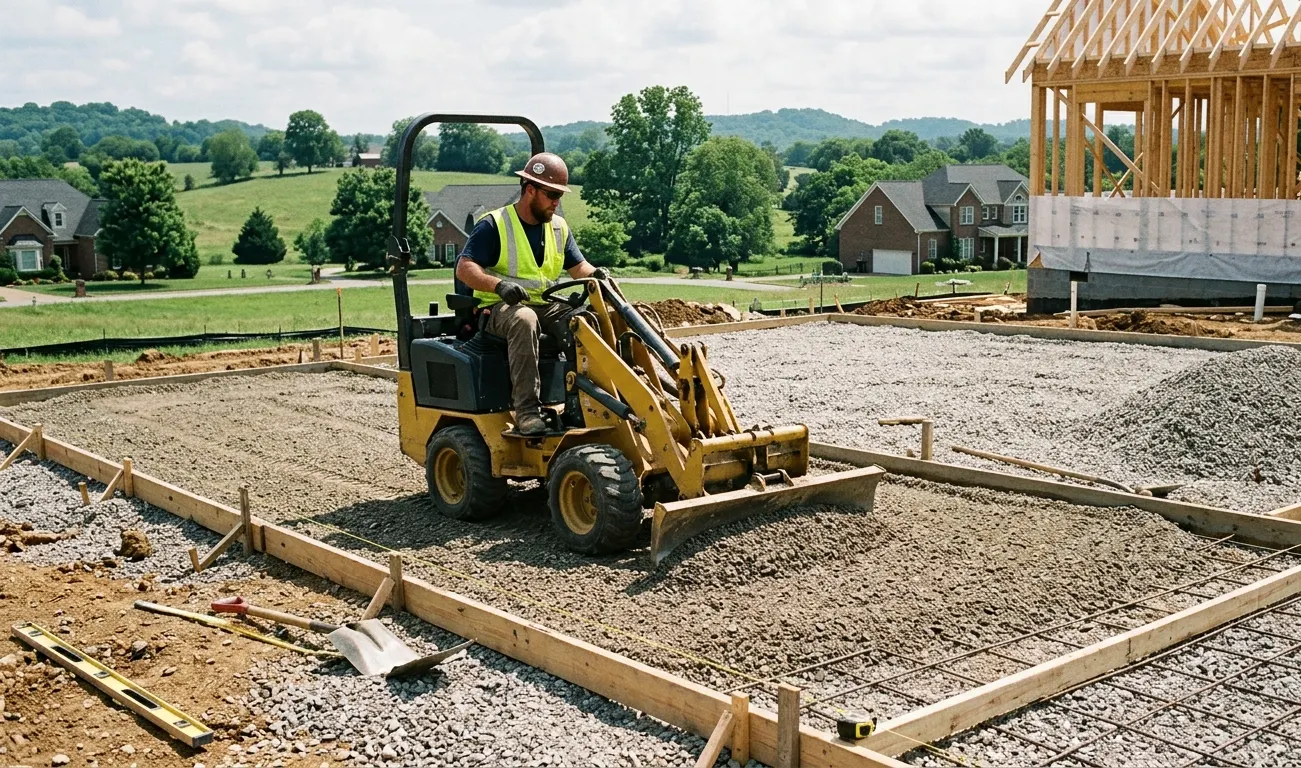
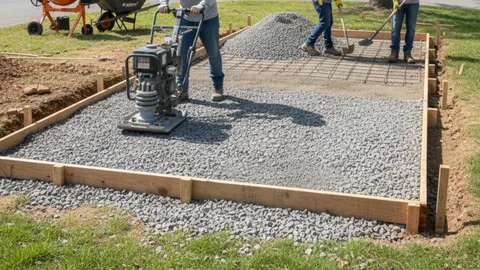
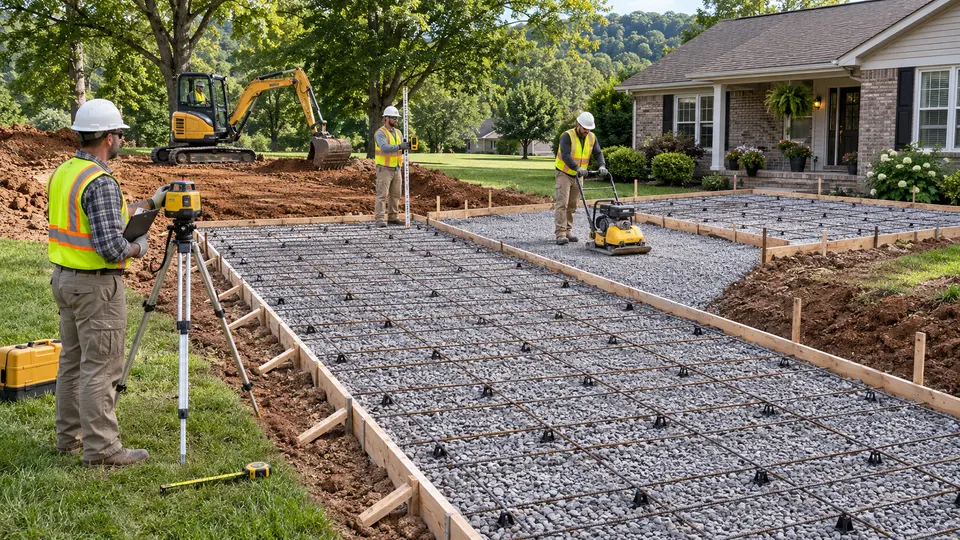
We compact the subgrade with a plate compactor on smaller jobs and a roller on larger ones, working in thin layers rather than trying to pack down a deep layer of fill all at once. Then we walk and roll the area to find any spots that still give under weight, and we dig those out and rework them. If the clay is too wet to compact properly, we wait for it to dry instead of pouring over mud.
Even compaction matters as much as firm compaction. A hard area right next to a loose one creates the same uneven support we’re trying to avoid. We don’t hide weak soil under concrete and hope for the best. Ground problems are far easier to fix before the forms and reinforcement go in.
The Gravel Base: What Does It Do and How Thick Should It Be?
The stone base creates a stable, even platform between the soil and the concrete. It also helps with drainage and makes it easier to set the final grade accurately. We use crushed stone because the angular pieces lock together when they’re compacted, unlike rounded gravel, which can shift.
How thick the base needs to be depends on the soil, the load, and how much bad material had to come out. On a typical residential patio, we install about 4 inches of compacted crushed stone. Driveways usually get about 6 inches because they carry vehicles. We go deeper when the soil is soft, the site stays wet, or the slab will carry heavy equipment or trucks.
What matters most is that the stone is spread, graded, and compacted properly. Dumping loose gravel into the hole right before the truck arrives doesn’t give the same support as a base that’s been built correctly.
Forms, Reinforcement and Vapor Barriers: What Goes in Before the Pour?
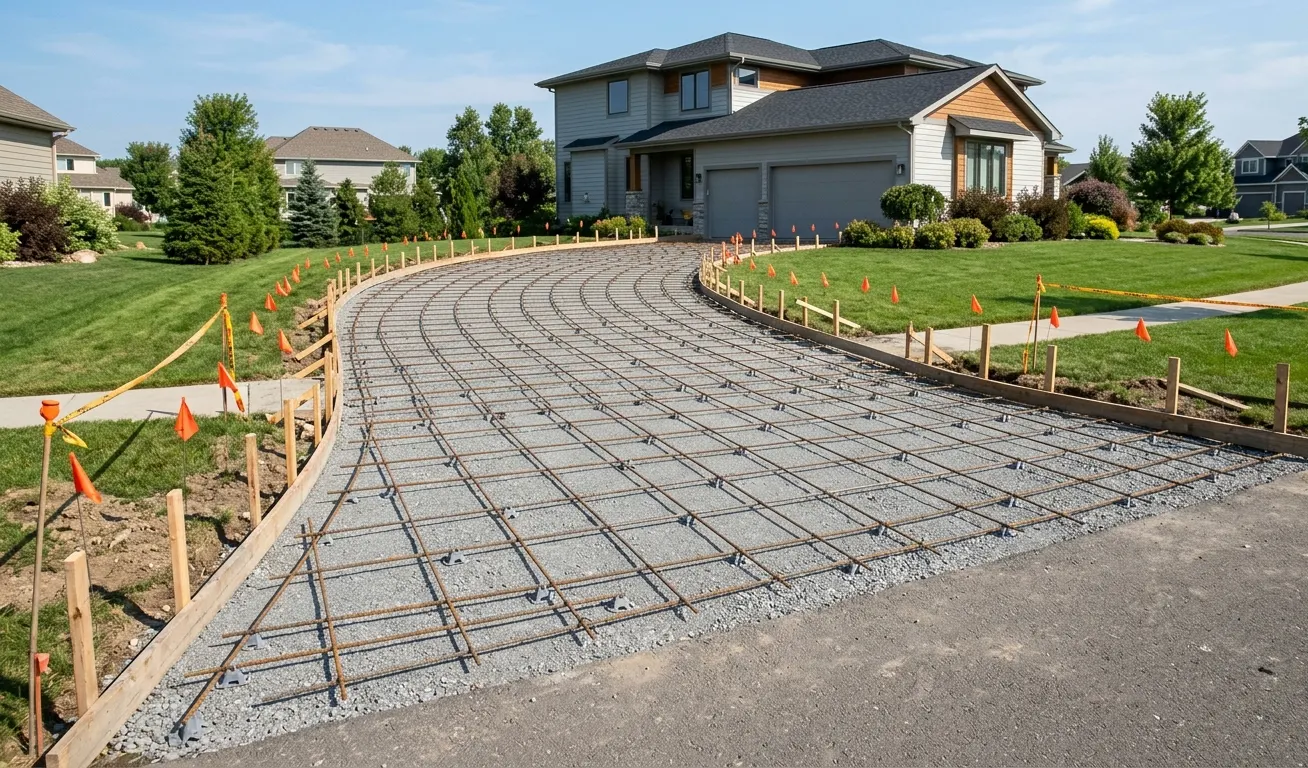
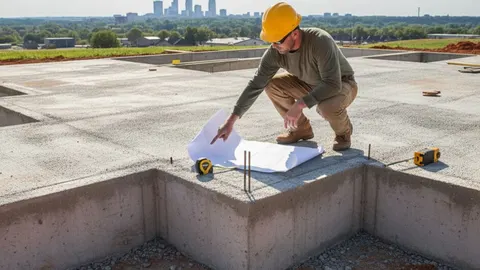
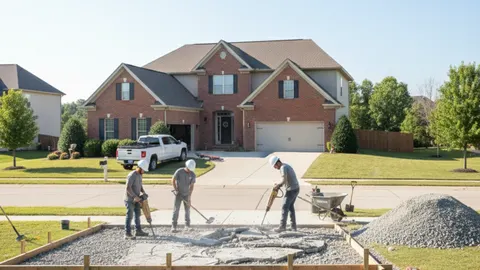
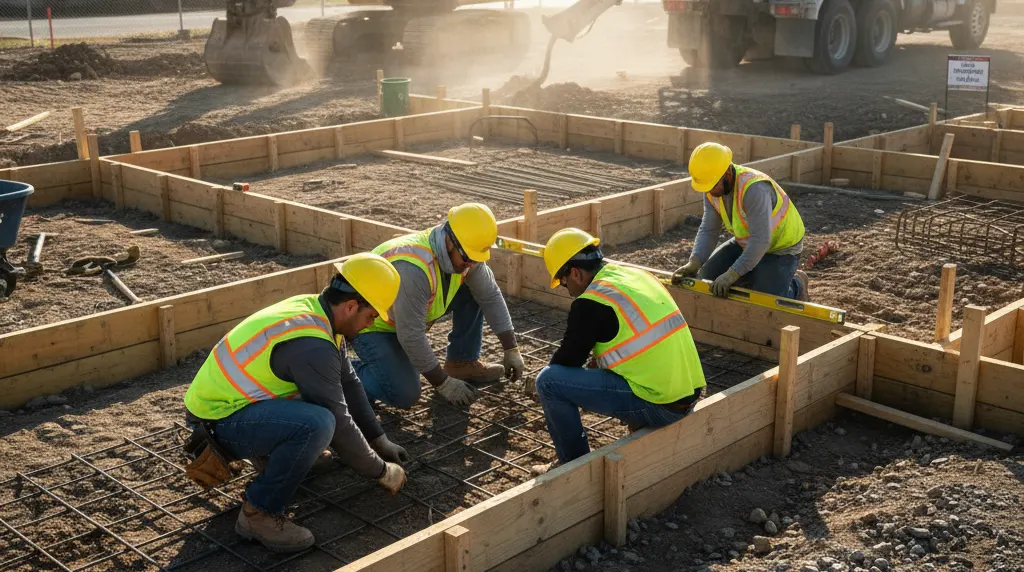
Once the ground and base are ready, the slab starts taking its final shape. Forms set the edges, height, thickness, and slope of the concrete, so we check those elevations carefully before the pour. Reinforcement comes next where the project calls for it. Depending on the slab and how it’ll be used, that can mean rebar or welded wire mesh. Reinforcement doesn’t make up for bad subgrade prep. Its job is different: it helps the concrete handle stress and keeps cracks tight.
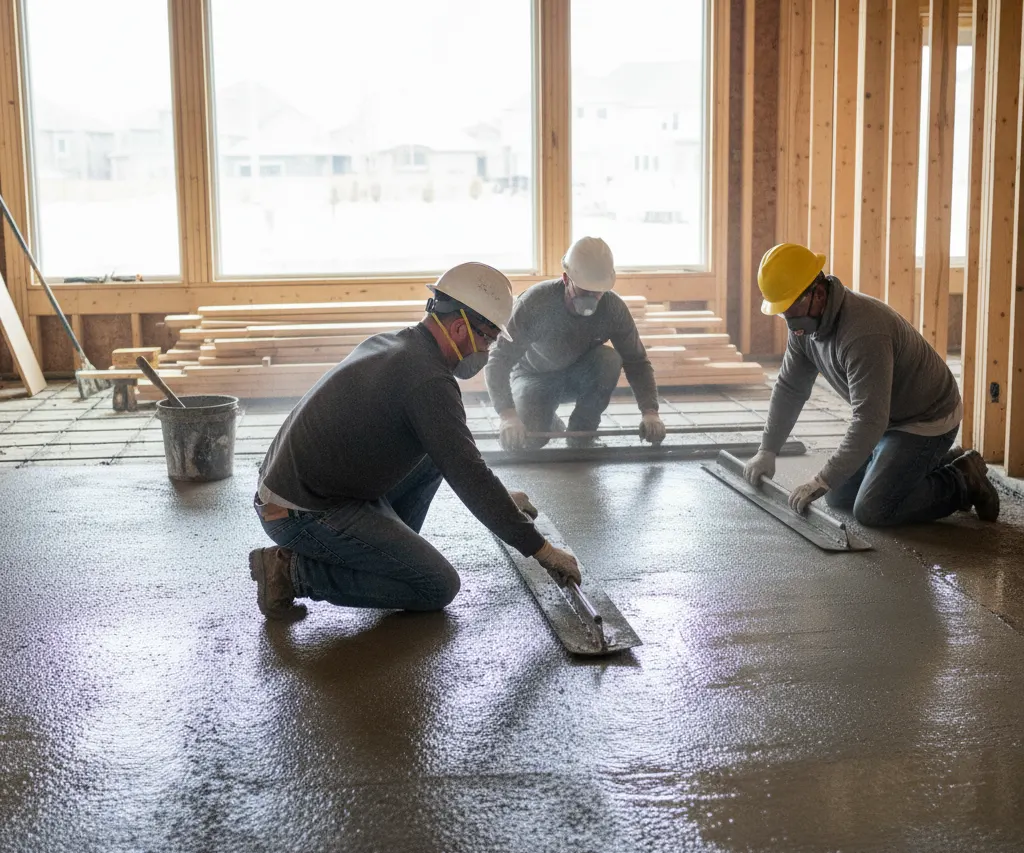
Interior slabs may also need a vapor barrier underneath. It cuts down the moisture moving up from the soil into the slab and into the flooring or building above. Whether you need one depends on the type of slab and what’s going on top of it.
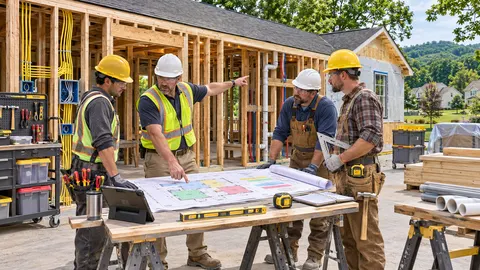
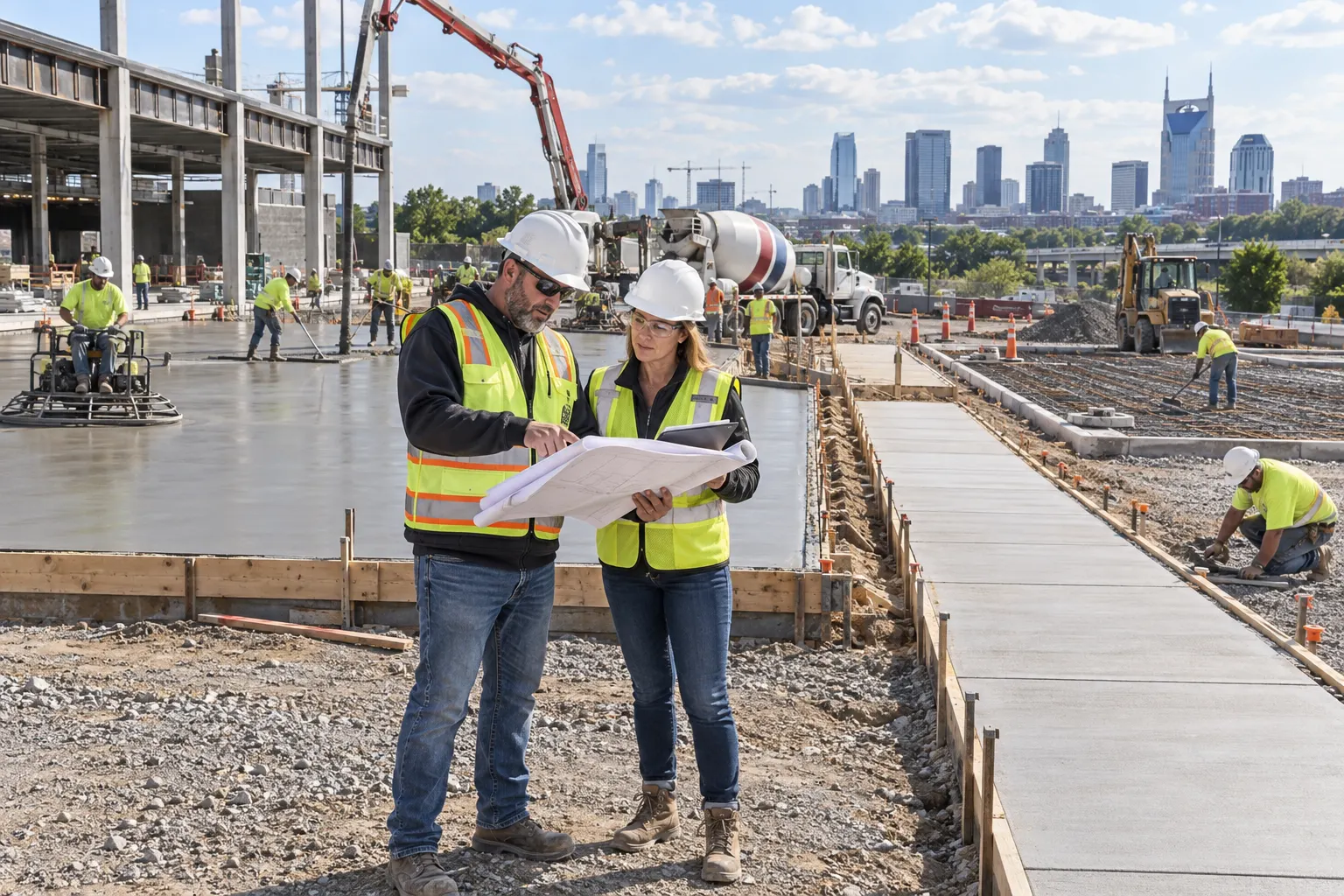
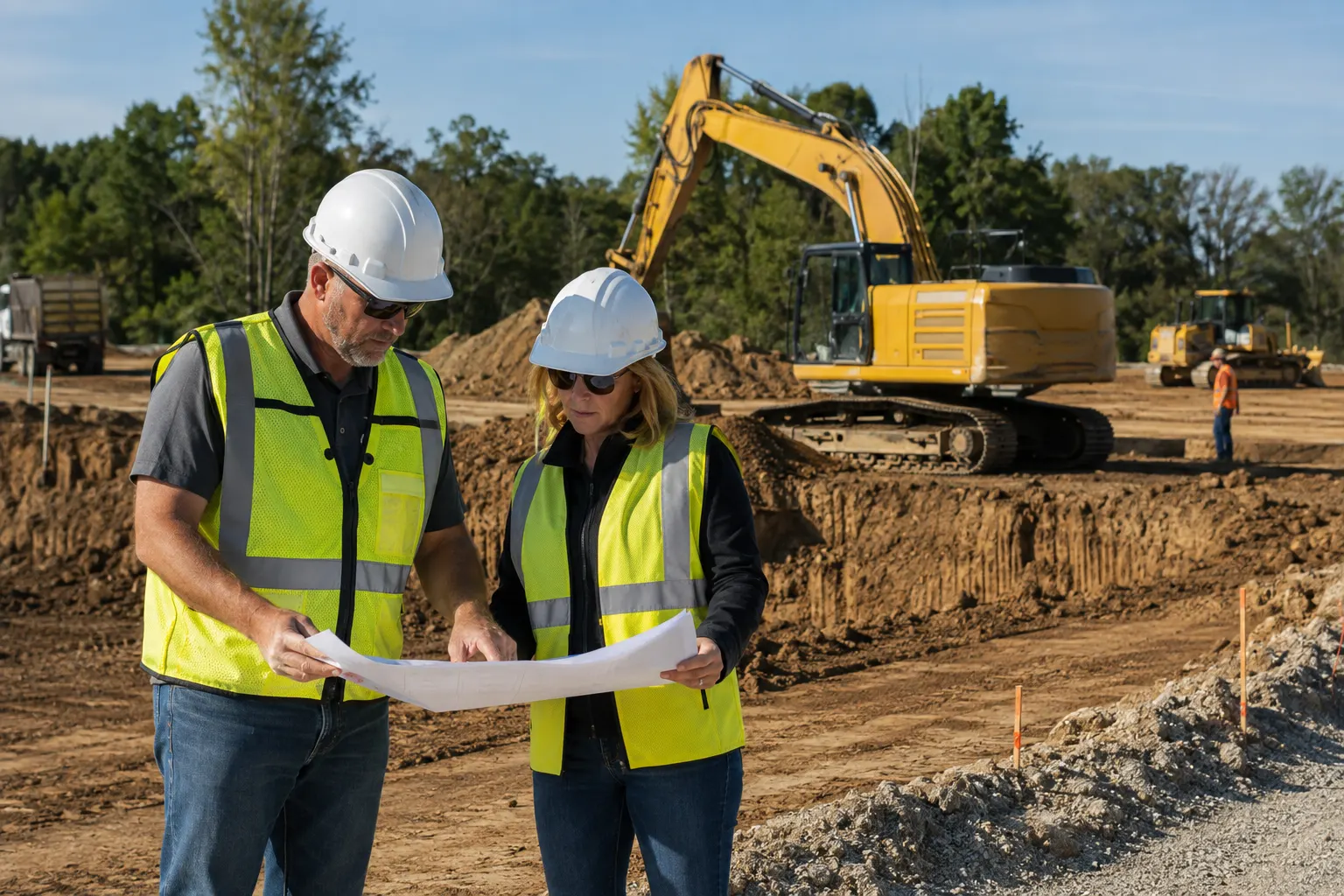
Before any concrete arrives, excavation, compaction, base, forms, reinforcement, utilities, and any other items set into the slab should all be finished. The pour and finishing start from there, and the step-by-step concrete pouring process picks up at that point.
What Happens When Site Preparation Is Skipped?
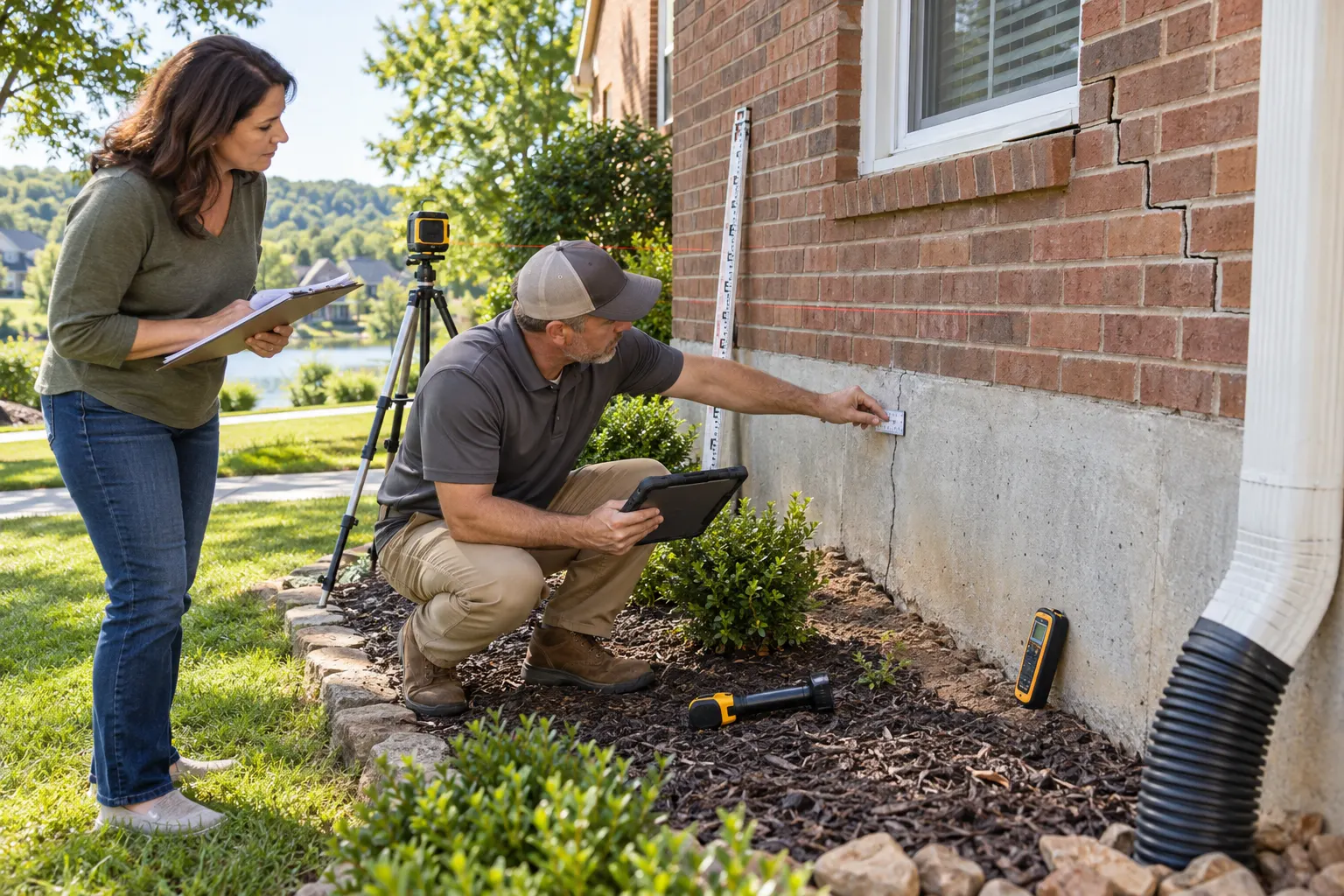
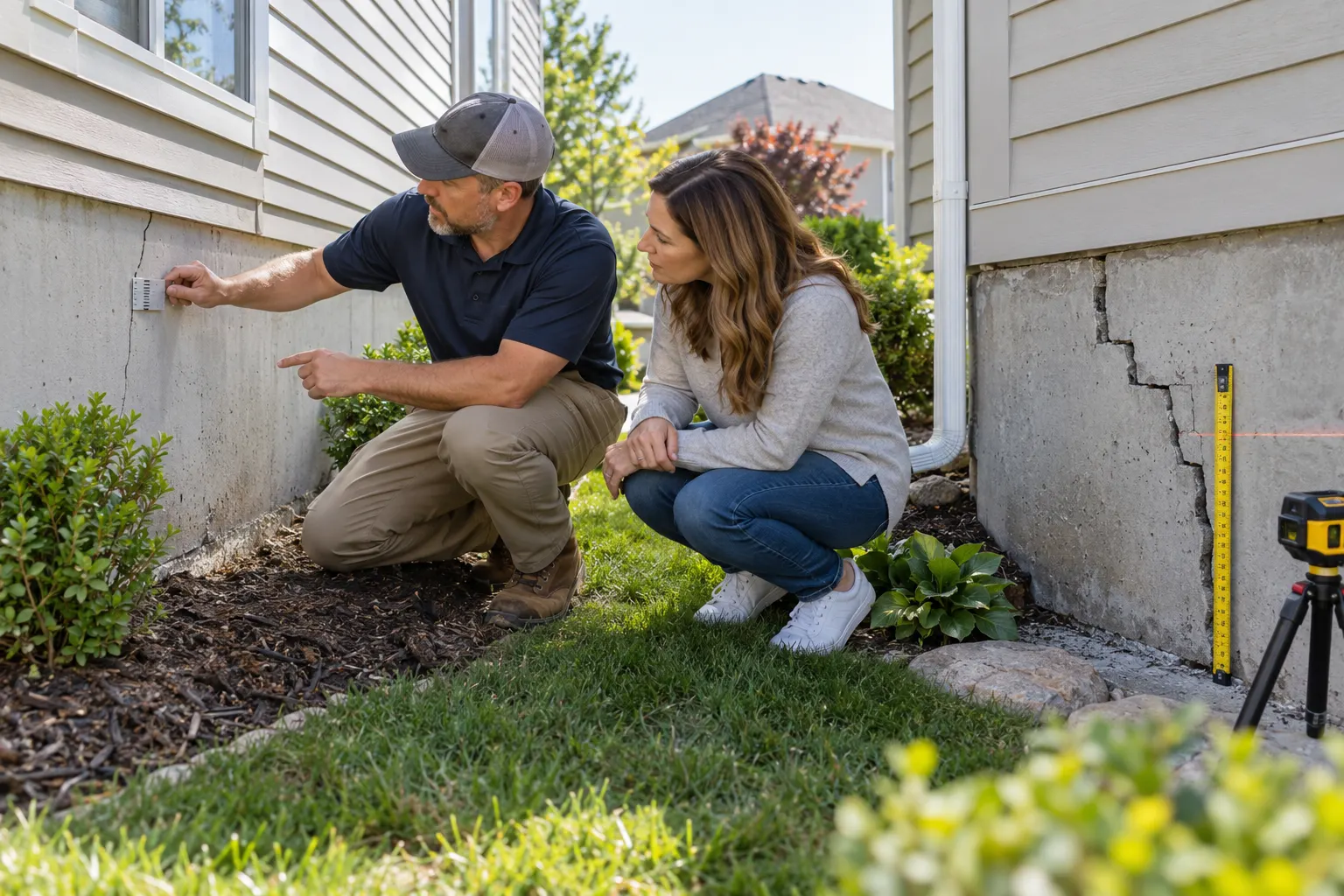
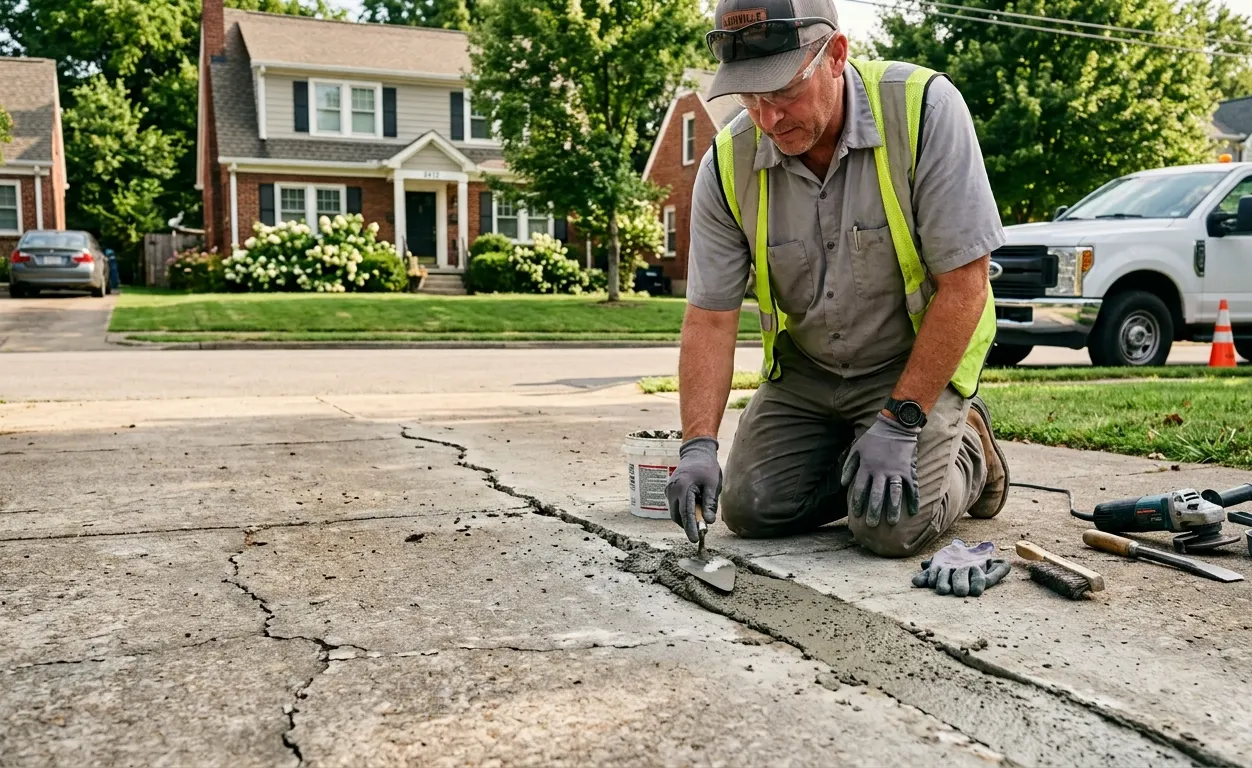
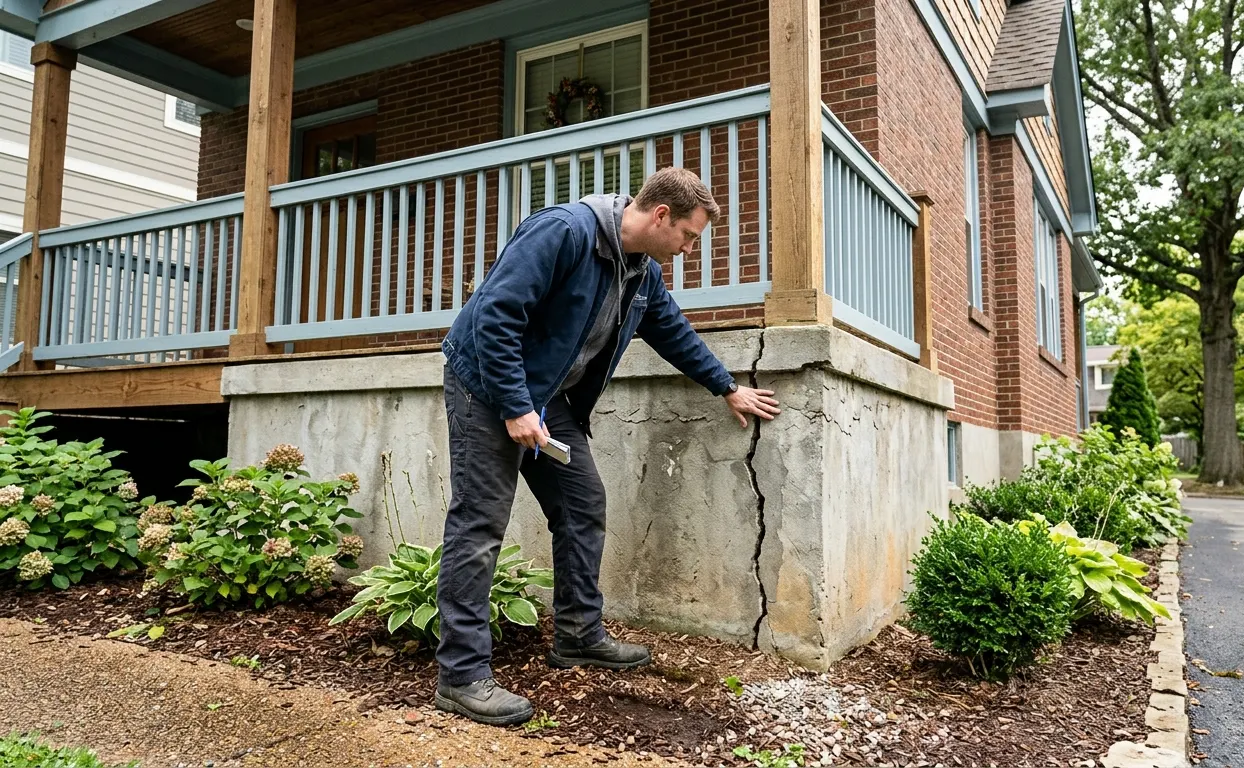
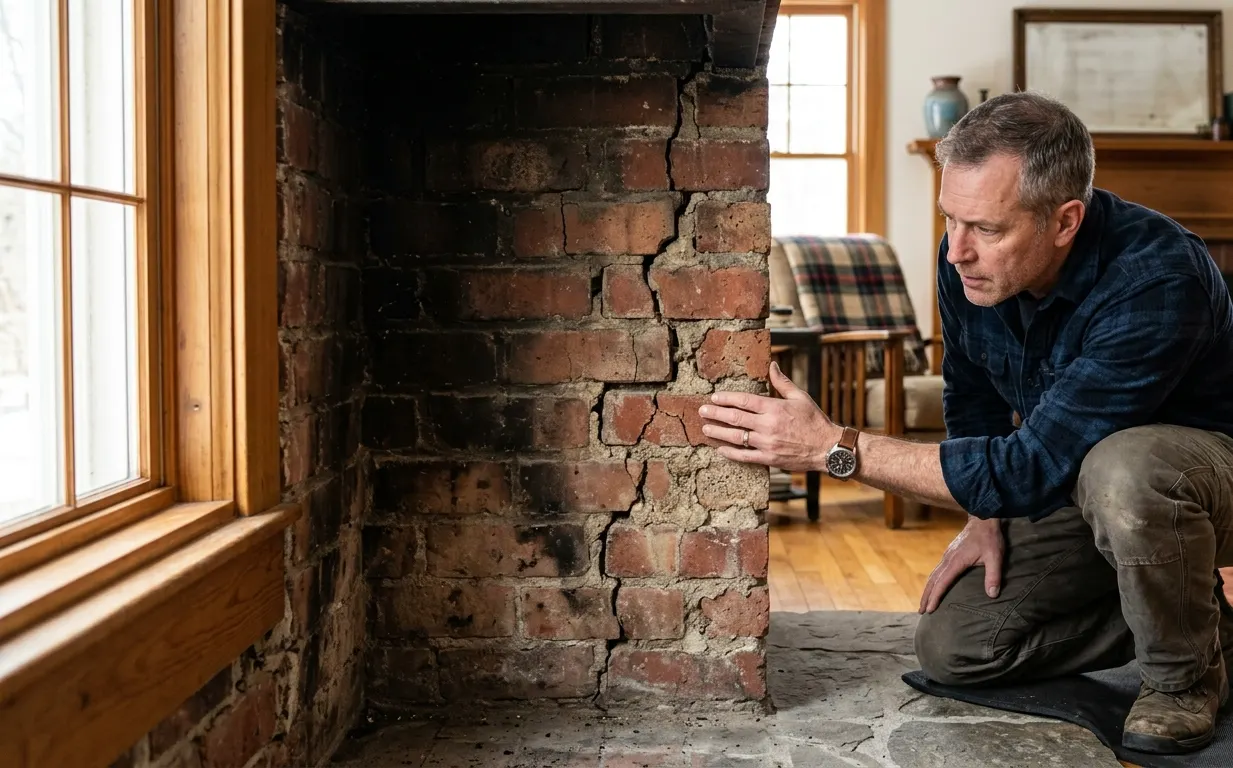
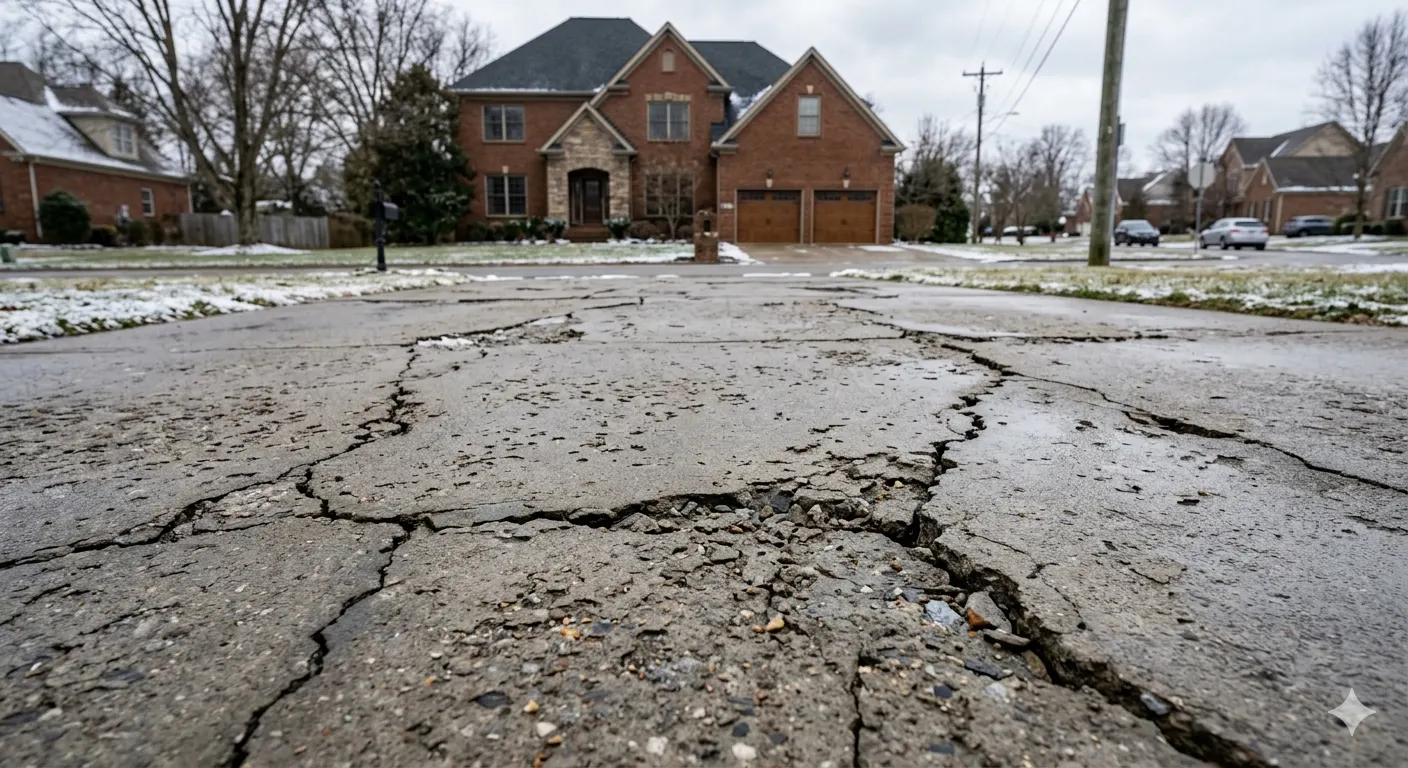
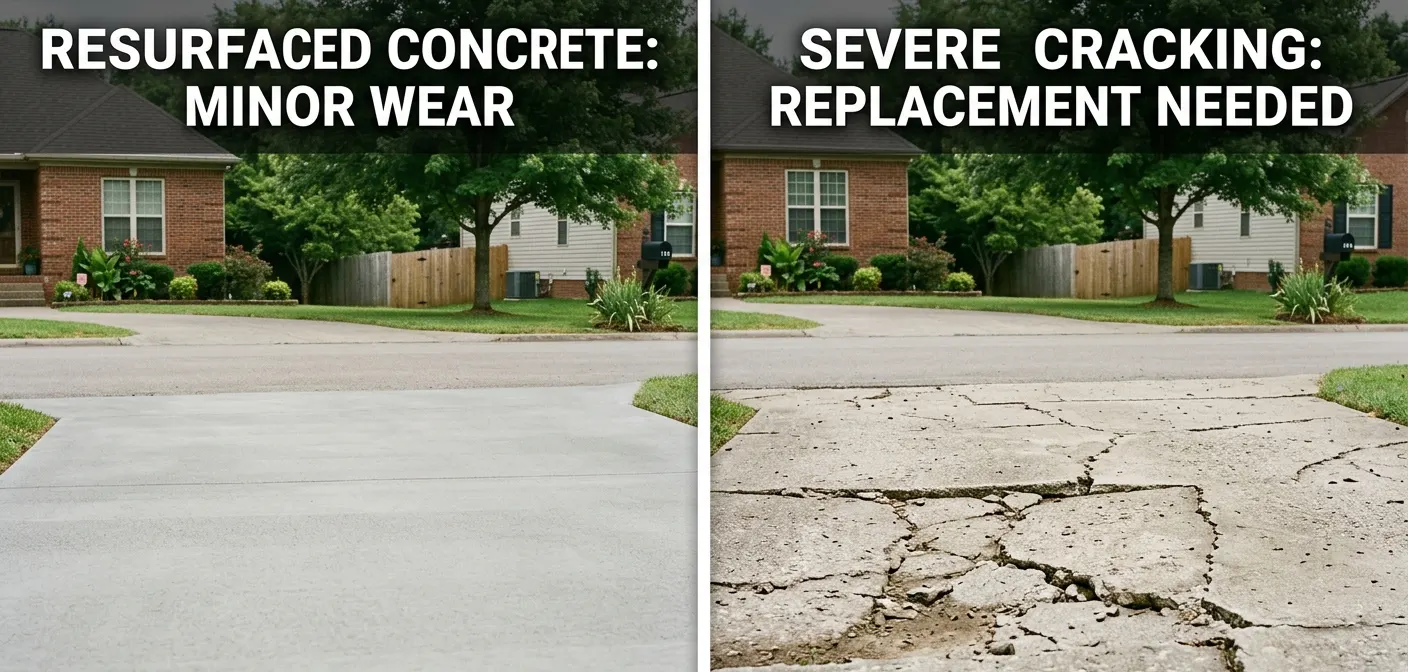
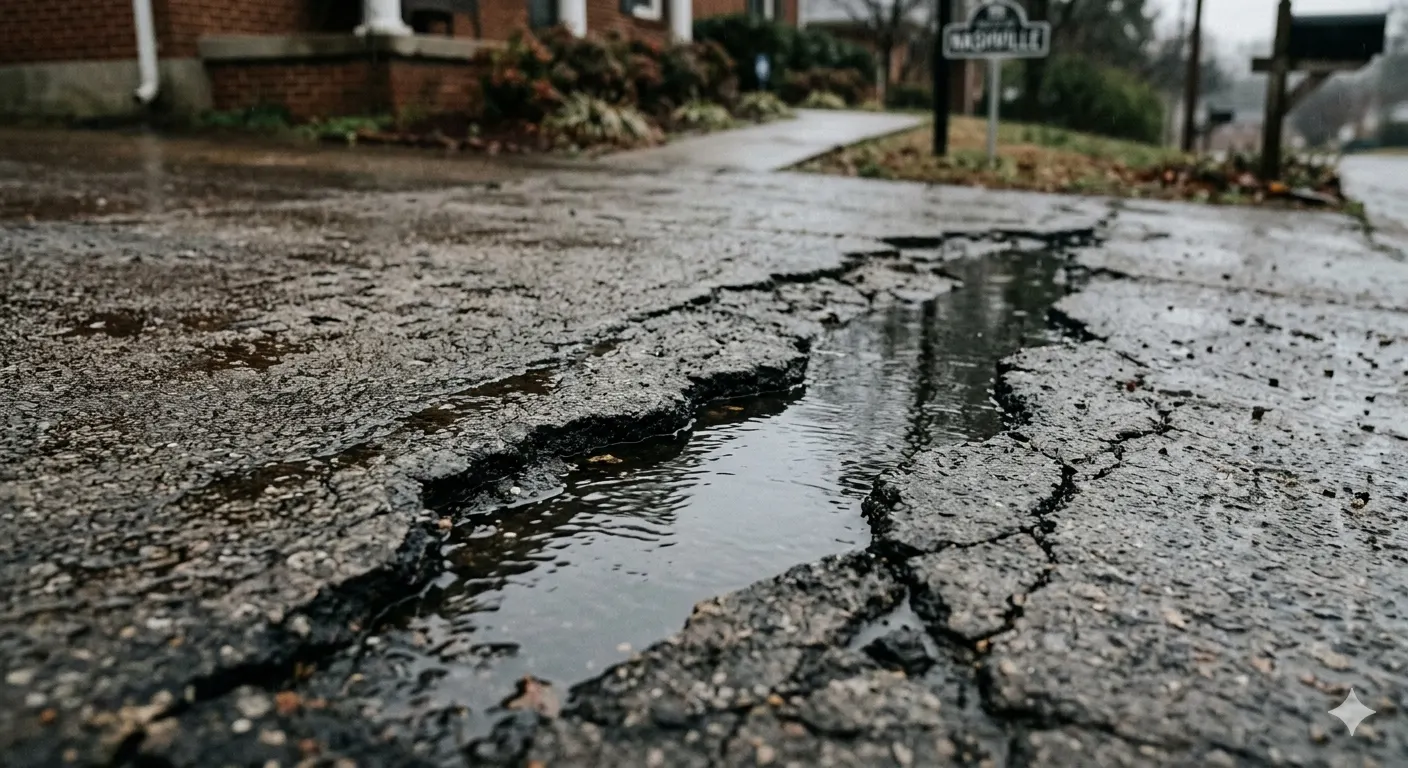
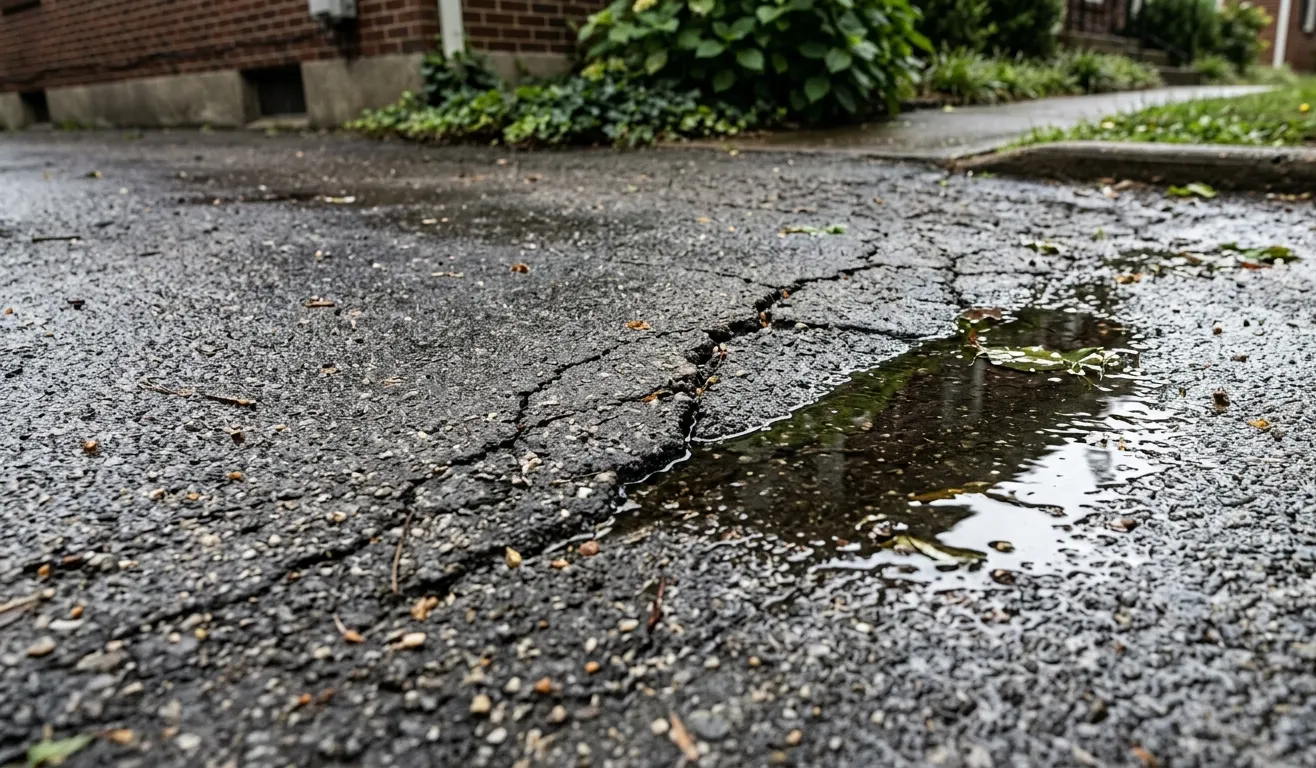
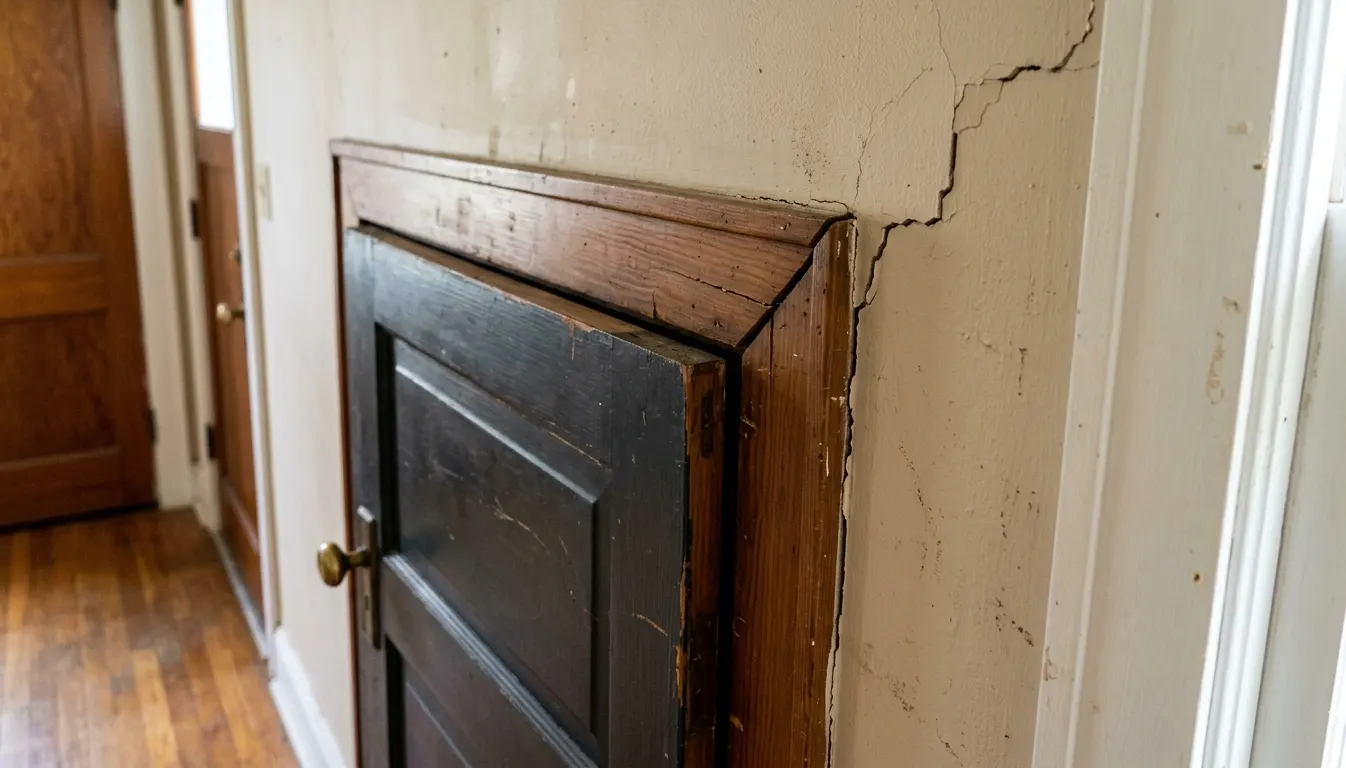
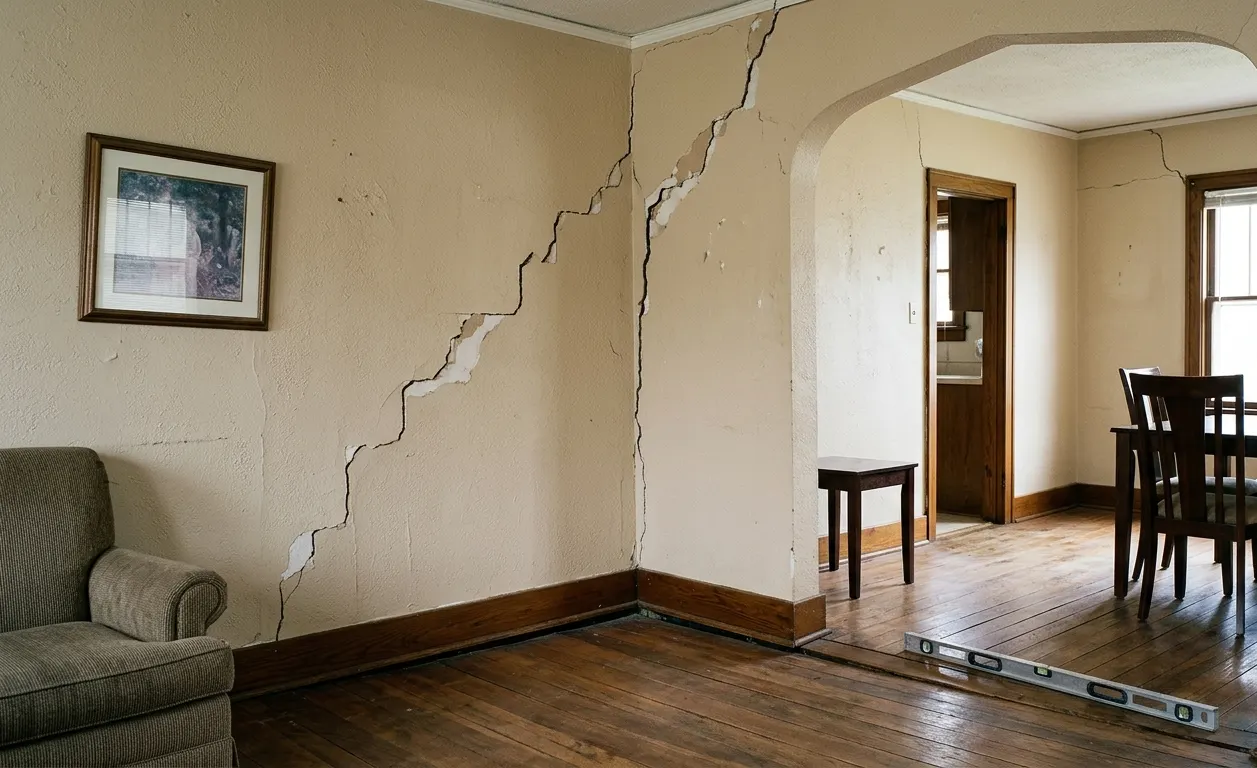
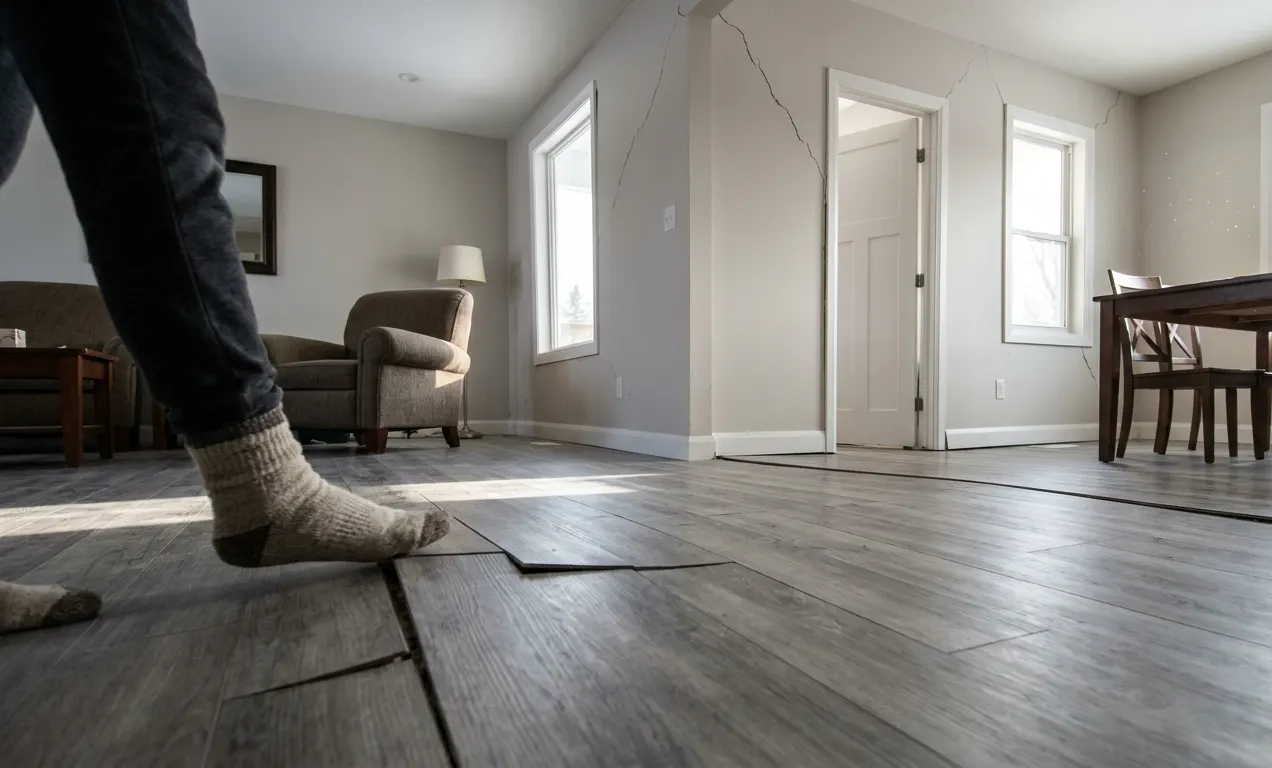
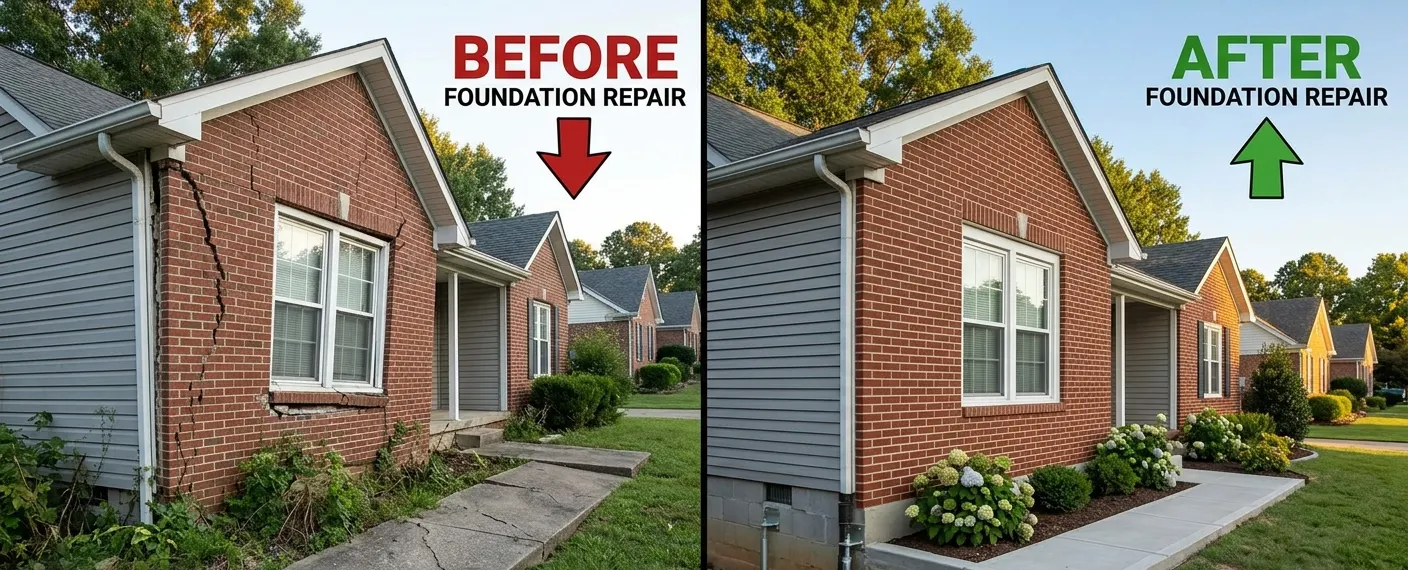
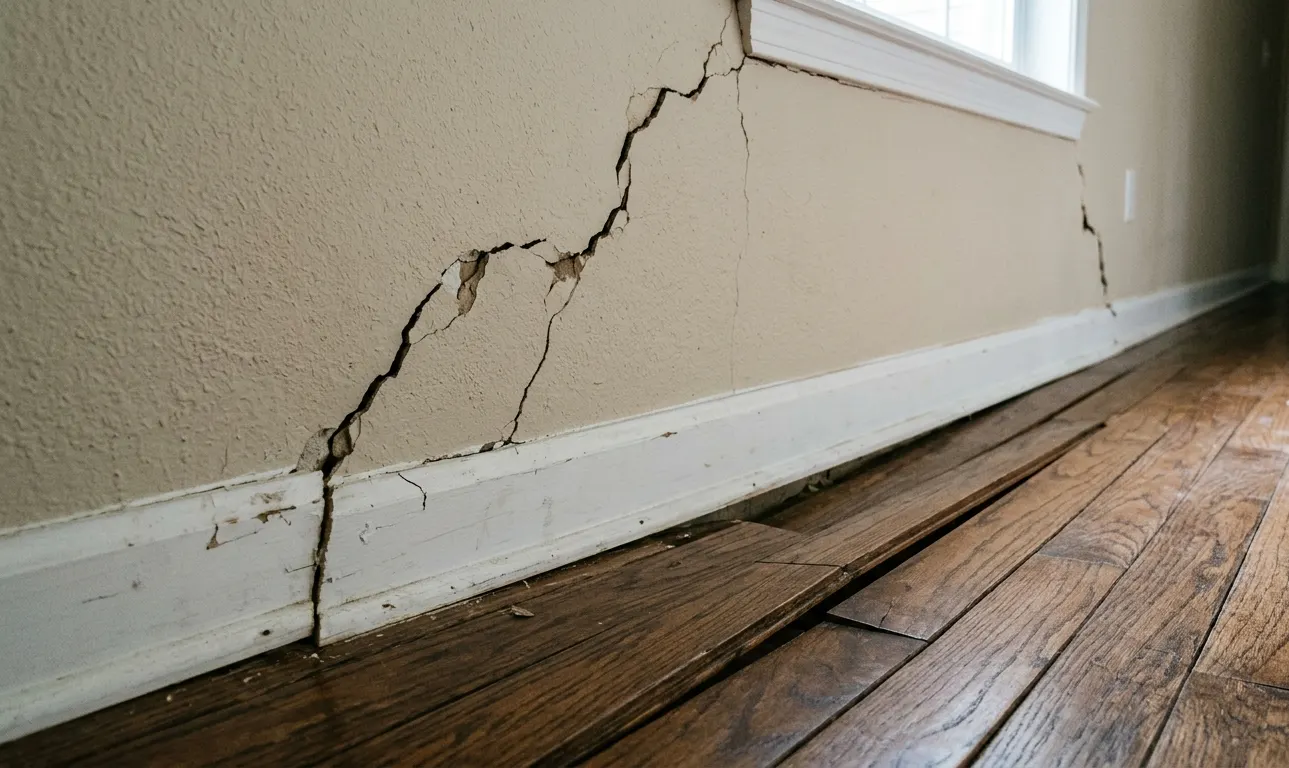
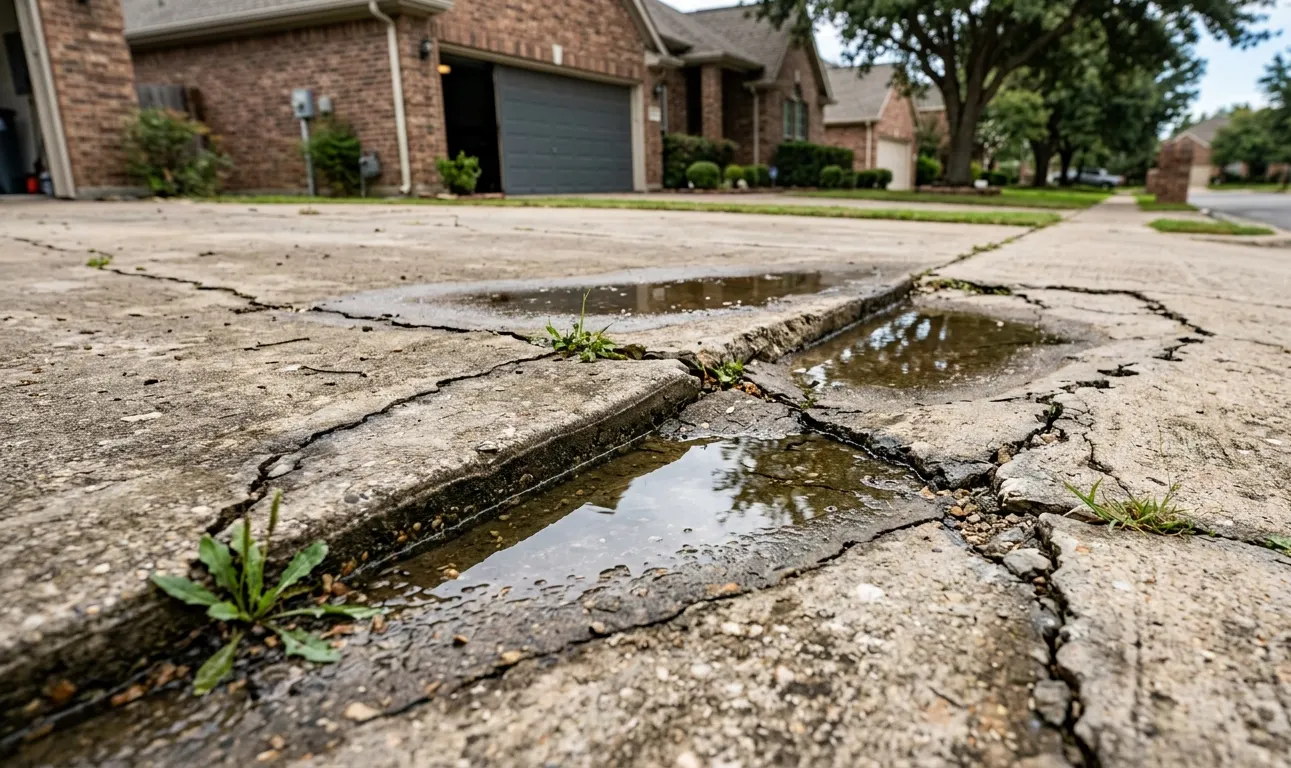
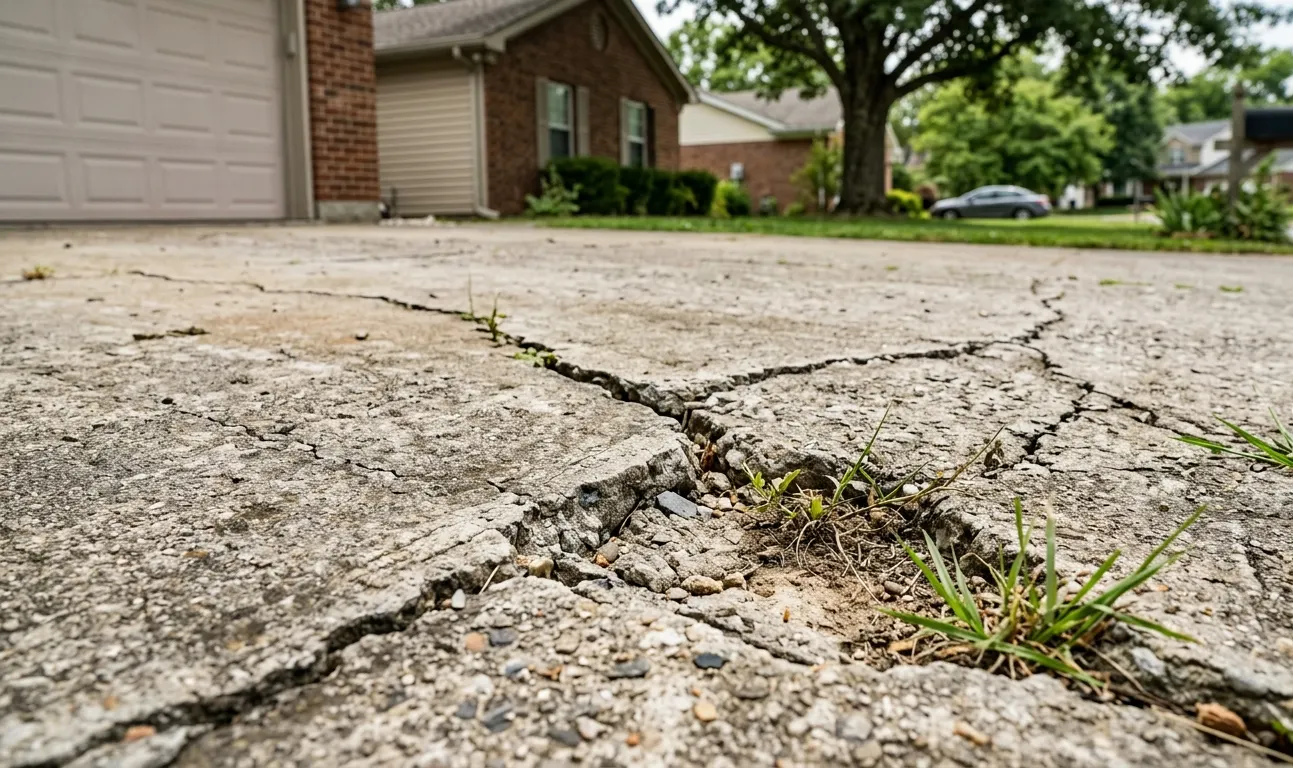
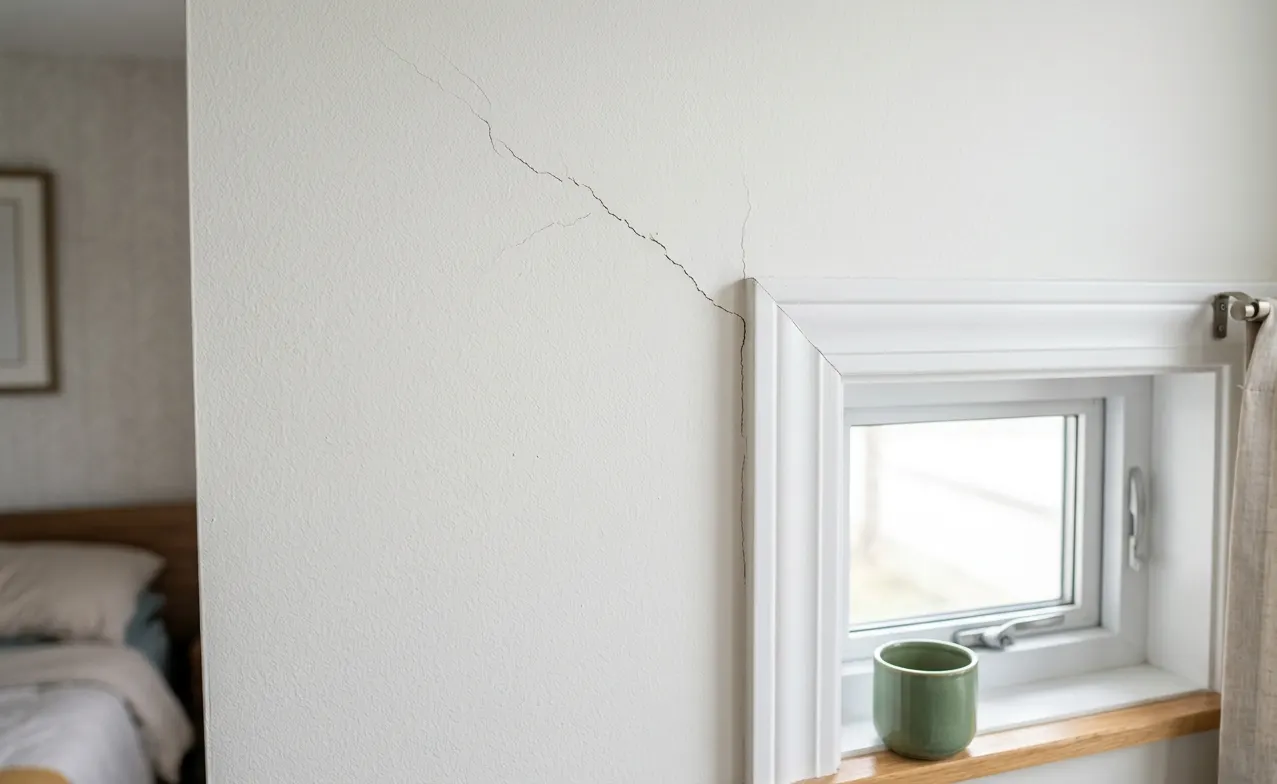
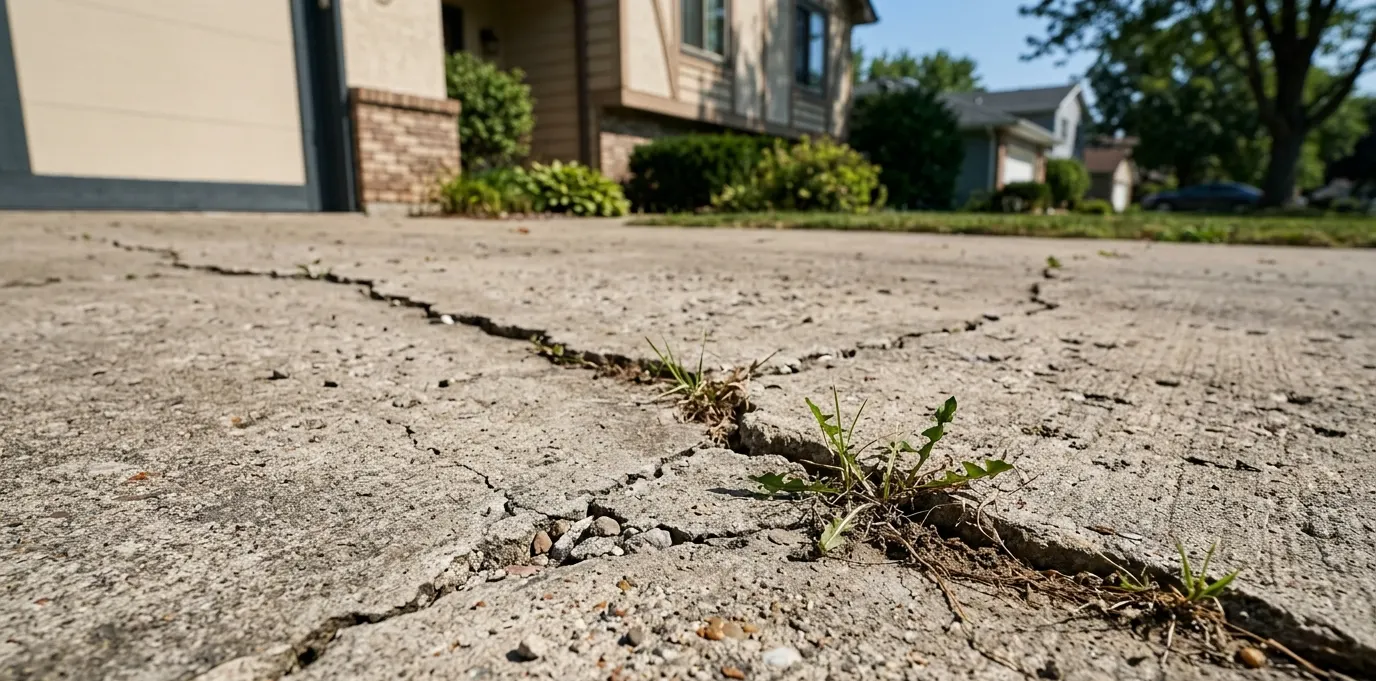
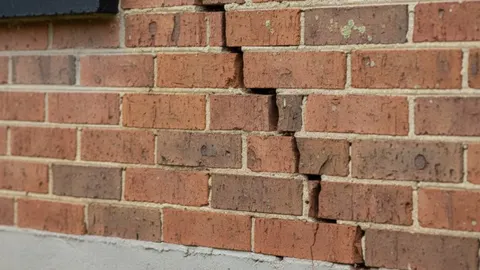
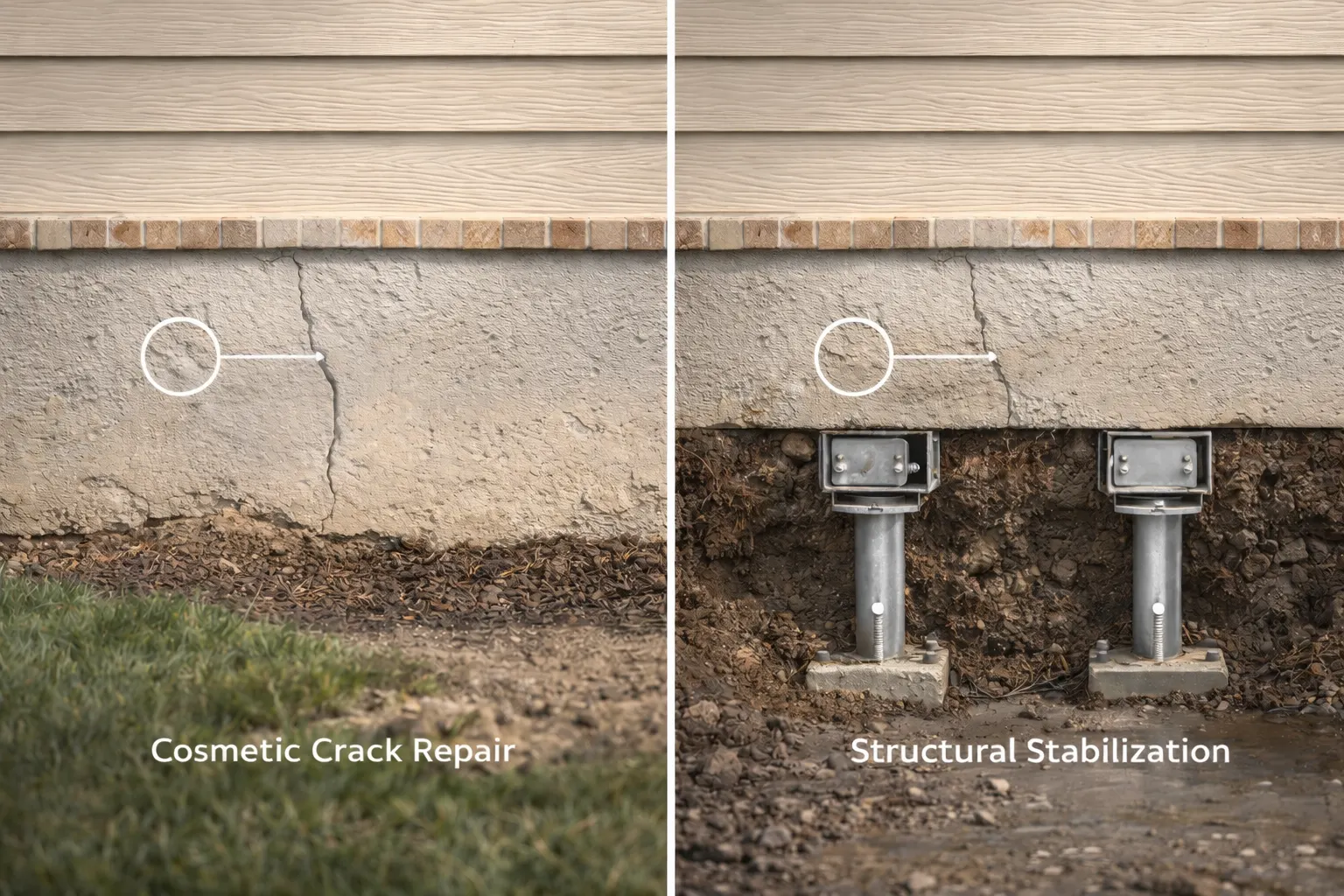
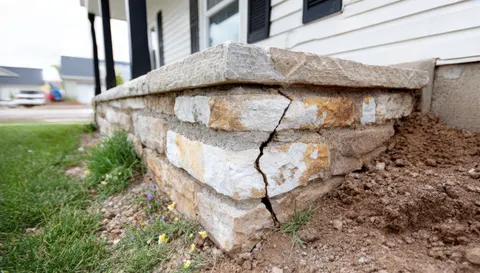
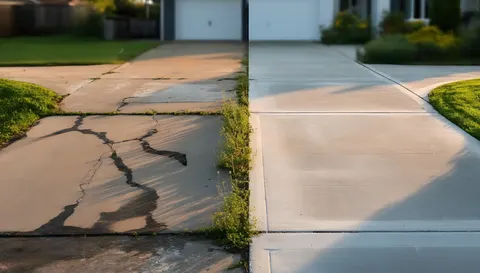
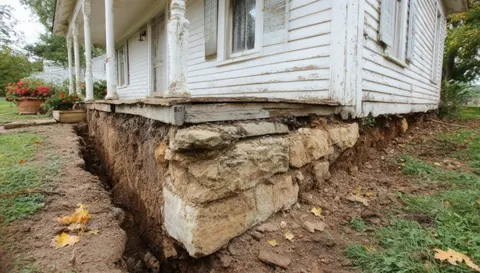
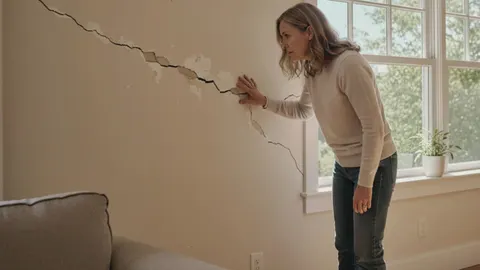
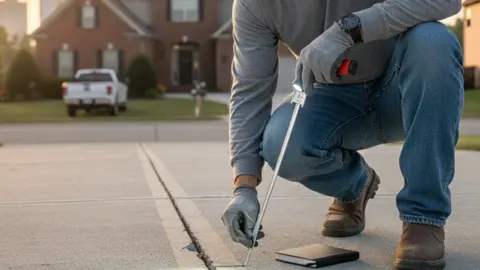
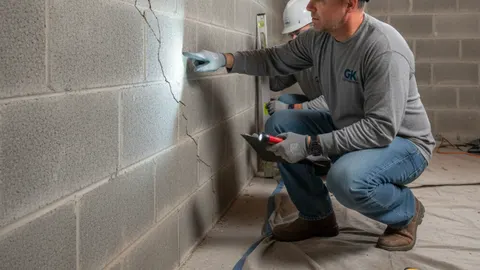
Poor prep usually shows up later as movement, cracking, settling, or drainage problems. The frustrating part is that the slab can look perfect on the day it’s poured. The damage tends to show up gradually. A driveway section sinks where loose fill was never compacted. A patio cracks over a soft spot. Water starts pooling where the base or forms weren’t graded correctly, and standing water makes those problems worse over time. The expensive part is that you can’t easily fix the soil under a finished slab. Correcting major subgrade problems usually means lifting, removing, or replacing sections of concrete.
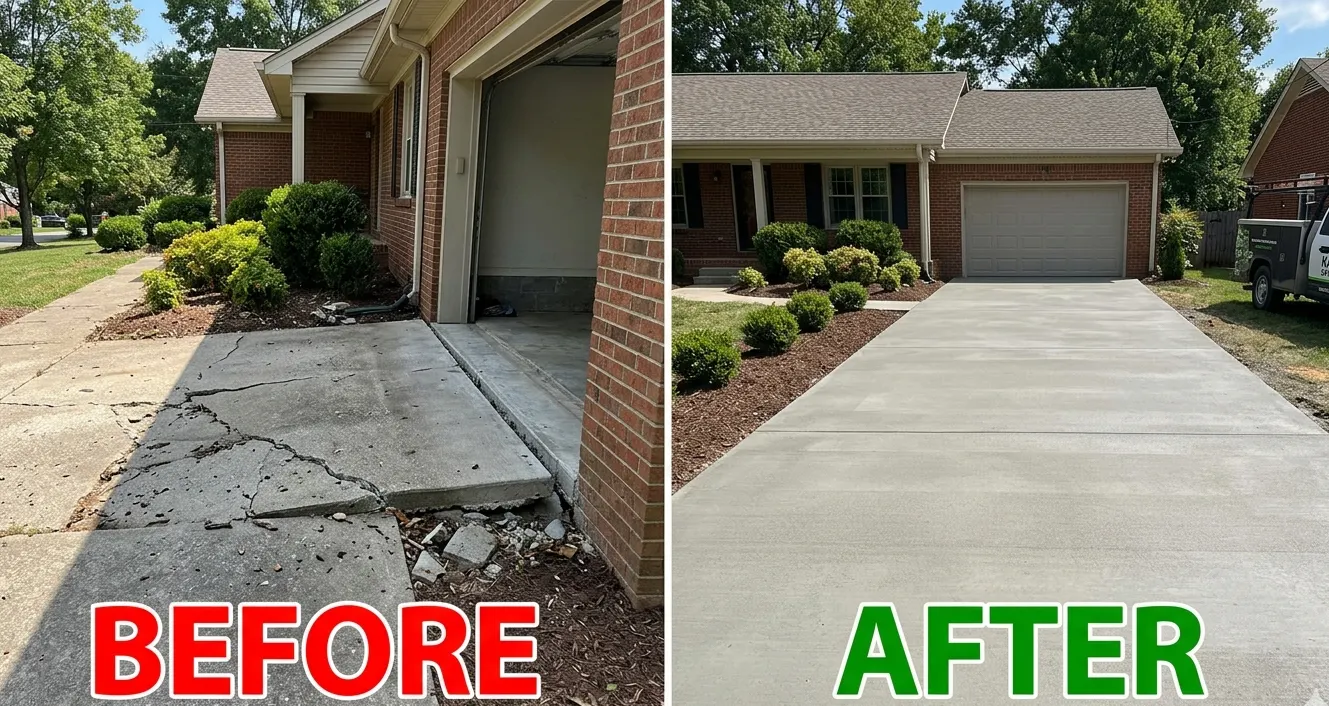
Here’s a call we get more often than you’d think. A homeowner’s driveway or patio, only a few years old, has sunk along one side and cracked across the middle. When we break out the damaged section, we find concrete sitting almost directly on soil, with an inch or two of loose gravel that was never compacted and topsoil still underneath. That section has to come out completely, the bad soil dug out and replaced, and a properly compacted base built before new concrete goes in. The homeowner ends up paying for the slab twice.
What Should Be Finished Before the Concrete Truck Arrives?
Everything under and around the slab should be ready before the concrete is ordered for delivery.
By then, we want the site cleared and excavated, weak areas corrected, the subgrade compacted, the base installed, elevations set, forms in place, reinforcement positioned, and any vapor barrier or embedded work done. There shouldn’t be a scramble to finish digging while the truck is already on the way, because once ready-mix arrives, the clock is running.
Proper site preparation for concrete lets the crew focus on placing and finishing the concrete instead of fixing problems underneath it at the last minute. That’s also why prep is a real part of any professional concrete estimate. You’re not only paying for what you see when the job is done. You’re paying for the work that keeps that concrete supported for years.
Good Concrete Starts Before You See Concrete
When we look at a new driveway, patio, or slab, we start with the ground. What needs to come out? Where does the water need to go? Is the soil stable? How should the base be built, and what reinforcement or moisture protection does the job need?
Good site preparation for concrete isn’t the flashy part of the job, but it’s one of the parts that matters most after the crew leaves.
If you’re planning concrete work in Nashville, Murfreesboro, or anywhere in Middle Tennessee, contact us for a quote . We’ll look at the site, explain the prep your project needs, and price the job based on the conditions that are actually there.