How Proper Site Grading Prevents Water Damage and Foundation Issues
After a heavy Nashville rain, where does the water around your home actually go? If it moves away from the house, the property is doing one of its most important jobs. If it collects beside the foundation, runs toward a crawlspace, or repeatedly washes soil away, the problem may begin with Site Grading. At GK Construction Solutions, we often look at grading when evaluating drainage and foundation concerns because water and soil conditions are closely connected. A home may show cracks or settlement, but the visible damage does not always explain why the movement started. Homeowners researching foundation repair Nashville should understand that repairing structural symptoms without considering where water is going can leave an important contributing condition unaddressed. Good grading does not prevent every foundation problem, but it can help manage surface water, reduce erosion, and keep unnecessary moisture from concentrating around the home.
How Does Proper Site Grading Protect Your Foundation?
Proper Site Grading protects a foundation by shaping the surrounding ground so surface water naturally moves away from the home instead of collecting beside it. When rain repeatedly pools near foundation walls, the surrounding soil can become saturated, erode, soften, or experience changing moisture conditions that may affect how consistently it supports the structure. Good grading can also reduce puddling near crawlspaces, limit erosion around the home, and provide a clear path for runoff from roofs, patios, driveways, and landscaped areas. However, grading is only one part of a complete drainage strategy. Gutters, downspouts, storm drains, soil type, underground water, plumbing leaks, and nearby hard surfaces can also affect moisture conditions. Poor grading does not automatically mean a foundation will fail, and regrading cannot reverse existing structural damage. The goal is to control surface water before it repeatedly concentrates where the foundation meets the soil and to combine grading with other drainage measures when the property requires them.
What Is Site Grading?
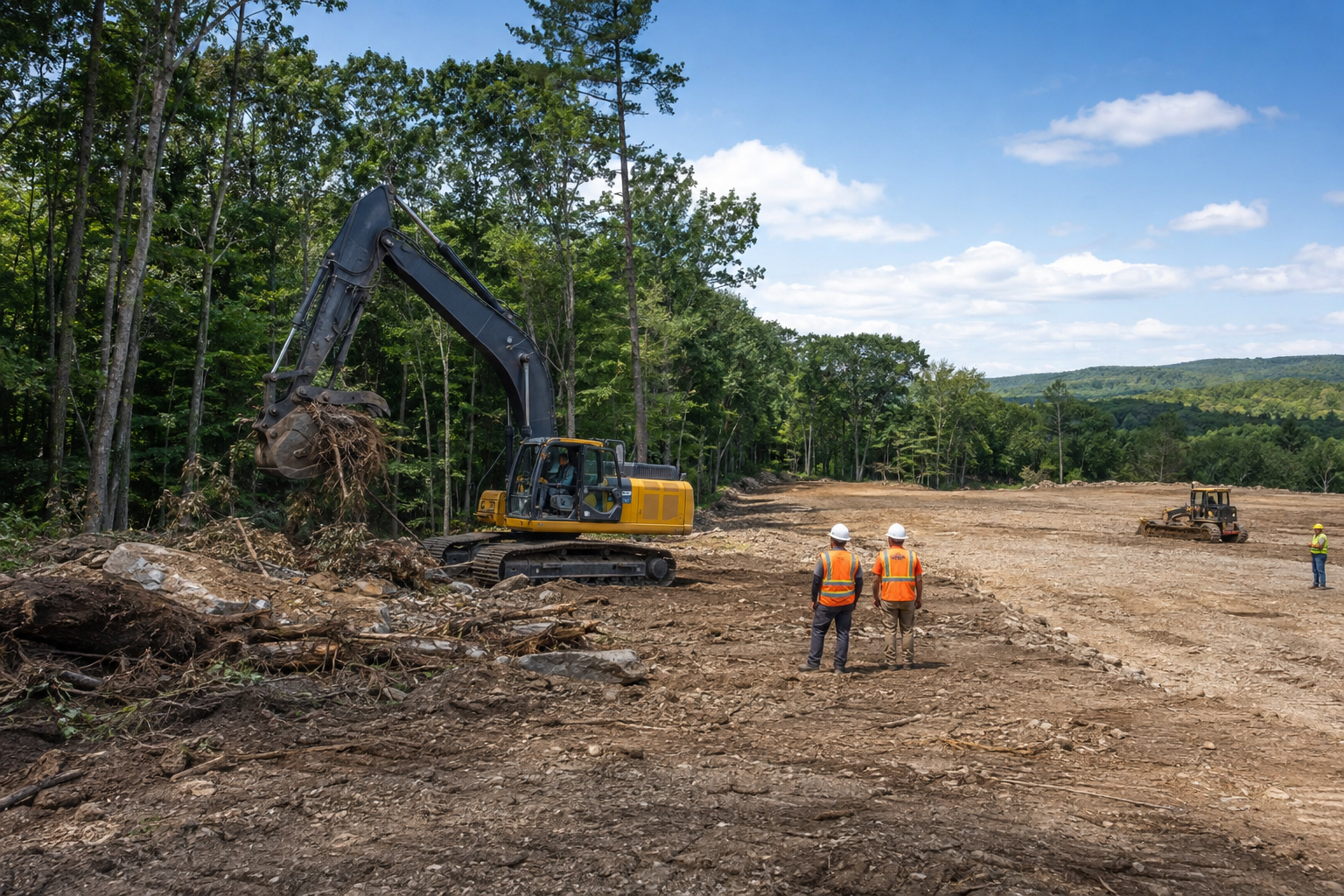
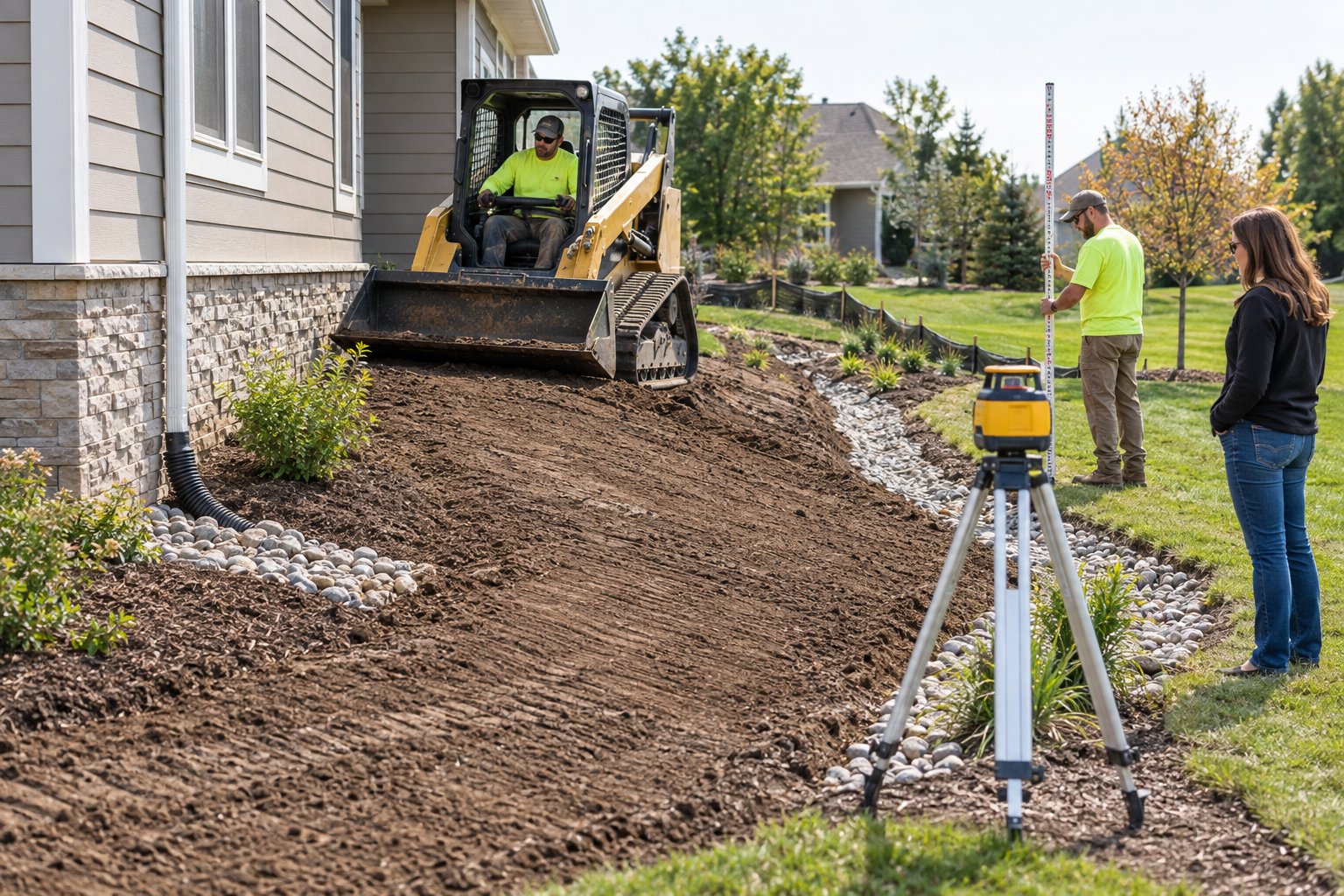
Site grading is the process of shaping the ground so it has the elevations and slopes needed for drainage, construction, and safe use. The goal is not simply to make a yard flat. A properly graded property directs water toward appropriate drainage paths and away from places where runoff can cause problems. Grading may involve removing soil from high areas, adding appropriate fill to low areas, creating swales, correcting depressions, or shaping the ground around structures. In construction, rough grading establishes the larger shape of the property, while final grading refines the surface before landscaping or other finishing work. For homeowners, one of the most important concepts is positive grading around the house.
Why Should the Ground Slope Away From a House?
The ground should generally direct surface runoff away from the house because water follows the lowest available path. When the yard slopes toward the foundation, rain can collect beside the structure instead of moving away.
That can contribute to saturated soil, muddy areas, erosion, crawlspace moisture, and water pressure against below-grade foundation surfaces. Good foundation drainage begins with controlling water before it reaches the wall whenever possible. Gutters and downspouts also need to support that goal. If a downspout releases a large amount of roof water directly beside the house, even an otherwise reasonable grade can become overwhelmed during heavy rain.
What Happens When a Yard Is Graded Toward the House?
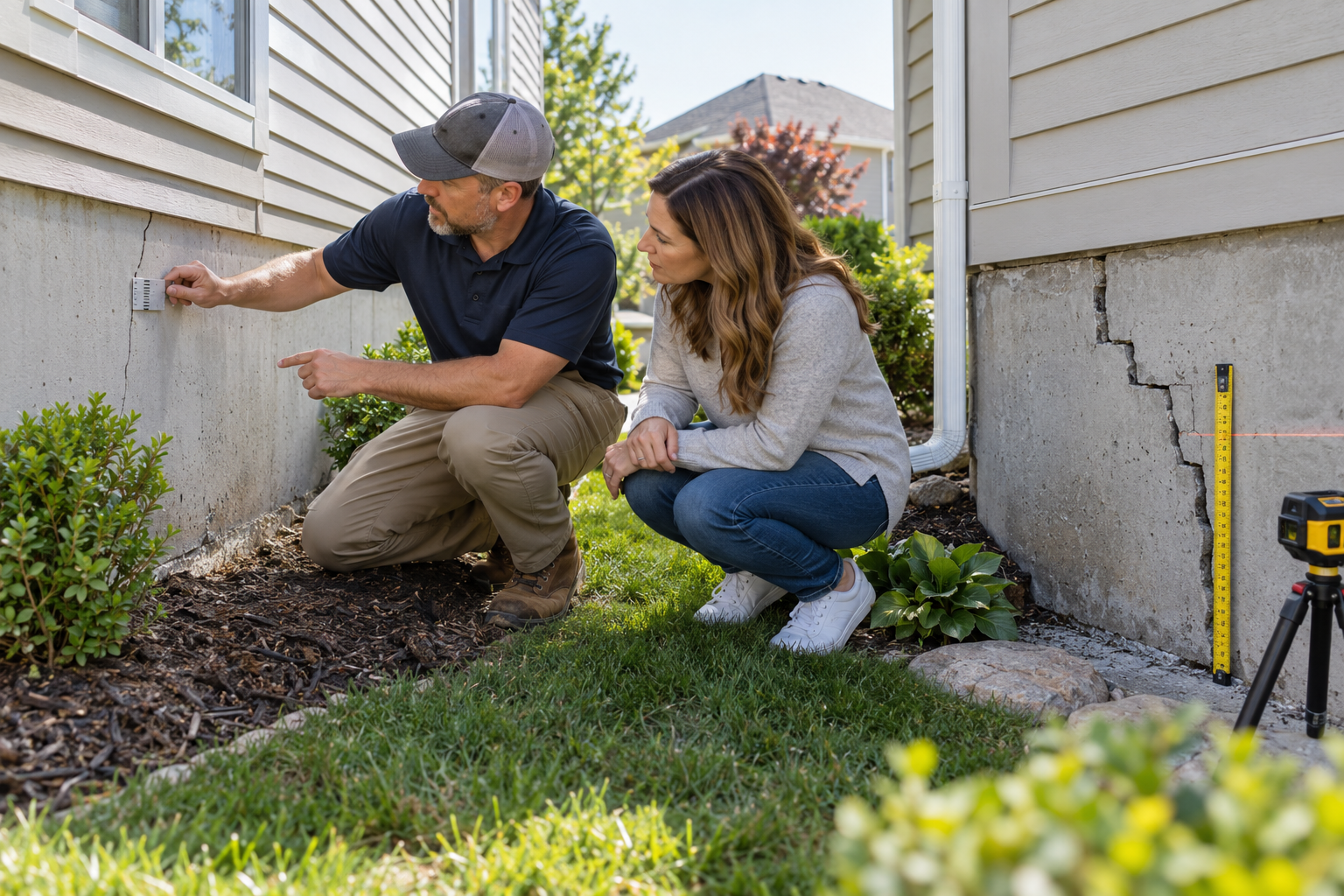
Negative grading can create repeated water problems near the foundation. Homeowners may notice puddles after rain, muddy soil that stays wet longer than the rest of the yard, washed-out mulch, or water flowing directly toward the home. Over time, soil may erode from some areas and accumulate in others. Moisture can also reach crawlspace vents, basement walls, or other low openings. If the supporting soil changes enough, foundation movement may occur as well. Our article on Foundation Settlement vs Foundation Failure explains why the pattern and progression of movement matter more than simply seeing one crack. Poor grading can contribute to a foundation problem, but it should be evaluated together with soil, drainage, construction, and other site conditions.
Can Poor Grading Cause Foundation Problems?
Yes, poor grading can contribute to foundation problems by repeatedly directing surface water toward the soil supporting the structure. Water can soften or erode some soils and create significant moisture changes in others.
If one part of the foundation experiences different soil conditions from another, uneven movement can develop. This does not mean every house with poor grading will need structural repair. It means drainage should be part of the evaluation when movement appears. For homeowners considering foundation repair in Nashville, correcting the water source may be just as important as understanding the structural symptom.
How Does Water Around a Foundation Affect Soil?
Water can change how soil behaves, but the effect depends on the soil type and property.
The USDA Natural Resources Conservation Service explains that soil characteristics can vary significantly from one location to another. Its Web Soil Survey provides current soil data that can be reviewed for specific areas.
Some soils drain relatively well, while others may remain wet longer, erode more easily, or change volume as moisture levels rise and fall. That is why two Nashville homes experiencing the same rainfall may not respond in exactly the same way. Our article on how Nashville soil affects foundations explains why soil conditions and moisture patterns should be considered together when foundation movement appears.
What Are the Signs Your Property Has Poor Site Grading?
Poor grading is often easiest to recognize during or shortly after rainfall. Look for water flowing toward the house instead of away from it. Other common warning signs include puddles beside the foundation, soggy soil that remains wet for long periods, erosion channels, exposed soil, washed-out mulch, and sediment collecting on sidewalks or patios. Low areas between the house and yard can also trap water. Pay attention to how downspouts interact with the grade. A downspout that empties into a depression can create a larger drainage problem than either condition would create alone.
What Is Positive Grading Around a House?
Positive grading means the ground is shaped so water flows away from the home. Negative grading does the opposite and directs runoff toward the structure. A simple example is a backyard where the ground immediately beside the house is lower than the lawn farther away. Rainwater naturally moves into that low area and may remain against the foundation. With positive grading, the surface rises near the house and gradually falls toward a safe drainage path. The exact slope and design depend on the site, surface materials, surrounding properties, and local requirements.
Can Site Grading Prevent Basement or Crawlspace Water Problems?
Site grading can reduce some basement or crawlspace moisture problems when surface runoff is contributing to the issue. If rainwater repeatedly moves toward foundation walls or low crawlspace areas, changing the grade may help direct that water elsewhere. However, grading cannot solve every moisture problem. Groundwater, plumbing leaks, failed drains, damaged foundation components, roof runoff, or other sources may also be involved.
This is why regrading should follow an evaluation of where the water is actually coming from rather than simply assuming the yard slope is responsible.
How Do Gutters and Downspouts Work With Site Grading?
Gutters and downspouts collect water from the roof and release it at specific locations around the house. If that water is discharged beside the foundation or into a low spot, it can undermine otherwise good grading.
The ground and roof drainage system should work together. Water leaving a downspout should have a clear path away from the home without immediately creating erosion or pooling. During heavy rain, homeowners can often learn a great deal simply by watching where the water moves after leaving each downspout.
Can Poor Site Grading Cause Erosion?
Yes, poor grading can cause or worsen erosion when runoff becomes concentrated in certain areas. Water flowing rapidly downhill may carry soil, mulch, and other landscaping material with it. Over time, small channels can become deeper and expose roots or create unstable slopes. In some cases, a retaining structure may become part of the solution, but a wall should not be used as a substitute for proper water management. Our guide on whether your property may benefit from a retaining wall explains how soil support, slopes, and drainage work together.
Can Regrading Help an Existing Foundation Problem?
Regrading can help address a drainage condition that may be contributing to foundation movement, but it cannot reverse existing structural damage. For example, if water consistently collects along one side of a house, improving the grade may reduce future saturation in that area. However, an already displaced foundation may still require structural evaluation. This distinction matters for anyone considering foundation repair Nashville. The best repair plan should consider both the existing foundation condition and the site factors that may have contributed to it. Treating only the crack while ignoring poor drainage can leave part of the problem unresolved.
When Is a Drain Needed Instead of Regrading?
A drainage system may be needed when surface slope alone cannot move water safely away from the property. This can happen on low-lying lots, properties receiving runoff from higher ground, narrow side yards, or areas where there is little room to create a useful slope. A French drain or other drainage system may collect and redirect water, depending on the site. Grading and drains are not competing solutions. They are often used together.
The correct approach depends on where the water originates, where it needs to go, and whether surface flow can reach that location naturally.
Can Landscaping Ruin Proper Site Grading?
Yes, landscaping changes can gradually alter drainage around a home. Repeatedly adding mulch or soil near the foundation may raise the grade in unwanted areas. Raised garden beds, edging, walkways, patios, and decorative features can also block drainage paths. Soil can settle after construction, creating new depressions that were not present when the property was first graded. Homeowners should periodically look at the grade around the house after landscaping changes. A small change in elevation can sometimes redirect a surprising amount of water.
Should You Check Grading Before Installing a Patio or
Driveway?
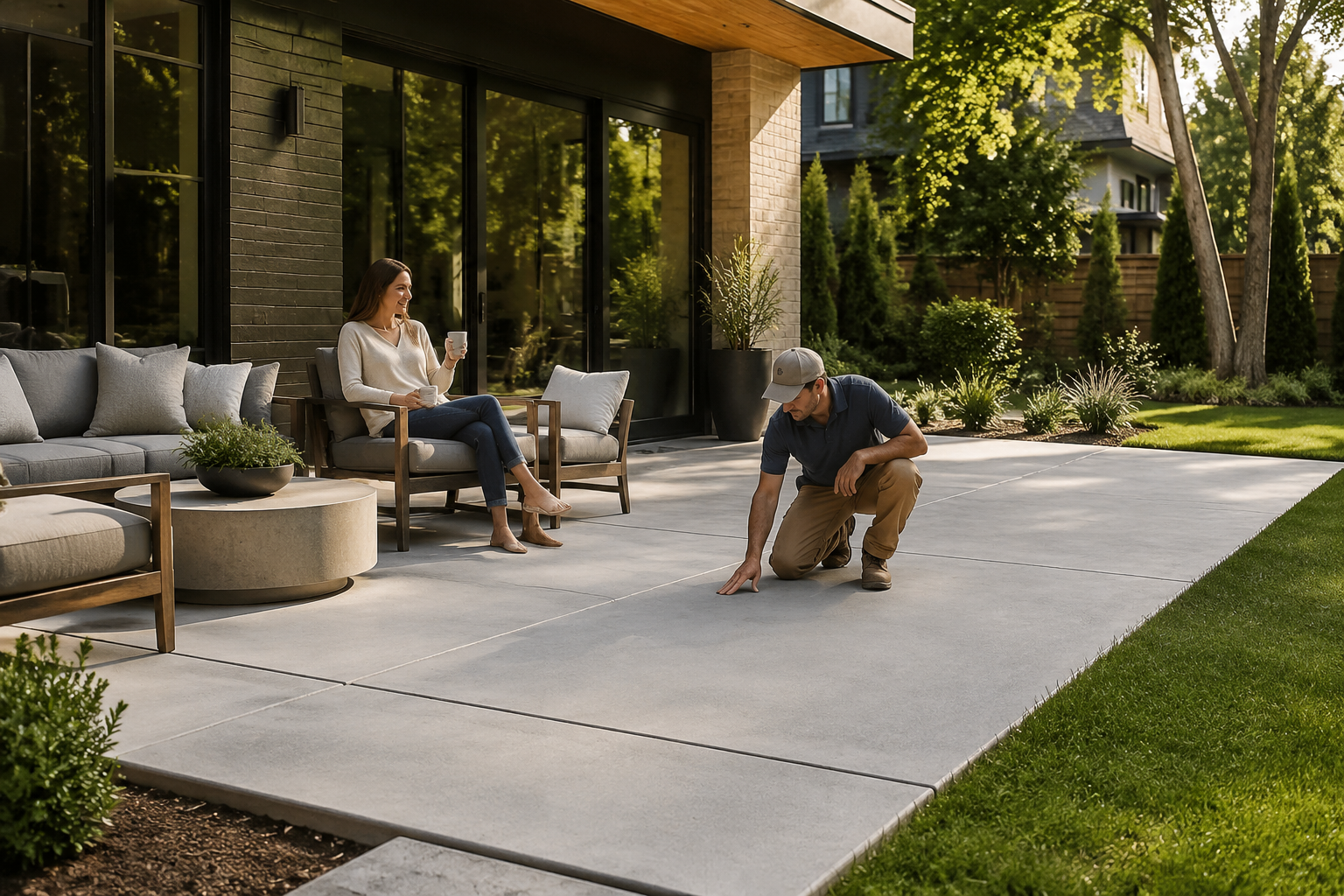
Yes, grading should be evaluated before installing a patio, driveway, or other large hard surface. Concrete does not absorb rainfall the same way soil or landscaping does, so runoff needs somewhere to go. If the new surface directs water toward the home, garage, or neighboring property, it can create a drainage problem. The finished patio and the surrounding grade should work together rather than fight each other.
Does Site Grading Require a Permit in Nashville?
Some grading work in Metro Nashville and Davidson County requires a grading permit, while certain smaller or qualifying activities may be exempt. Metro Water Services defines grading broadly as changing site elevations, removing ground cover, cutting, filling, stockpiling, or similar land-disturbing activity. Its current guidance lists specific permit thresholds and exemptions, including some landscaping work on existing developed properties when limits on disturbed area, grade change, material volume, drainage impacts, and other conditions are met.
Metro also notes that even exempt activities must still comply with applicable stormwater and erosion-control requirements. Because requirements depend on the actual scope and site, homeowners should confirm current Metro requirements before significant regrading begins.
How Can You Check Your Yard's Grading After Rain?
The easiest way is to observe the property while water is actually moving. Look for the direction of runoff, puddles beside the foundation, overflowing gutters, downspouts discharging into low areas, erosion channels, and soggy soil. Walk around the entire home if conditions are safe. Pay particular attention to transitions between soil and hard surfaces such as patios, sidewalks, and driveways. Photos taken during several storms can help show whether the same areas repeatedly collect water. Those patterns are often more useful than looking at a dry yard and guessing where runoff travels.
When Should You Call a Professional About Site Grading?
Professional evaluation makes sense when water regularly collects near the foundation, significant regrading is needed, or drainage problems continue after simpler improvements. It is also helpful when patios, retaining walls, driveways, or other structures affect the grade. Foundation symptoms make the issue more important.
If cracks are widening, floors are becoming uneven, or doors are suddenly sticking, grading should be evaluated as part of the larger site condition rather than treated as a landscaping problem alone. Our guide on when to call a professional for foundation issues explains when several warning signs together deserve closer attention.
Why Choose GK Construction Solutions for Site Grading and Foundation Concerns?
At GK Construction Solutions, we look at grading, drainage, and structural symptoms together.
Our work includes excavation, concrete construction, foundation-related services, masonry, hardscapes, and site work. That broader construction perspective helps us evaluate how water moves across the property and how surrounding surfaces may be affecting the foundation. For homeowners researching foundation repair Nashville, we believe understanding the cause matters as much as repairing the visible damage. If water is concentrating beside the home, we want to know why. If the grade has changed, we look at what created that change. If a patio, driveway, or retaining wall is involved, we consider how those features interact with the drainage plan.
Our goal is to recommend a site-specific solution rather than assume every water problem needs the same fix.
Frequently Asked Questions About Site Grading
Can I Add Soil Around My Foundation to Improve Grading?
Yes, adding appropriate fill can sometimes correct minor grading problems, but the finished elevation and drainage path need to be considered carefully. Soil should not simply be piled against siding, vents, or other building components. The material should also be suitable for establishing a stable grade rather than creating a loose surface that quickly washes away. Nearby sidewalks, patios, and property boundaries can limit how much elevation can be changed. For small adjustments, adding and compacting suitable material may help. Larger drainage problems are better evaluated as part of the entire site rather than corrected by adding soil in one isolated location.
Can Bad Grading Cause Water in a Crawlspace?
Yes, negative grading can contribute to crawlspace moisture by directing rainwater toward the foundation instead of away from it. Water may collect near crawlspace vents, foundation openings, or low exterior areas and increase moisture around the structure. However, grading is not the only possible cause. Plumbing leaks, groundwater, damaged drainage systems, or high humidity may also contribute. The best approach is to identify when the moisture appears and where water travels during rain. If the crawlspace becomes wet shortly after storms and exterior water is pooling against the house, site drainage deserves closer attention.
Does Regrading Permanently Fix Drainage Problems?
Not always. Regrading can provide a long-term solution when the main problem is surface water moving in the wrong direction, but it cannot control every water source. Soil may settle again, landscaping may change the grade, gutters can overflow, or water may arrive from neighboring or uphill areas. Underground water and plumbing problems also require different solutions. After regrading, the property should still be monitored during heavy rain to confirm that runoff follows the intended path and does not create new erosion or ponding somewhere else.
Can a Patio Cause Water to Flow Toward My Foundation?
Yes, an improperly sloped patio can direct rainwater toward the foundation or trap it in a low area beside the home. Large hard surfaces collect runoff that previously may have soaked into the ground, so their slope is important. A patio should be planned as part of the property's broader drainage pattern rather than treated as an isolated slab. If water consistently collects where the patio meets the house, the surface elevations and surrounding grade should be evaluated. Correcting the problem may involve the patio, nearby soil, drainage, or a combination of those conditions.
How Do I Know If My Yard Needs Regrading?
Your yard may need regrading if rainwater repeatedly moves toward the house, puddles beside the foundation, or creates erosion in the same areas after storms. Other clues include soggy soil, washed-out landscaping, sediment on walkways, and low spots that stay wet. The best time to inspect the yard is during or shortly after significant rain because the water shows you the actual drainage path. Not every puddle requires major grading work, but repeated patterns are worth investigating, especially when they occur close to the foundation or alongside structural symptoms.
Should I Fix Grading Before Foundation Repair?
Grading and foundation problems should often be evaluated together rather than automatically fixing one before the other. If poor drainage is contributing to changing soil conditions, correcting that problem may be an important part of the overall repair plan. However, significant structural movement may also require direct stabilization or repair. Regrading alone cannot reverse existing foundation damage. A coordinated evaluation helps determine which conditions are causes, which are symptoms, and what sequence of work makes sense for the property. This can reduce the risk of repairing visible damage while leaving the drainage problem that contributed to it.
Final Thoughts
Site Grading plays a simple but important role: it determines where surface water goes. When the ground directs rain away from a Nashville home, it helps reduce unnecessary moisture around the foundation and can limit erosion, puddling, and soil saturation. When the grade sends water toward the house, problems can build slowly. Good grading should also work with gutters, downspouts, patios, driveways, retaining walls, and other drainage features.
It is not a cure for every foundation or moisture problem, but it is an important part of understanding the property as a complete system. Before focusing only on a crack, puddle, or damp crawlspace, look at where the water is coming from and where the site is sending it.
See Where the Water Is Going Before It Becomes a Bigger Problem
If water keeps collecting near your Nashville home, schedule a site evaluation with GK Construction Solutions. We can look at the grade, drainage paths, surrounding concrete, soil conditions, and visible foundation concerns to help determine whether regrading or another site improvement should be part of the solution.
Follow our social media pages below: