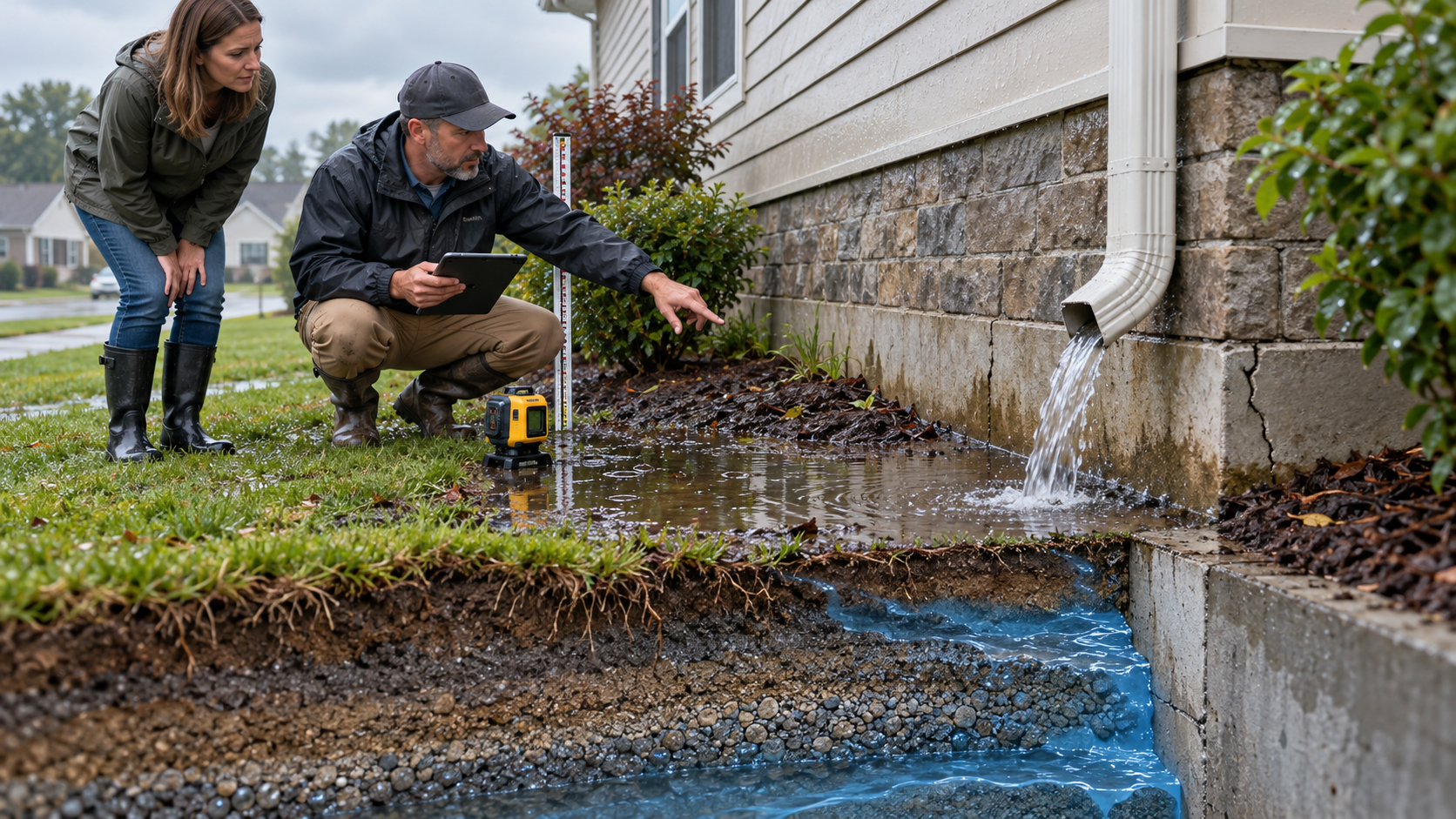
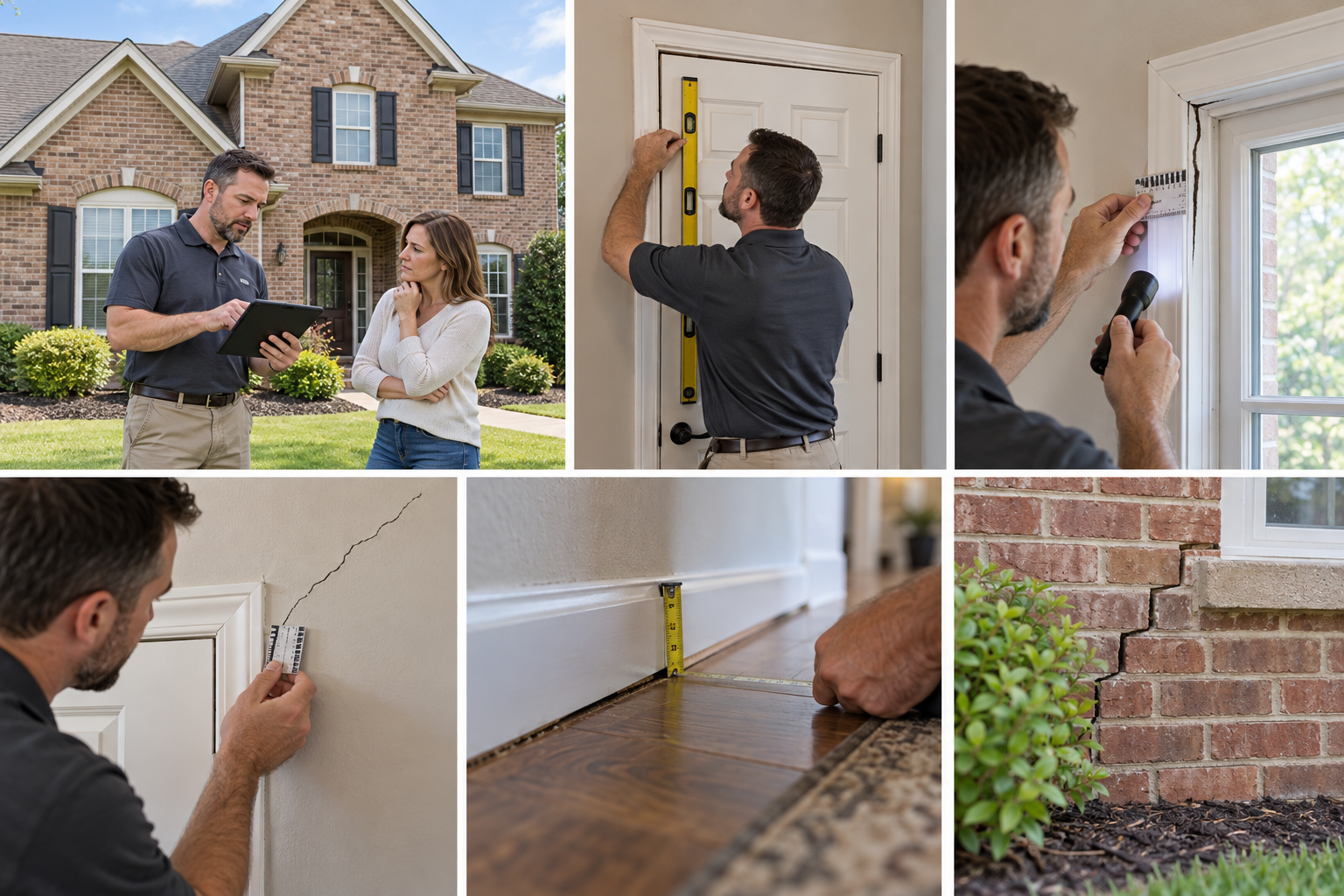
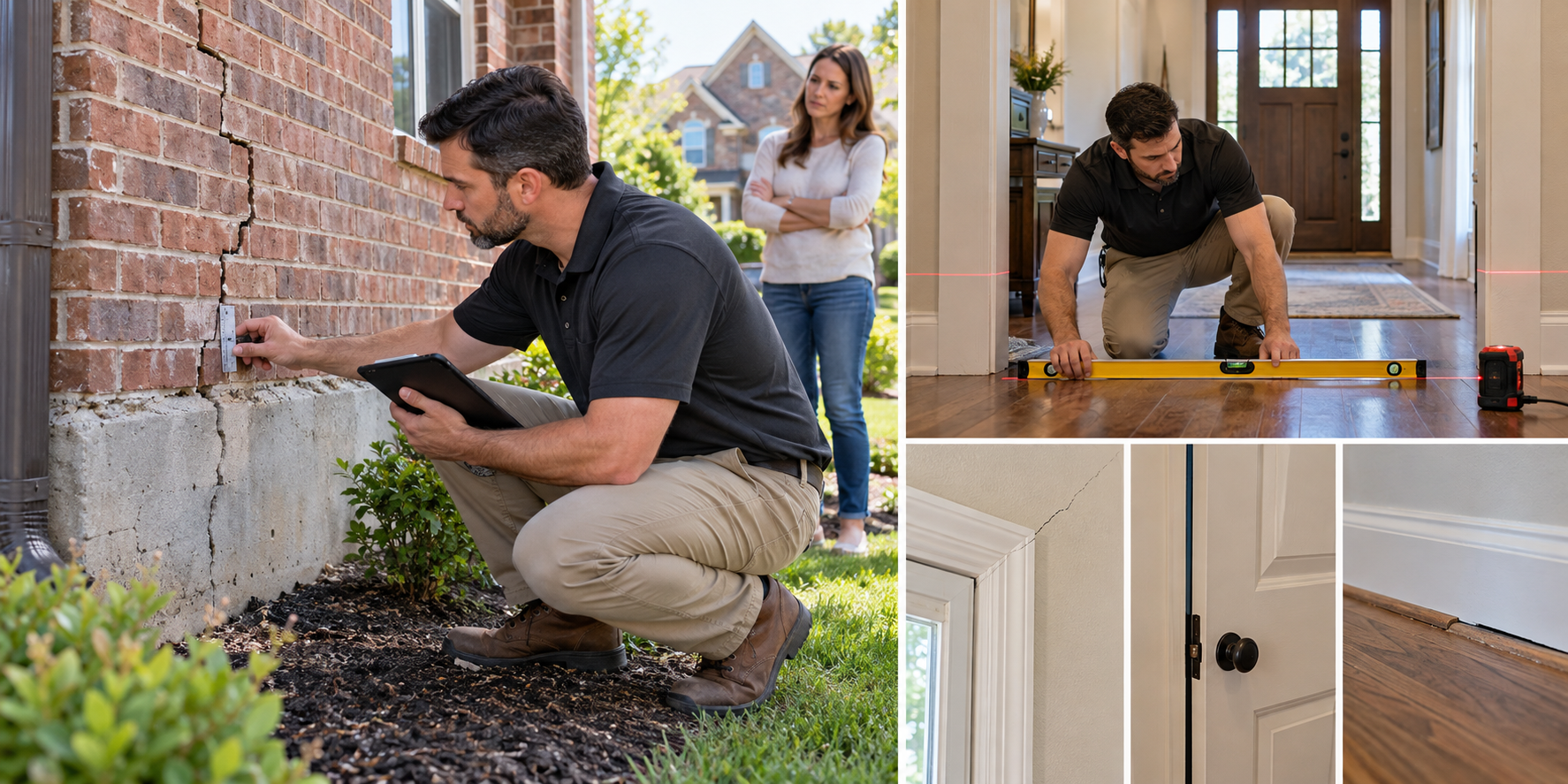
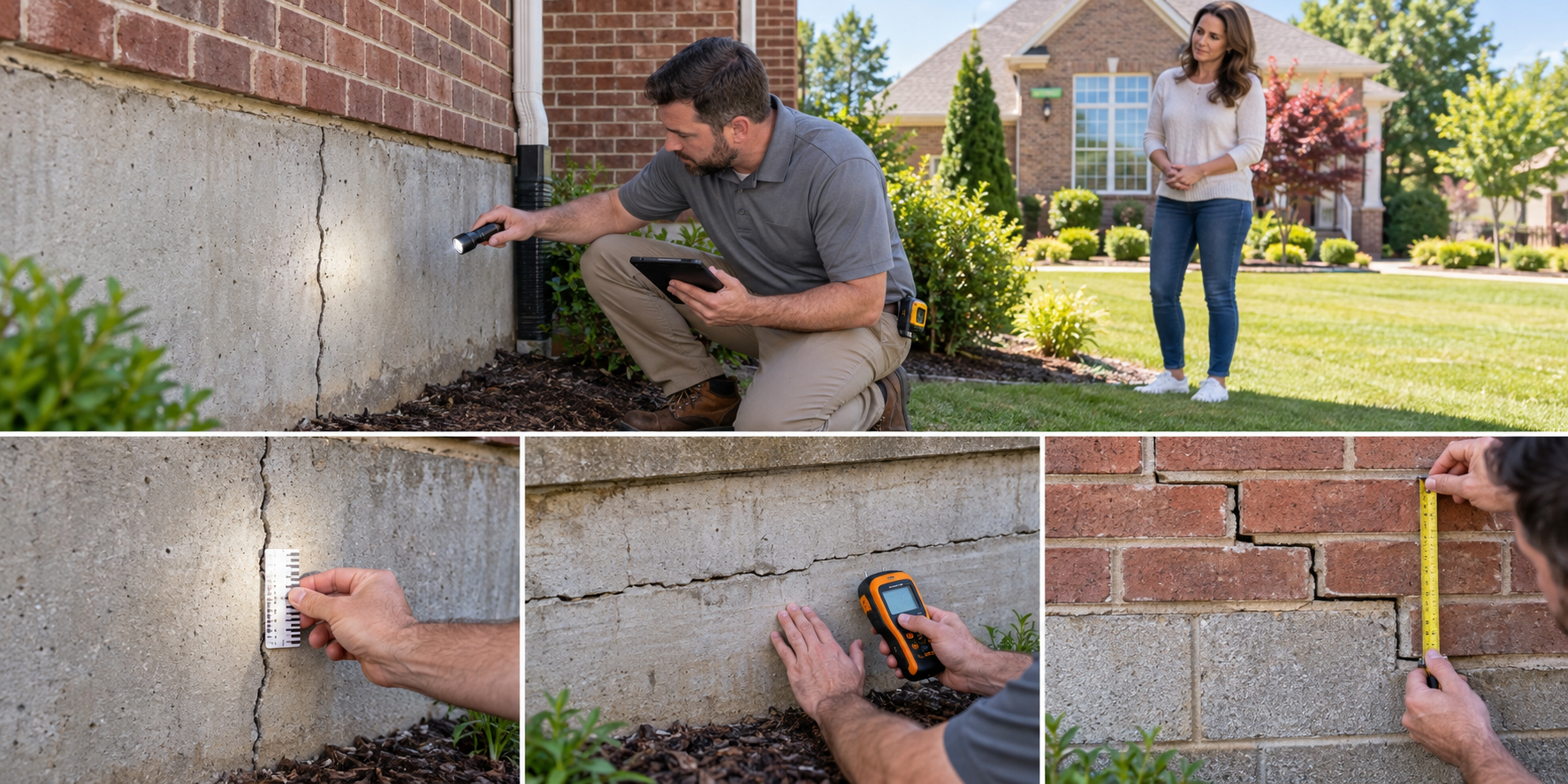
After heavy rain, most homeowners check the roof, gutters, or driveway. What happens to the water once it reaches the ground is just as important. If water repeatedly collects beside your Foundation, runs toward the house, or washes soil away from one area, the effects can build slowly. You may eventually notice cracks, uneven floors, sticking doors, damp crawl spaces, or changes around exterior walls. At GK Construction Solutions, we look at drainage as part of the larger property rather than treating it as a separate landscaping problem. The direction water travels can affect the soil supporting the home. For homeowners researching
foundation repair Nashville, understanding that connection matters. Repairing a crack without considering why water is concentrating around the house may leave an important contributing condition unresolved.
How Can Poor Drainage Damage a Home Foundation?
Poor drainage can damage a home foundation over time by allowing water to repeatedly collect in the soil around or beneath the structure. Depending on the soil and property, excess water may soften soil, contribute to erosion, create uneven moisture conditions, or increase water pressure against below-grade foundation walls. When one area around the house stays wetter than another, the supporting soil may behave differently, which can contribute to uneven foundation movement and settlement. Poor drainage can also increase the chance of moisture reaching crawl spaces, basements, and cracks in foundation walls. The U.S. Department of Health and Human Services Healthy Homes Reference Manual recommends installing gutters so water drains away from the foundation and grading soil around a home so surface water also moves away from the structure. Drainage alone does not explain every foundation problem, but when water repeatedly pools beside a Nashville home, it should be evaluated along with cracks, settlement, soil conditions, and other structural symptoms.
What Happens When Water Pools Around a Foundation?
Water follows the lowest available path. If part of the yard slopes toward the house, rainwater may collect along the foundation instead of moving safely away. Downspouts that empty directly beside exterior walls can add even more water to the same area. Over time, repeated saturation can change how the surrounding soil supports the structure. Some soil may soften or erode. Other soil may change volume as moisture levels increase and decrease. GK Construction Solutions' guide to
proper site grading and foundation protection explains that poor grading can create saturated soil, erosion, crawl-space moisture, and uneven support around a home. This does not mean every puddle will cause foundation failure. It does mean repeated water accumulation deserves attention.
Can Poor Drainage Cause Foundation Settlement?
Yes, poor drainage can contribute to conditions that lead to settlement. Foundation settlement happens when the supporting soil beneath part of a structure moves or loses support. If water repeatedly washes soil away from one location or keeps another area saturated, support may become less consistent. Uneven support can lead to differential settlement, where one part of the structure moves more than another. That movement may eventually show up as cracks, sloping floors, sticking doors, or gaps around windows. Our article on
foundation settlement versus foundation failure explains why the pattern and progression of movement matter more than simply noticing one crack. For foundation repair in Nashville, drainage should therefore be considered alongside the visible structural symptoms.
How Does Nashville Soil React to Too Much Water?
Soil does not respond to moisture the same way everywhere. Nashville properties can include clay-rich soils that hold water and change as moisture conditions fluctuate. GK Construction Solutions' guide to
how Nashville soil affects foundations discusses how clay-heavy soil can expand when wet and shrink as it dries. This repeated change can place stress on a foundation. The important point is that drainage problems can make moisture less consistent around the house. One side may remain relatively dry while another stays saturated after every storm. Those differences can contribute to uneven movement. That is why drainage, soil, and foundation condition should be evaluated together rather than as separate problems.
Can Poor Drainage Cause Foundation Cracks?
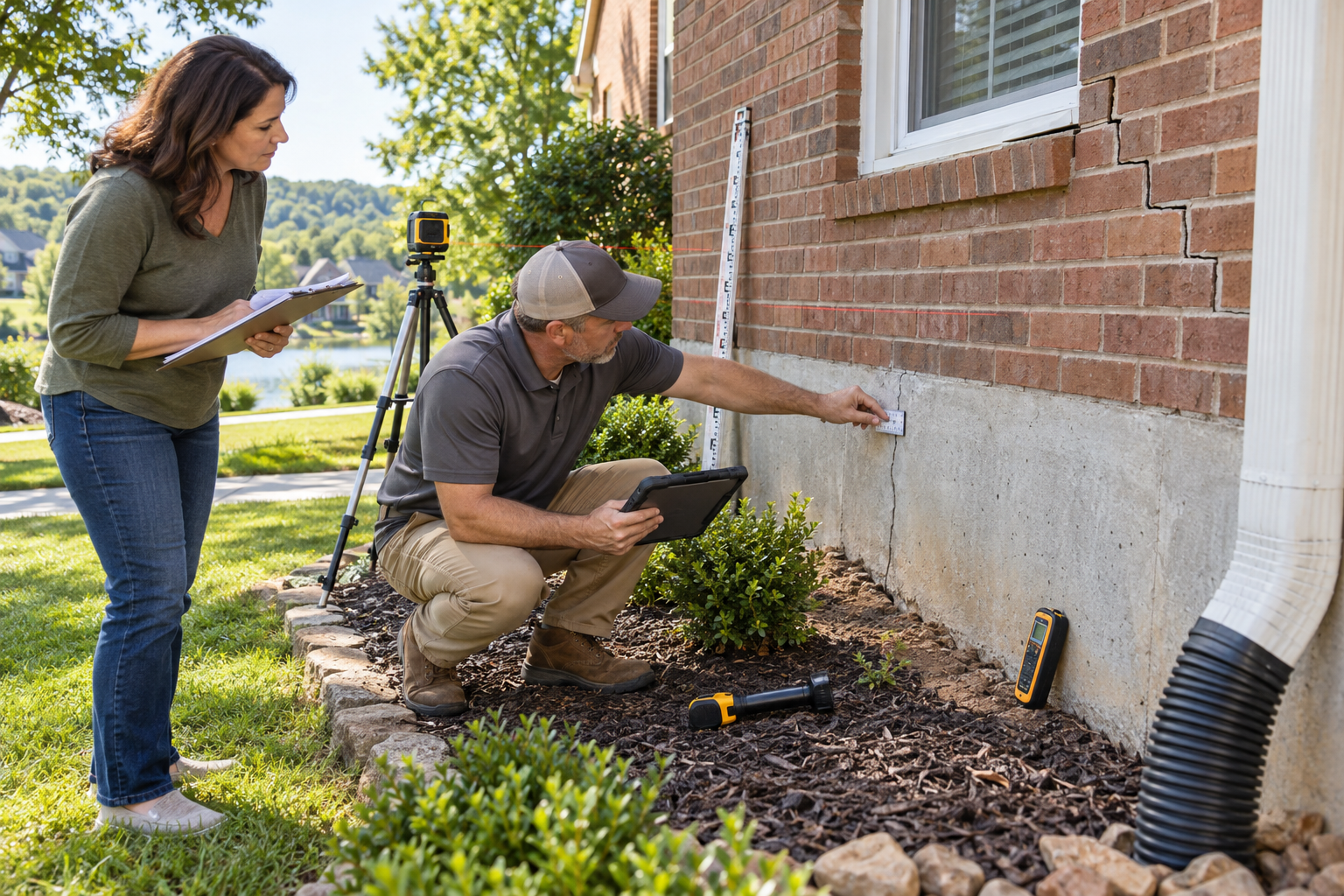
It can contribute to the conditions that cause cracking. If soil beneath or beside a foundation moves unevenly, the concrete, masonry, and framing above it may experience additional stress. Homeowners may notice vertical, diagonal, horizontal, or stair-step cracks depending on the location and type of movement. However, a crack alone does not prove drainage is the cause. Construction methods, normal material shrinkage, soil conditions, plumbing leaks, settlement, and other factors may also be involved. Our guide to
common causes of foundation damage in Nashville homes discusses poor drainage alongside soil movement and changing moisture conditions as possible contributors to foundation problems. The source of the movement should be identified before deciding on a repair.
Can Bad Gutters Damage a Foundation?
Gutters themselves do not usually damage a foundation, but poorly managed roof runoff can contribute to drainage problems. A roof collects a large amount of rainwater and sends it toward the gutter system. If the gutters overflow or downspouts discharge immediately beside the home, that water becomes concentrated in a relatively small area. The
U.S. Department of Health and Human Services Healthy Homes Reference Manual says gutters should be installed so drainage is carried away from the foundation. It also recommends grading surrounding soil so water moves away from the house. Check for overflowing gutters, disconnected downspouts, erosion beneath outlets, and downspouts that release water toward the house. Fixing these relatively simple drainage problems can be an important part of protecting the surrounding soil.
How Does Poor Site Grading Affect a Foundation?
Site grading determines where surface water naturally travels. Positive grading generally directs water away from the structure. Negative grading sends runoff toward it. A low area next to the home may stay wet long after the rest of the yard dries. GK Construction Solutions'
site grading guide explains that grading may involve correcting depressions, creating drainage paths, adding appropriate fill, or shaping the property to move runoff away from vulnerable areas. Significant grading work should be planned carefully because changing the path of water can affect other parts of the property. In some situations, grading alone may not be enough and another drainage solution may be needed.
What Are Signs Poor Drainage Is Affecting Your Foundation?
Drainage problems are easier to recognize when you look at both the yard and the house. Outside, watch for persistent puddles, soil washing away, muddy areas next to the foundation, downspout erosion, or water consistently flowing toward the structure.
Inside, warning signs may include:
- Foundation or wall cracks that continue changing
- Uneven or sloping floors
- Doors and windows that begin sticking
- Moisture in crawl spaces or basements
- Gaps developing around walls or trim
- Repeated water entry after rain
Several symptoms developing together deserve more attention than one isolated condition. GK Construction Solutions' guide on
when to call a professional for foundation issues discusses cracks, uneven floors, sticking doors, soil movement, and poor drainage as conditions that may need professional evaluation.
Can Improving Drainage Fix an Existing Foundation Problem?
Improving drainage can address a contributing water problem, but it cannot automatically reverse structural damage that has already occurred. For example, correcting the grade may prevent rainwater from continuing to pool beside one corner of the home. That does not necessarily lift a settled foundation back into place or repair an already displaced wall. This distinction is important. For homeowners considering foundation repair Nashville, the repair plan may need to address both the existing structural condition and the drainage issue that contributed to it. Treating only one side of the problem may leave the other unresolved.
How Can Homeowners Improve Drainage Around a Foundation?
Start by watching the property during and shortly after rainfall. Look at where roof runoff exits, whether gutters overflow, whether the soil slopes toward or away from the structure, and where puddles remain. Some properties may benefit from gutter or downspout corrections. Others may need regrading, swales, drainage systems, or erosion-control measures. Avoid making major drainage changes without understanding where the redirected water will go. The goal is not simply to move water away from one wall. It is to establish a safe drainage path that works with the entire site. GK Construction Solutions works with excavation, grading, concrete, retaining walls, and other site-related construction, allowing drainage concerns to be considered as part of the broader property.
When Should You Have Foundation Drainage Evaluated?
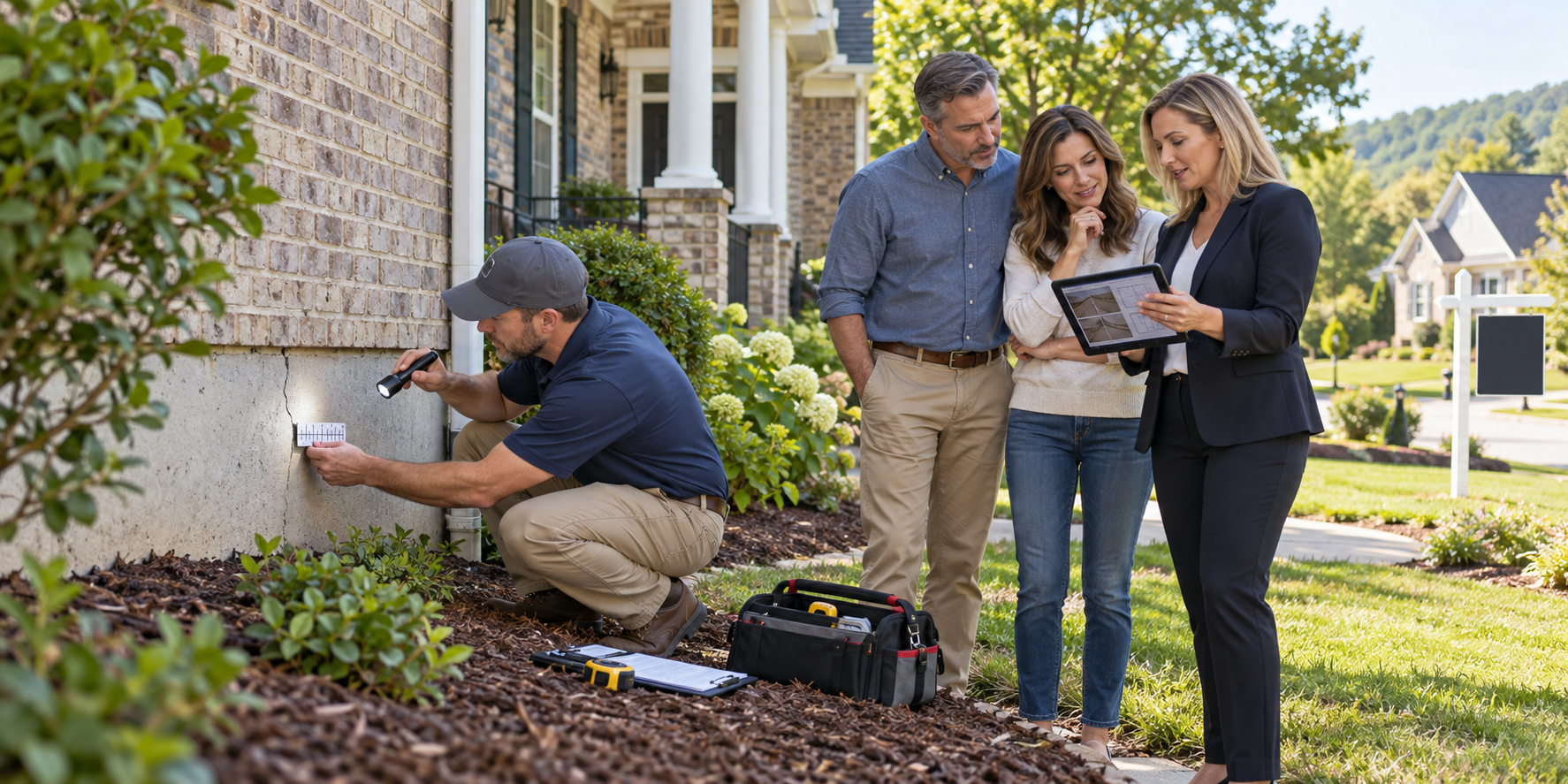
Consider an evaluation when water consistently collects around the home or drainage issues appear alongside structural changes. Do not wait for a dramatic foundation crack if the property is already showing obvious water-management problems. Repeated erosion, persistent saturated soil, water entering the crawl space, and runoff moving toward the house are all reasons to investigate. If cracks, uneven floors, or sticking doors are also getting worse, evaluating both drainage and foundation condition becomes even more important. Early investigation does not mean major repair will automatically be necessary. It simply gives you better information about what is happening.
Why Choose GK Construction Solutions for Foundation and Drainage Concerns?
At
GK Construction Solutions, we look beyond the visible crack. Our services include concrete construction, excavation, grading, foundation-related work, masonry, retaining walls, and other site improvements. That wider construction background helps us evaluate how drainage, elevations, surrounding surfaces, and the structure may be interacting. For Nashville homeowners, our
Nashville construction and foundation services provide a starting point for evaluating foundation concerns and the site conditions surrounding them. If water is collecting beside the home, we want to understand where it is coming from and why it is staying there. For homeowners searching for foundation repair Nashville, that means looking at both the structural symptom and possible contributing conditions before recommending the next step.
Frequently Asked Questions
How Far Should Water Drain Away From a Foundation?
There is no single drainage distance that works for every property. The important goal is to prevent water from collecting beside the foundation and provide a safe path for runoff. Site slope, soil, neighboring properties, hard surfaces, and local drainage requirements all influence the appropriate design.
Can Heavy Rain Suddenly Cause Foundation Problems?
A single storm does not automatically cause foundation failure, but heavy rainfall can reveal existing drainage weaknesses. Water may expose erosion, saturated soil, clogged gutters, low spots, or areas where runoff consistently collects. Repeated moisture problems are generally more concerning than one temporary puddle.
Can a French Drain Protect a Foundation?
A French drain can be useful in some situations by collecting and redirecting water, but it is not the right solution for every property. The source of the water, site elevation, soil, outlet location, and existing drainage should be evaluated first.
Can Downspouts Cause Foundation Problems?
Downspouts can contribute to foundation drainage problems if they discharge large amounts of roof runoff directly beside the home. They should direct water toward an appropriate drainage area rather than allowing it to repeatedly saturate soil next to the foundation.
Will Regrading Stop Foundation Settlement?
Regrading can help correct surface drainage that may be contributing to soil movement, but it does not reverse existing structural settlement. If the foundation has already moved significantly, structural repair may still be necessary.
What Should I Do if Water Pools Near My House After Every Rain?
Start by checking gutters, downspouts, grading, and obvious low spots. If the pooling is persistent or appears alongside cracks, uneven floors, moisture intrusion, or other signs of foundation movement, have the site and foundation professionally evaluated.
Final Thoughts
Water does not need to enter the house to create problems around a Foundation. Poor drainage can slowly change the soil surrounding a Nashville home through saturation, erosion, and uneven moisture conditions. Over time, those conditions may contribute to settlement, cracking, moisture problems, or uneven structural movement. The most useful approach is to look at the entire water path. Where does rain leave the roof? Where do the downspouts discharge? Which direction does the yard slope? Where does water remain after a storm? Answering those questions can help reveal why a foundation problem is developing instead of focusing only on the crack it eventually creates.
Find the Source of the Water Before It Creates More Problems
If rainwater repeatedly collects near your Nashville home or you are noticing cracks, uneven floors, or other signs of movement,
contact GK Construction Solutions. We can evaluate the surrounding grade, drainage paths, concrete, and visible foundation concerns to help determine what practical next step makes sense for your property.
Follow our social media pages below: