How Much Does a Concrete Patio Cost in Nashville?
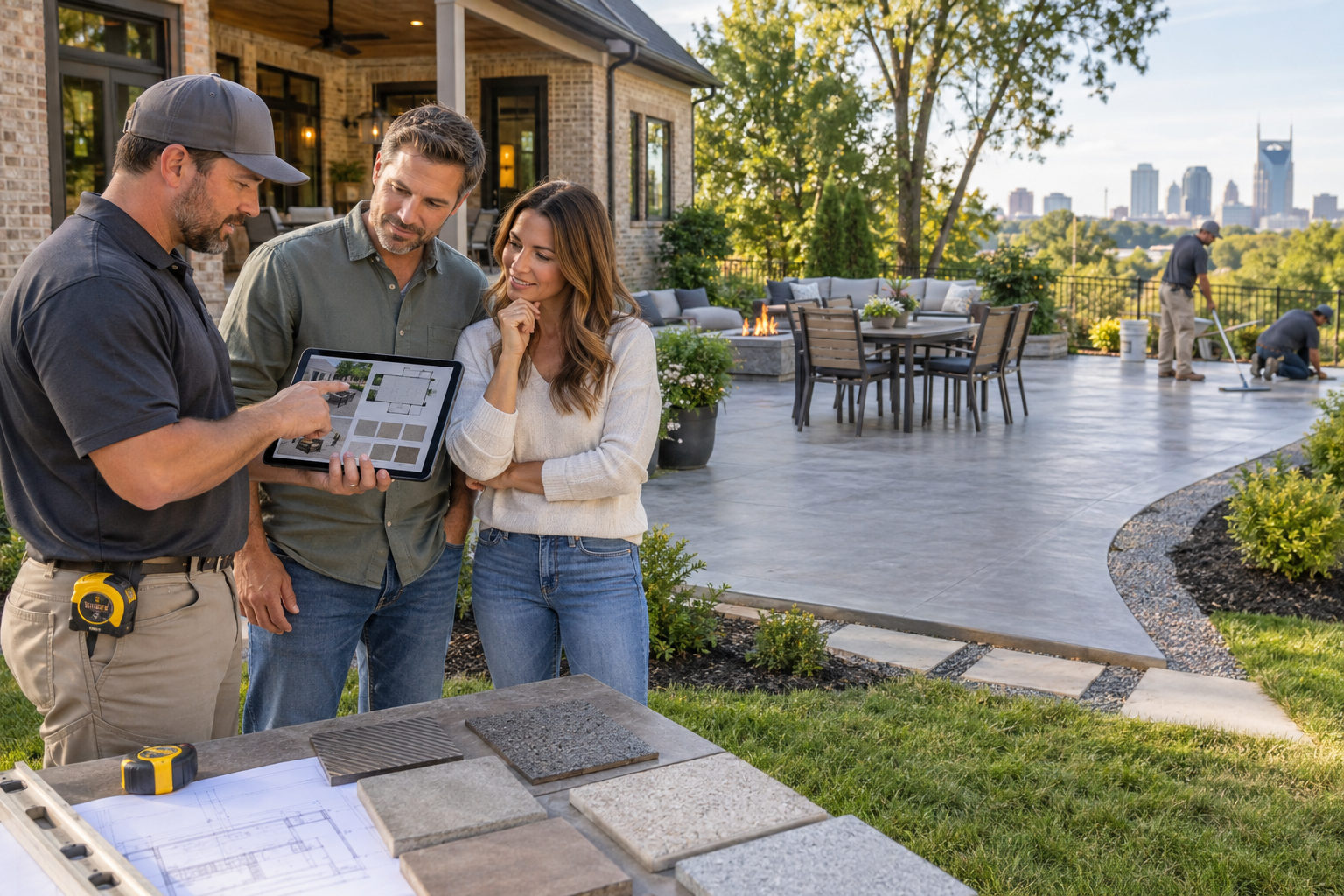
You may have a clear picture of the patio you want, but figuring out what it will actually cost can be much harder.
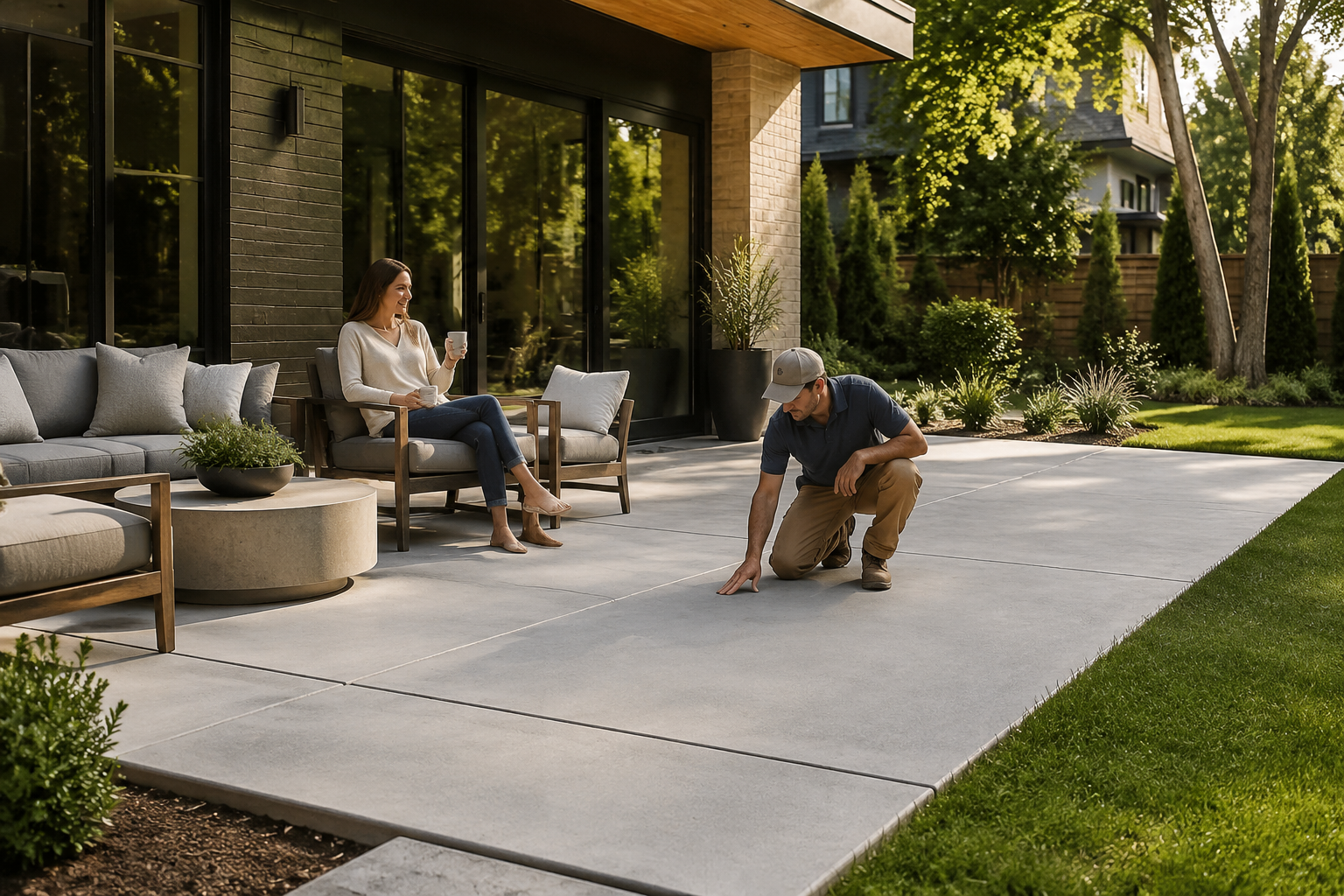
A Concrete Patio might be a simple rectangular slab behind the house, or it might include decorative stamping, color, steps, drainage improvements, demolition, and major site preparation. Those differences can change the budget quickly. At GK Construction Solutions, we encourage homeowners to look beyond the cost of concrete itself. The condition of the yard, access for equipment, drainage, grading, reinforcement, and finish all affect the scope.
Homeowners comparing general contractors in nashville tn should also make sure estimates include the complete project rather than just a low price for pouring the slab. A patio that is properly prepared and positioned for drainage can provide far more value than one built without considering the surrounding property.
How Much Does a Concrete Patio Cost in Nashville?
A Concrete Patio in Nashville can vary widely in price depending on its size, finish, site preparation, access, drainage, and design. As a general 2026 budgeting benchmark, Angi reports that concrete patios nationally average about $3,555, with common project totals ranging from approximately $1,919 to $5,393. Its broader reported range is about $4 to $30 per square foot, reflecting the major difference between simple slabs and highly customized installations. These numbers should be treated as planning estimates rather than Nashville quotes. A straightforward patio on a level, accessible yard may fall toward the lower end, while stamped finishes, demolition, poor access, grading corrections, drainage systems, retaining walls, or complex shapes can raise the price. Site preparation can be especially important because the finished patio depends on the ground beneath it. The best way to understand your actual cost is to evaluate the patio size, existing yard conditions, desired finish, drainage, and any related construction before requesting a complete project estimate.
What Factors Affect the Cost of a Concrete Patio?
Square footage is only the beginning. The final price may depend on the patio shape, slab design, reinforcement, finish, excavation, soil conditions, base preparation, access, drainage, and whether existing concrete or landscaping has to be removed. A simple rectangle is usually easier to form and finish than a curved patio with multiple levels or decorative borders. Access can also matter. If concrete trucks and equipment can get reasonably close to the work area, installation may be more straightforward. Tight backyards, fences, slopes, or other obstacles can increase labor. That is why two patios with identical square footage can have very different project costs.
How Does Patio Size Affect Cost?
Larger patios generally cost more because they require more concrete, base material, reinforcement, forms, finishing labor, and excavation. For example, a 100-square-foot sitting area requires far less material than a 400-square-foot outdoor entertaining space. However, the price does not always increase at exactly the same rate as square footage. Some project costs, such as equipment mobilization and setup, are relatively fixed. A larger patio may therefore have a different per-square-foot cost than a very small project. Homeowners should think first about how the space will actually be used rather than choosing a size based only on price.
How Much More Does Stamped Concrete Cost?
A stamped concrete patio generally costs more than a basic broom-finished slab because it requires additional materials and labor. The contractor may apply color, release materials, stamping patterns, decorative borders, and sealer. More complicated patterns or multiple colors can require additional time. Angi's 2026 patio-cost data identifies finish type and design complexity as major factors that can push a project toward the higher end of its reported price range. Stamped concrete can provide the appearance of stone, brick, or other materials while maintaining a continuous concrete surface, but homeowners should decide whether the decorative upgrade fits both their design goals and budget.
Is a Plain Concrete Patio Cheaper Than Pavers?
Often, but not always. A standard concrete patio can require fewer individual materials and less piece-by-piece installation than a paver patio. Pavers involve preparing the base, laying individual units, cutting pieces around edges, and filling joints. However, project complexity, paver selection, access, and site preparation can change the comparison. Concrete also has its own maintenance considerations. Cracking can occur over time, while individual pavers may sometimes be removed and replaced more easily. The better choice depends on appearance, budget, maintenance preferences, and the property itself.
Does Site Preparation Affect Concrete Patio Cost?
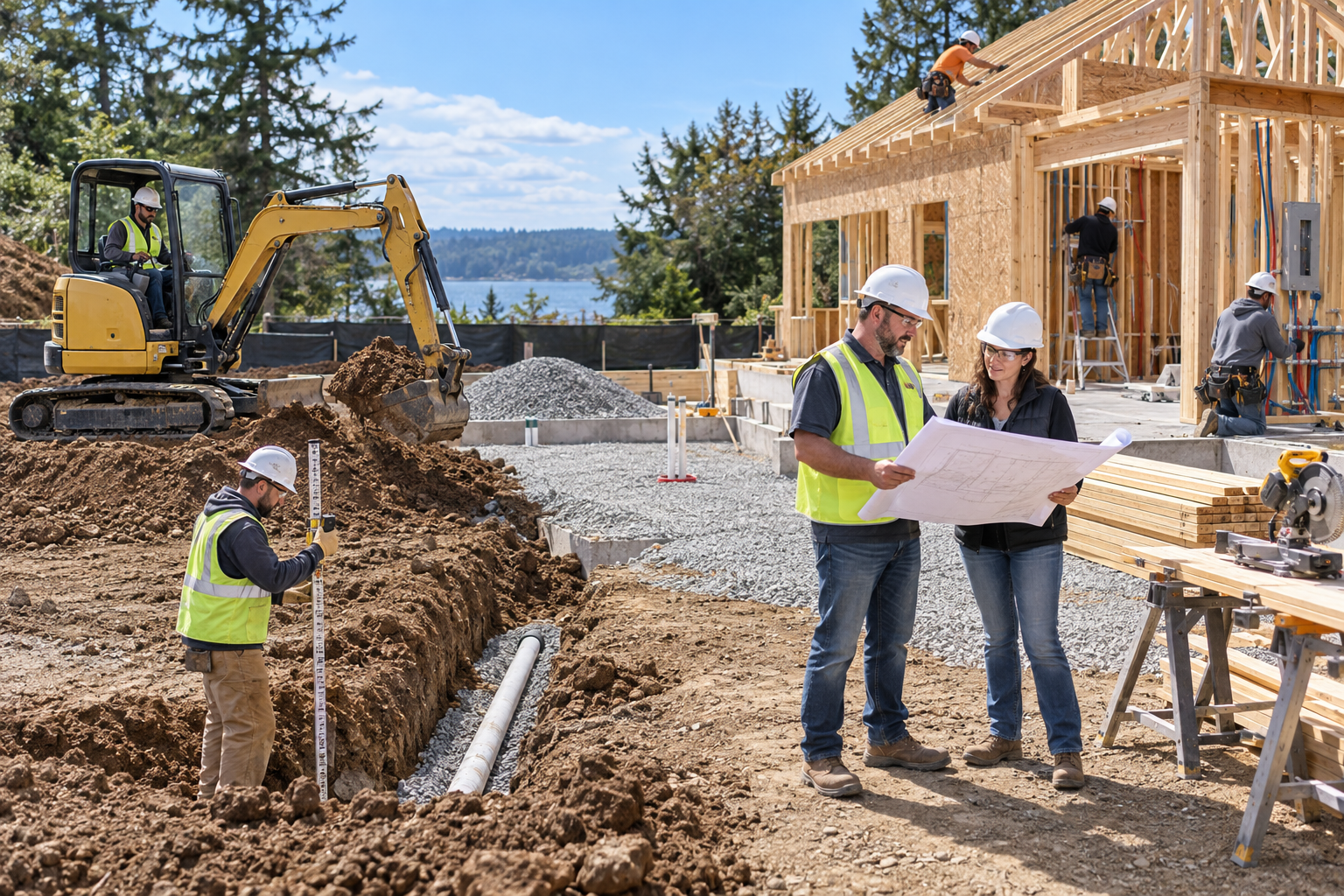
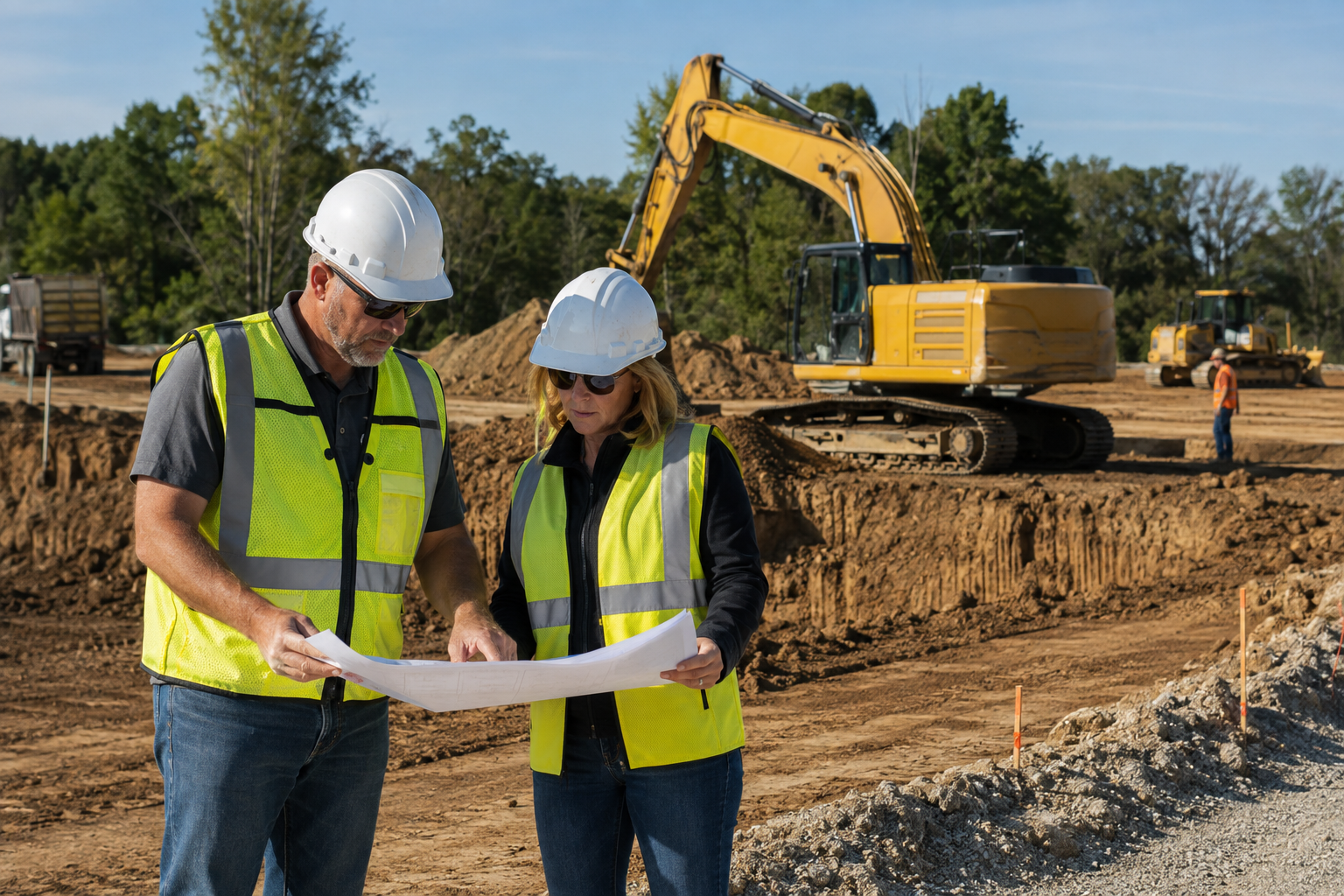
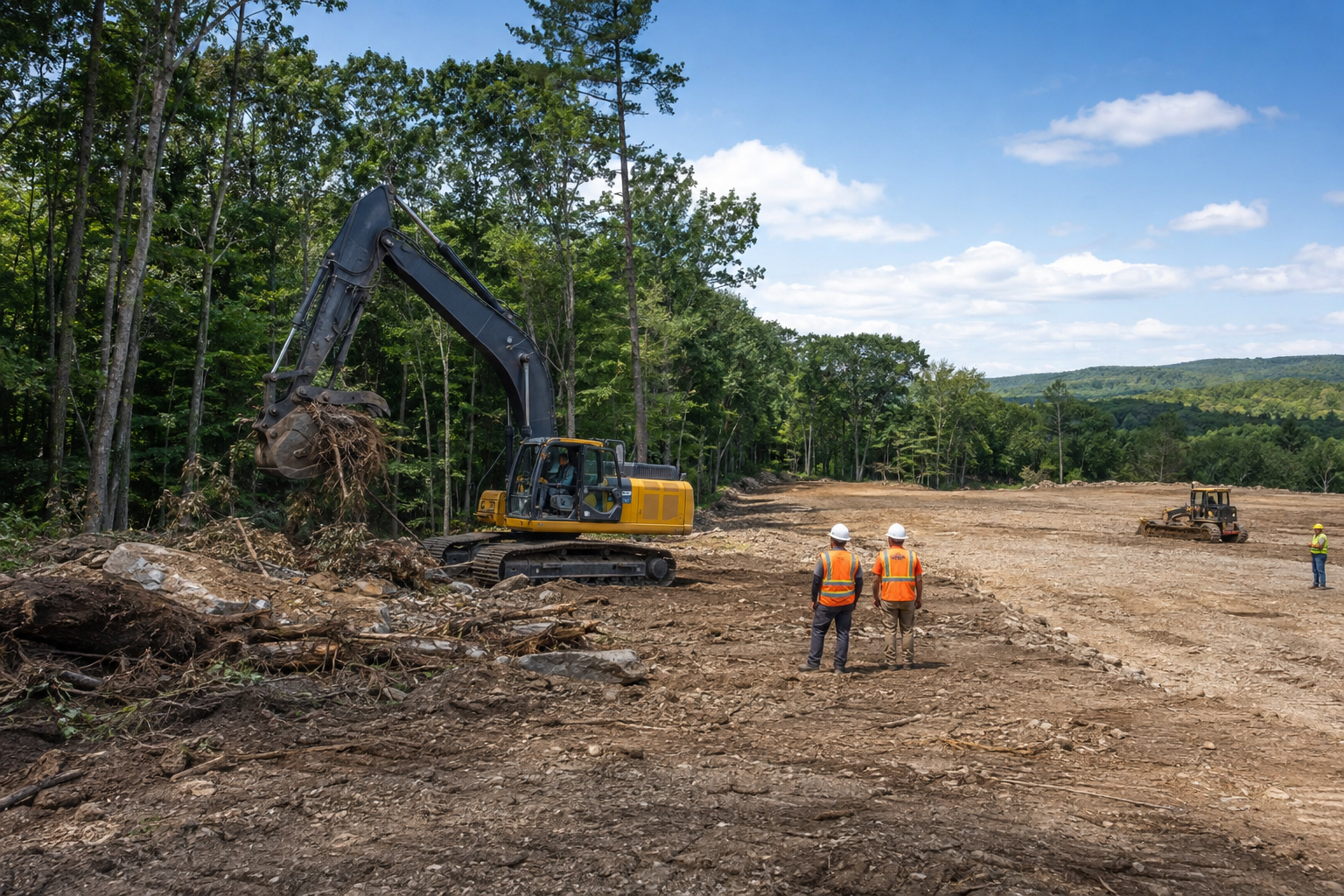
Yes, site preparation can have a major effect on the final cost. Before concrete is poured, the project may require excavation, removal of topsoil, compaction, base material, grade adjustments, and preparation around existing structures. If an old patio must be demolished, that adds labor, hauling, and disposal. A sloped property may also require more excavation or even retaining features before a level patio area can be created.
Angi's 2026 cost guide notes that leveling and grading alone can add significant expense to some patio projects. The visible concrete is only as dependable as the site prepared beneath it.
Why Is Grading Important Before a Patio Is Poured?
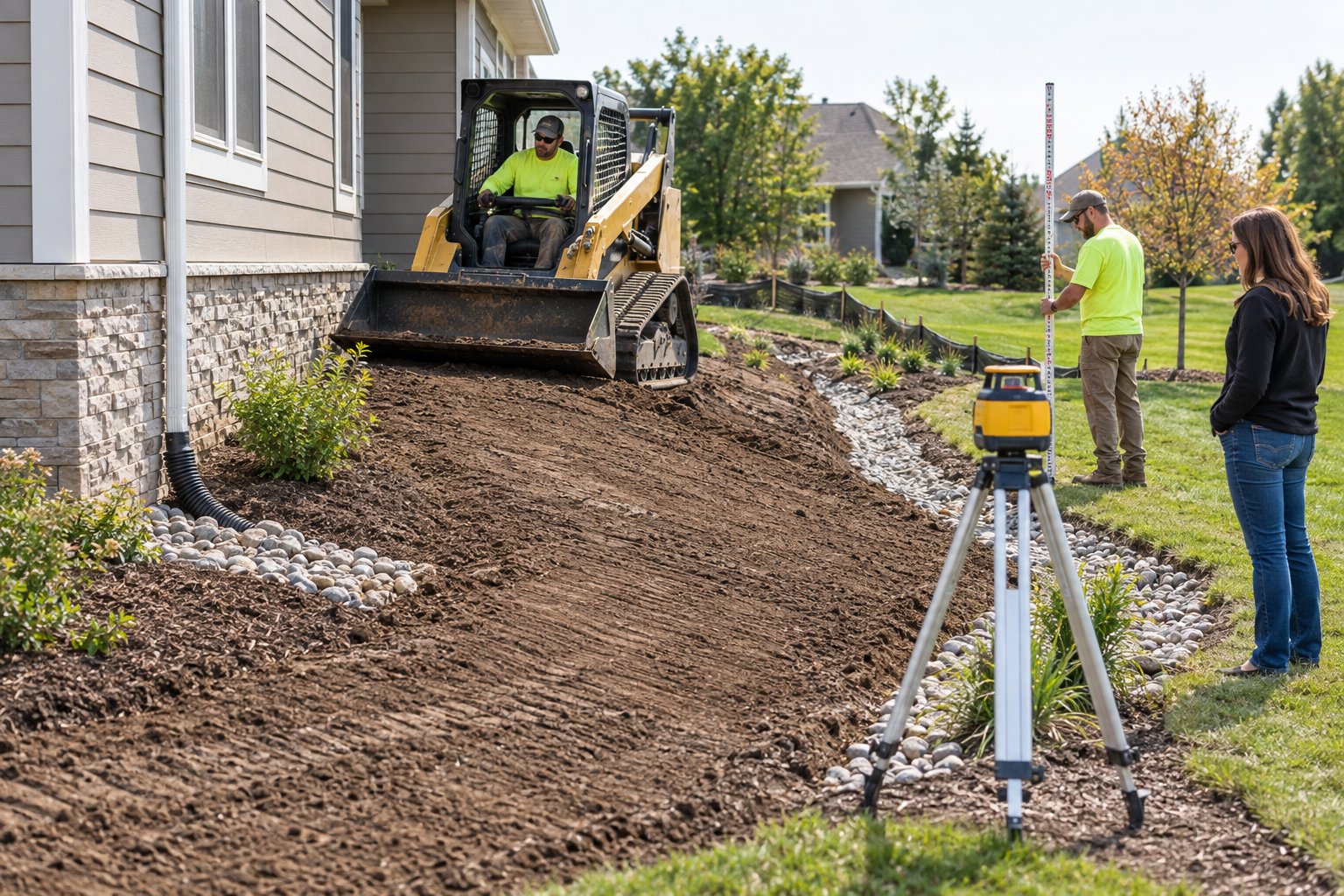
Grading determines where rainwater will travel after the patio is installed. Concrete creates a hard surface that sheds water rather than absorbing it. If the patio directs runoff toward the house, it can contribute to pooling and moisture problems near the foundation. Our guide on how proper site grading prevents water damage and foundation issues explains why drainage should be considered before new hard surfaces are added.
When comparing general contractors, ask how the finished patio will interact with the surrounding grade, downspouts, landscaping, and foundation. Fixing drainage before concrete is poured is usually easier than discovering after the first major storm that water has nowhere appropriate to go.
Can Drainage Increase the Cost of a Patio?
Yes, especially if the existing property does not provide a suitable path for runoff. Some patios may need grade corrections, drainage channels, swales, downspout changes, or another drainage solution.
A sloped yard might also require retaining work to create a usable level. These improvements add cost, but they serve an important purpose. A lower estimate that ignores an obvious drainage issue is not necessarily the better value. Metro Nashville describes stormwater as runoff from hard surfaces such as rooftops, streets, and parking areas that eventually travels through drainage systems or waterways. A new patio becomes another hard surface that affects how rainfall moves across the property.
Does Removing an Old Patio Cost Extra?
Yes. Existing concrete generally needs to be broken apart, loaded, hauled away, and properly disposed of before the new patio can be prepared. Cost depends on the old slab's size, thickness, accessibility, and reinforcement. Demolition may also reveal conditions that were not obvious beforehand, such as poor base material or drainage problems. If an existing patio settled or cracked significantly, it is important to understand why before replacing it with another slab in the same location.
What Decorative Concrete Options Increase the Price?
Decorative finishes can make a patio more distinctive, but they add materials and labor. Common options include stamping, integral color, stains, decorative borders, exposed aggregate, saw-cut patterns, and sealing.
A basic broom finish typically keeps the project simpler. Homeowners who want decorative concrete can control costs by choosing one or two design features that have the biggest visual impact instead of combining every available upgrade.
Does Nashville Soil Affect Patio Cost?
It can. Soil conditions influence excavation, compaction, base preparation, drainage, and how well the ground supports the slab. The USDA Natural Resources Conservation Service provides its Web Soil Survey so users can review mapped soil information for specific areas. That does not replace an on-site assessment, but it highlights an important point: soil conditions can vary from property to property. If a yard has soft areas, poor drainage, fill soil, or evidence of movement, additional preparation may be needed before concrete is placed.
Does a Concrete Patio Need a Permit in Nashville?
Permit requirements depend on what the project includes. Metro Nashville's residential permit guidance specifically addresses decks, patio covers, accessory structures, and other residential construction. A simple ground-level concrete patio is not the same as an attached deck or covered patio, so homeowners should confirm the requirements for their specific scope rather than assuming all patios follow the same permitting process.
Grading can create a separate requirement. Metro Water Services states that grading includes activities that change site elevations, remove ground cover, or involve cutting and filling. Certain activities are exempt, while larger projects may require a grading permit. If a patio project includes substantial grading, retaining walls, drainage work, a cover, or other structures, permit requirements should be checked before construction.
What Is the Cheapest Way to Build a Concrete Patio?
Keeping the design simple is usually the easiest way to control cost. A basic rectangular patio with good access, straightforward grading, minimal demolition, and a standard finish is generally less complicated than an irregular stamped patio on a steep yard. However, homeowners should not save money by skipping proper site preparation or drainage. Those are not decorative extras. A simple patio built on a properly prepared site can often be a better long-term choice than an elaborate design built on an inadequate base.
Should You Add a Retaining Wall With a Patio?
Sometimes a retaining wall is necessary to create a usable patio area on a sloped property. The wall may hold back the higher section of the yard so a flatter outdoor space can be established below. That increases the project scope because excavation, drainage, wall materials, base preparation, and potentially engineering or permitting may need to be considered. Our guide to retaining walls and their role in property stability explains why retaining structures and drainage need to work together. If a wall is necessary, planning it at the same time as the patio usually makes more sense than treating the two projects independently.
How Can You Keep Concrete Patio Costs Under Control?
The best way to control costs is to make important decisions before construction begins. Choose the patio size based on how you expect to use it. Keep the overall shape relatively simple if budget matters. Decide whether stamping, color, or another decorative option is truly important. Address grading and drainage before finalizing the design. Also make sure contractors understand access limitations, demolition needs, and surrounding landscaping when preparing their estimates. Changing the size, finish, or drainage plan after work begins can create additional costs that were not included in the original scope.
What Should a Concrete Patio Estimate Include?
A useful estimate should make the project scope clear. Depending on the job, that may include excavation, site preparation, base material, forms, reinforcement, concrete placement, finish, grading, drainage work, demolition, cleanup, and sealing. If decorative work is included, the exact finish should be identified. If existing concrete must be removed, that should also be clear. When evaluating general contractors, compare what each estimate actually includes instead of selecting a contractor based only on the lowest total. Two estimates can look dramatically different simply because one includes necessary site preparation while another does not.
Why Choose GK Construction Solutions for Concrete Patio Projects?
At GK Construction Solutions, we approach a patio as part of the entire property rather than simply as a slab of concrete. Our work includes concrete construction, excavation, grading, masonry, hardscapes, retaining walls, and foundation-related services. That broader experience allows us to consider how the patio interacts with the yard, drainage, nearby structures, and surrounding concrete. We want homeowners to understand the complete scope before construction begins.
That includes how the site will be prepared, where water will go, which finish fits the project, and whether additional grading or retaining work is needed. If you are also thinking about longevity, our guide on how long a concrete patio lasts in Nashville explains how installation quality, drainage, maintenance, and local weather can affect performance over time.
Frequently Asked Questions About Concrete Patio Costs
Is a 10x10 Concrete Patio Expensive?
A 10x10 patio is relatively small at 100 square feet, but its final cost still depends on site preparation, finish, access, demolition, and drainage. A simple slab on an accessible, already suitable area will generally be less expensive than the same size patio requiring excavation, grading corrections, or decorative stamping. Small projects may also have minimum mobilization or labor costs, so multiplying 100 square feet by a generic online price does not always predict the final estimate accurately.
Is Stamped Concrete Worth the Extra Cost?
Stamped concrete can be worth the added expense when appearance is a major priority. It can create patterns that resemble stone, brick, or other materials while maintaining a concrete surface. However, stamping requires extra labor and materials and may also involve coloring and sealing. Homeowners mainly interested in an affordable, functional outdoor surface may prefer a standard finish. The decision comes down to whether the decorative appearance provides enough value for your goals and budget.
Can I Pour Concrete Over an Existing Patio?
Sometimes an overlay may be possible, but pouring new concrete over a damaged slab is not automatically a good solution. If the existing patio has settled, cracked badly, or drains toward the home, covering it may leave the original problem underneath. Elevation also matters because adding material raises the finished surface near doors, siding, and surrounding landscaping. The old slab should be evaluated first to determine whether resurfacing, overlaying, or complete removal makes more sense.
Does a Concrete Patio Need a Gravel Base?
Concrete patios commonly rely on a properly prepared and compacted base, but the exact base design depends on soil conditions, drainage, slab design, and site requirements. The important issue is creating stable, uniform support beneath the concrete. Simply pouring on loose or poorly prepared soil can increase the risk of settlement and cracking. The contractor should determine what excavation and base preparation are appropriate for the property rather than applying the same detail to every Nashville yard.
Can a Patio Affect My Foundation?
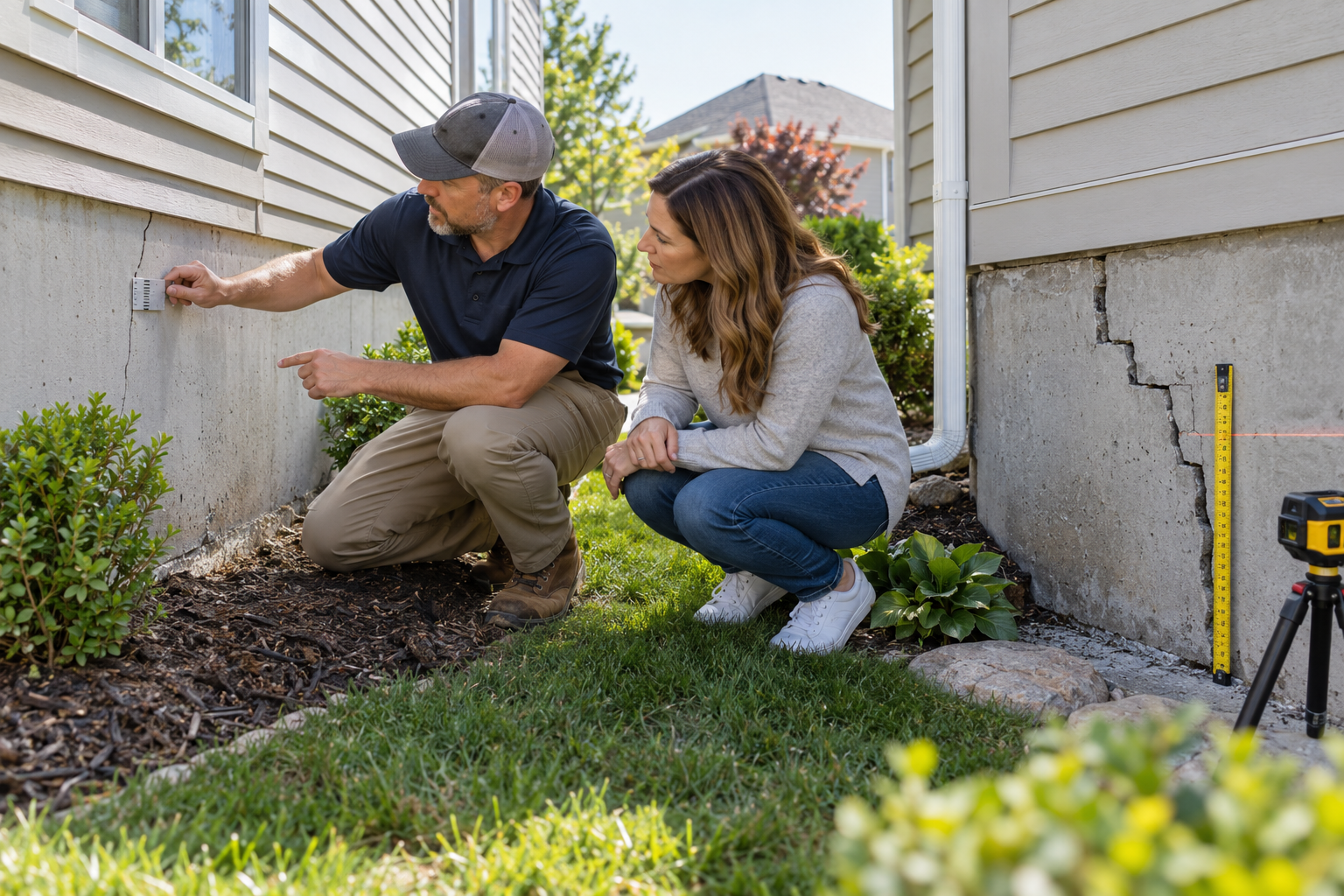
Yes, mainly through drainage if the patio is improperly positioned or sloped. A concrete surface collects and redirects rainfall, and water moving toward the house can increase moisture around foundation soils. That does not mean a patio automatically causes foundation problems. A properly planned patio should work with the existing grade and drainage system so runoff moves toward an appropriate location instead of collecting beside the home.
Is It Better to Build a Patio Before Landscaping?
Often, yes. Installing the patio before finished landscaping can make equipment access, excavation, grading, and cleanup easier. Concrete construction can disturb surrounding soil and create traffic from workers and equipment, so completing detailed planting first may lead to unnecessary damage or rework. Planning both projects together is even better because finished grades, drainage, planting beds, walkways, and patio elevations can be coordinated from the beginning.
Final Thoughts
The cost of a Concrete Patio in Nashville depends on far more than its square footage. A simple, accessible patio with a standard finish may require a relatively straightforward scope. A sloped property with demolition, drainage corrections, decorative stamping, and retaining work can become a much larger project.
Current 2026 cost data provides a useful starting point, but online averages cannot account for the condition of your specific backyard. Site preparation deserves particular attention. Proper grading, drainage, base preparation, and planning around surrounding structures can influence both the initial price and how well the patio performs afterward. Instead of asking only, "How much is concrete per square foot?" it is more useful to ask what the complete patio project needs in order to function properly on your property.
Plan the Patio Around the Property, Not Just the Slab
If you are planning a new patio in Nashville and want a clearer picture of the project scope, reach out to GK Construction Solutions. We can look at the size, site access, grading, drainage, finish options, and surrounding conditions so you can better understand what your patio project may involve before moving forward.
Follow our social media pages below: